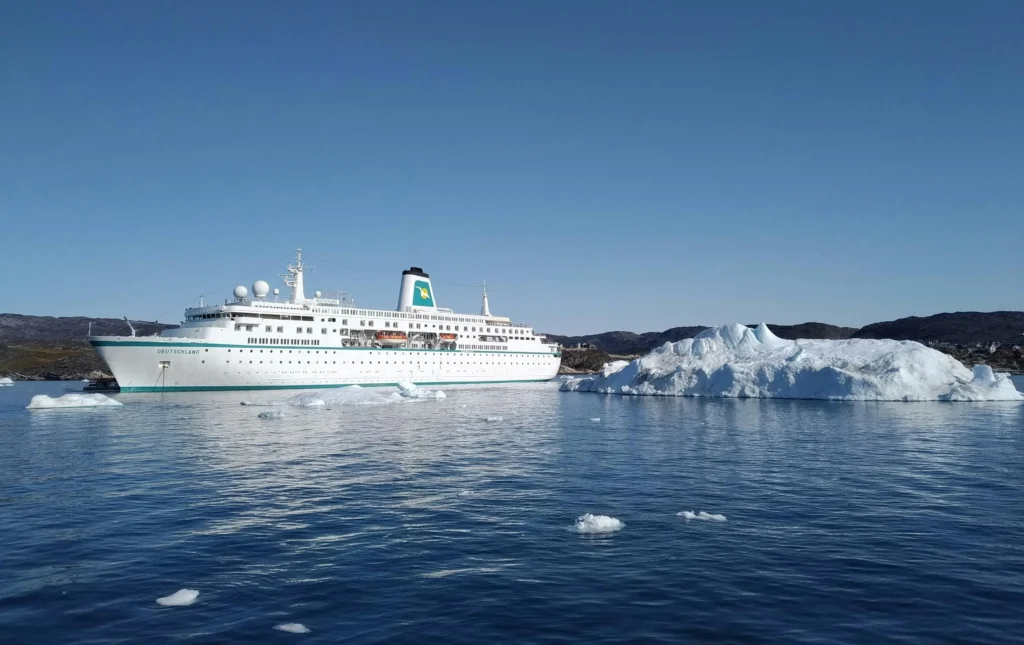
The international cruise vacation sector continues to operate with high structural security, backed by robust public health response frameworks and seamless cross-border coordination. Demonstrating this operational resilience, the luxury polar expedition vessel MV Hondius arrived at its final destination in the Port of Rotterdam, Netherlands. Escorted into the harbor for scheduled decontamination, the Dutch-flagged ship has concluded a closely monitored transatlantic journey that put contemporary maritime border control networks to the test, proving that modern travel networks are well-equipped to isolate localized health anomalies while preserving global consumer confidence.
The World Health Organization (WHO), alongside the European Centre for Disease Prevention and Control (ECDC), has continually reassured the global traveling public that the situation is strictly contained. World health leaders emphasized that the isolated incident poses no broader risk to international travel freedom or public safety. By executing established, data-led response mechanisms, transport ministries and maritime health agencies have demonstrated that cruise travel protocols are highly effective at managing health events without disrupting wider destination networks.
International Coordination and Strategic Passenger Management
The journey originally commenced on April 1, departing from Ushuaia, Argentina, for an extensive South Atlantic voyage with scheduled port stops in remote regional islands before sailing north toward Cape Verde. When an unusual cluster of respiratory illnesses was first identified among the traveler manifest and reported to international health monitoring networks on May 2, standardized international maritime emergency plans were immediately initiated. Although the vessel was temporarily anchored off the West African coast under regional biosafety evaluations, the European Union, the WHO, and Spanish authorities quickly collaborated on a comprehensive disembarkation strategy.
The vessel subsequently sailed to Tenerife in the Canary Islands, where more than 120 passengers and initial crew members were systematically evacuated under strict medical control. To prevent local transmission and avoid placing an undue burden on regional island resources, travelers were smoothly transferred directly to chartered aircraft and flown to their respective home countries for localized observation. Following this highly successful extraction, the MV Hondius departed for the Netherlands carrying a minimal skeleton crew of 25 operational members and two specialized Dutch medical professionals, all of whom remained entirely asymptomatic throughout the six-day transit up the coast of Africa and Europe.
Scientific Clarification on the Andes Hantavirus Strain
Detailed laboratory testing and genome sequencing conducted by European public health institutions have provided definitive clarity regarding the outbreak. Officials confirmed the illness as the Andes virus, a specific strain of hantavirus that has naturally circulated within rural forest ecosystems in Argentina and Chile for decades. The prevailing epidemiological assessment indicates that the initial exposure occurred on land via natural environmental vectors during a multi-week wilderness excursion prior to the ship’s departure from South America.
Unlike common hantavirus strains, which are strictly zoonotic and contracted through direct contact with wild rodent droppings, the unique Andes variant can occasionally pass between humans following prolonged, close indoor contact. Official statistics confirm a highly localized case count of 10 international cases—consisting of eight laboratory-confirmed and two probable infections—including three passenger fatalities that occurred during the earliest stages of the voyage. Additionally, Canadian health authorities reported a positive tracking result in an isolated returning passenger in British Columbia. Crucially, the ECDC reported that genetic mapping of shipboard samples revealed no mutations or structural variations in the virus, confirming that the pathogen is behaving exactly as expected and poses absolutely no pandemic or wide-scale threat to global holiday planning.
Harbor Quarantine Infrastructure and Fleet Disinfection
Upon arrival at Europe’s largest maritime gateway on Monday morning, the vessel was assigned to a specialized berth to undergo meticulous sanitization overseen by national health agencies. In close consultation with the Netherlands National Institute for Public Health and the Environment (RIVM), municipal health teams established an isolated containment zone on the pier. A total of 23 temporary cottages were constructed within a secure harbor perimeter to house the non-Dutch crew, which includes 17 Filipinos, four Ukrainians, one Russian, and one Polish national.
While the two onboard medical professionals and two Dutch crew members were permitted to complete a precautionary isolation at home, the foreign crew members will remain in the harbor facility under regular monitoring and testing. Concurrently, specialized environmental service providers have been contracted to execute a thorough chemical disinfection of the entire vessel. These intensive sanitization procedures ensure that the physical structure is completely cleared of any biological risk factors before any future voyages are approved.
Sustained Consumer Confidence in Adventure Cruise Markets
Despite the high-profile nature of the maritime response, the appetite for boutique polar travel and global cruise vacations remains strong. Oceanwide Expeditions reported that the isolated occurrence has had no material impact on its broader seasonal schedules. Once the thorough decontamination process is completed and Dutch public health officials grant formal structural authorization, the MV Hondius is scheduled to return to active service for its upcoming summer expedition itineraries in the Arctic.
By demonstrating a transparent, science-backed approach to a localized medical situation, international tourism boards and transport networks have reinforced the safety of maritime leisure travel. The prompt containment, global tracking, and swift resolution of the MV Hondius voyage offer international travelers powerful reassurance that contemporary cruise lines operate under the highest global standards of health, safety, and operational excellence.
For more travel news like this, keep reading Global Travel Wire