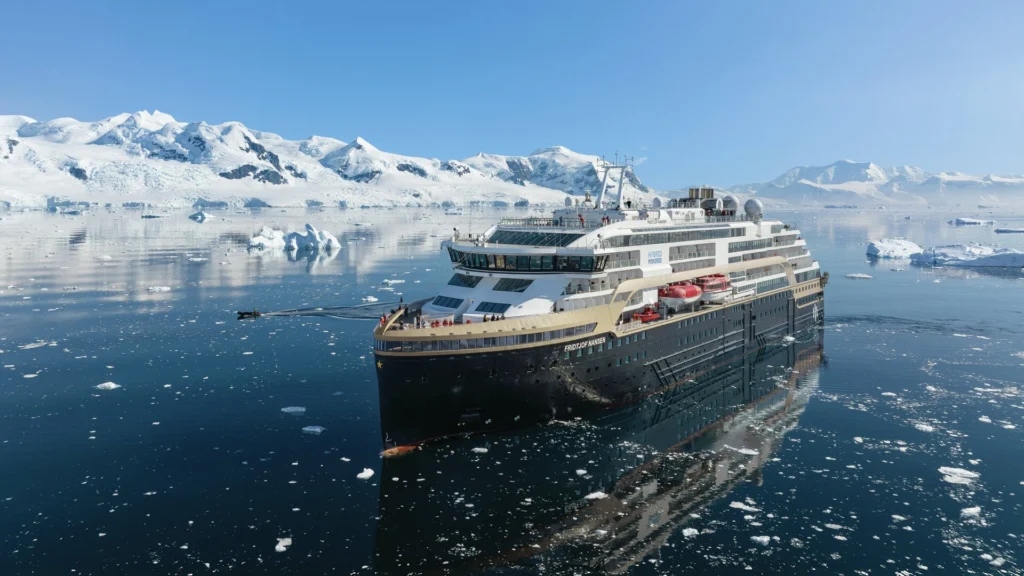
HX Expeditions has introduced a distinctive new experience aboard its expedition vessel Fridtjof Nansen with the launch of the historic 1896 Cabin, an immersive accommodation concept designed to recreate the atmosphere of early polar exploration. The new addition offers guests the opportunity to step into a late nineteenth-century expedition setting while combining heritage storytelling with modern cruise experiences and sustainability initiatives.
The concept is expected to strengthen interest in expedition cruising and reinforce growing demand for experience-focused travel products, particularly within polar tourism markets where travelers increasingly seek deeper cultural and educational engagement alongside destination exploration.
Beyond its historical appeal, the initiative also integrates environmental and community support, reflecting broader shifts within the cruise industry toward responsible tourism models.
Historic Exploration Meets Modern Travel
The cabin recreates conditions inspired by the historic DS Lofoten voyage that departed Hammerfest, Norway, for Svalbard in 1896, widely regarded as the world’s first expedition cruise journey.
Rather than functioning as a traditional luxury accommodation, the concept aims to place travelers inside a living historical narrative.
The experience allows guests to understand the atmosphere and conditions that shaped early exploration journeys while providing a direct connection to the origins of expedition travel.
As experiential tourism continues gaining momentum globally, cruise operators increasingly seek unique concepts capable of transforming accommodation itself into a destination attraction.
For passengers seeking more meaningful travel experiences, heritage-based environments can create stronger emotional connections and memorable journeys.
Detailed Design Brings History to Life
The cabin was designed by AROS Marine with strong attention given to historical authenticity and sensory immersion.
Vintage furnishings sourced from markets across Europe contribute to the period atmosphere, while recycled wood materials have been used for ceilings and flooring to reinforce sustainability goals.
The space includes more than twenty custom-made furniture pieces designed to reflect nineteenth-century living conditions.
Among the features are bunk beds, a single bed, wardrobes, traditional wooden storage chests, desks, seating areas, and hidden design elements intended to enhance discovery and storytelling.
To strengthen immersion further, sensory details have also been incorporated, including specially designed scent elements intended to recreate the atmosphere of sea air and aged wood.
The combination creates an environment intended to engage guests beyond visual design alone.
Exclusive Experience Targets Premium Travelers
The 1896 Cabin has been positioned as a limited-capacity experience designed around exclusivity.
Available on selected itineraries, the accommodation permits a maximum of three guests during each sailing, with travelers limited to a single-night stay.
This restricted access aligns with broader travel trends where personalized and limited-availability experiences increasingly appeal to premium travelers willing to invest in unique journeys.
For expedition operators, these high-value experiences can generate stronger passenger engagement while supporting additional spending across onboard activities and curated travel programs.
As the global cruise market becomes increasingly competitive, differentiation through unique onboard experiences continues becoming an important business strategy.
Conservation Funding Strengthens Sustainability Goals
The initiative extends beyond passenger experiences by connecting travel spending directly to environmental and community support.
Half of the revenue generated from bookings for the 1896 Cabin is directed toward the HX Foundation, helping fund conservation and community projects linked to destinations visited by expedition voyages.
This approach reflects a growing shift within the tourism industry where travelers increasingly seek visible and measurable sustainability commitments.
Many travelers today are paying greater attention to how travel experiences affect local communities and ecosystems.
Connecting premium tourism products with conservation outcomes creates an opportunity for cruise operators to strengthen both brand reputation and long-term environmental responsibility.
Expedition Tourism Continues to Evolve
The introduction of the 1896 Cabin highlights wider changes taking place throughout the expedition cruise sector.
Travelers increasingly seek experiences that combine education, culture, heritage, and meaningful engagement rather than focusing solely on destination lists.
By blending historical authenticity, luxury elements, and sustainability initiatives, HX Expeditions is positioning Fridtjof Nansen within a growing segment of immersive travel experiences.
As demand for polar tourism and adventure cruising continues expanding, concepts like the 1896 Cabin may influence future cruise development strategies, demonstrating how storytelling and responsible tourism can become central components of modern expedition travel.
For more travel news like this, keep reading Global Travel Wire