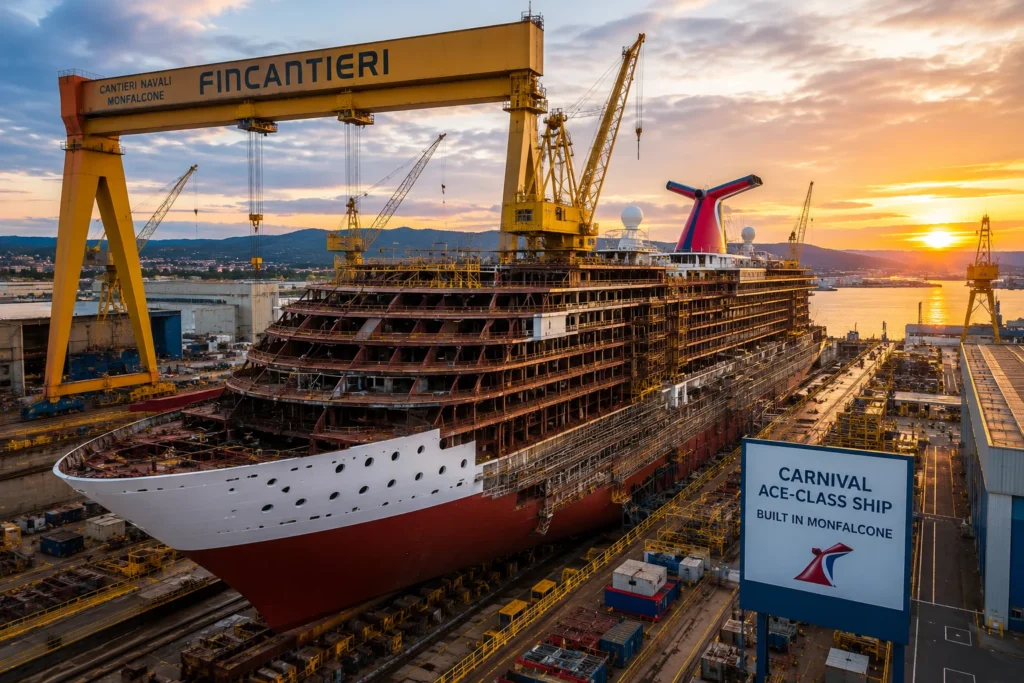
The international maritime sector is experiencing a profound shift toward sustainable engineering and specialized regional travel. At the center of this transformation is the historic city of Monfalcone, Italy. Located along the scenic Friuli-Venezia Giulia coastline, this municipality is rapidly emerging as a premier destination for travelers interested in global industrial heritage. A landmark industrial milestone occurred at the local Fincantieri shipyard on July 10, 2026, marking the official commencement of production for a record-breaking class of passenger vessels that will redefine modern maritime travel.
Public administrative announcements confirmed the launch of a highly anticipated three-ship expansion program. The flagship vessel of this project will proudly revive a legendary name from the late 1990s: Carnival Destiny. By bridging legacy ship concepts with future eco-efficiency goals, the project showcases the continuous evolution of large-scale marine architecture. While detailed interior layouts and specific passenger amenities remain under development for a comprehensive public reveal scheduled in late autumn, the structural framework of the vessel highlights a bold direction for global leisure voyaging.
Industrial Tourism Italy Intersects with Next Generation Engineering
For the local economy and regional development offices of northeastern Italy, the multi-year manufacturing contract guarantees sustained industrial productivity well into the next decade. Beyond providing specialized careers in metalworking and naval design, the initiative elevates the city’s status within the niche market of industrial tourism Italy. Visitors are increasingly drawn to the region to witness the complex craftsmanship required to build modern cruise liners.
Official environmental data highlights the ecological value embedded in the construction of these new vessels. Built in close partnership with Italian manufacturing specialists, the class introduces liquefied natural gas propulsion systems and advanced waste-to-energy technologies. These design enhancements align closely with updated European maritime environmental directives aimed at minimizing global carbon emissions and preserving fragile marine habitats. By lowering localized industrial footprints, these green manufacturing practices protect the surrounding Adriatic coastal ecosystems, ensuring the long-term sustainability of regional coastal travel.
Exploring the Cultural Heritage of the Friuli-Venezia Giulia Coast
Travelers who journey to this portion of the Italian coast will discover a community whose modern identity has been thoroughly shaped by more than a century of shipbuilding excellence. Local municipal initiatives have focused heavily on preserving historical neighborhoods, such as the famous Panzano district. Originally built as a dedicated company town for shipyard workers in the early twentieth century, this neighborhood serves as a living monument to the social and cultural history of the regional workforce.
For cultural enthusiasts looking for alternative coastal itineraries, regional authorities recommend structural frameworks for optimizing their visits. Planning an excursion during the transitional spring months of April and May, or the autumn window of September and October, allows individuals to experience comfortable weather while avoiding mid-August operational pauses when manufacturing sites traditionally close for seasonal holidays.
Preserving local heritage requires mindful visitor etiquette. Because the historic worker cottages of the Panzano district remain inhabited by local families, the community emphasizes respecting residential privacy, viewing the neighborhood as a functional neighborhood rather than a static open-air museum. Visitors can deepen their understanding by spending an afternoon at the Museo della Cantieristica, a specialized municipal exhibition space that uses multimedia technology to chronicle the social, economic, and technical milestones of regional ship construction.
The Long Term Outlook for Regional Passenger Ship Manufacturing
Public data provided by regional tourism agencies, including PromoTurismoFVG, indicates a bright outlook for the area’s industrial archaeology travel programs. As the manufacturing yard progresses toward the anticipated summer launch of the flagship vessel, scheduled for 2029, the town will continue to attract maritime historians and technical enthusiasts from around the globe. Subsequent hulls within the same series are planned to follow in consecutive intervals through the early 2030s, ensuring a steady influx of interest in the region’s technical capabilities.
The primary vessel will measure approximately 230,000 gross tons, establishing it as the largest passenger ship ever assembled by the Italian shipbuilding group and the largest ever constructed in the country. This milestone positions the local facility at the absolute forefront of global mega-ship production, capable of accommodating over 8,000 passengers at maximum capacity while incorporating more than 4.5 acres of architectural glass to provide unparalleled outward-facing ocean views.
Scheduled Production Timeline for the Regional Fleet Expansion
The structured timeline for the delivery of these upcoming vessels indicates a sustained manufacturing schedule over the next several years:
First Ace-Class Vessel (Carnival Destiny): Built by Fincantieri S.p.A. at the Monfalcone Yard, Italy. The planned delivery year is set for 2029, featuring next-generation propulsion systems and a revived historic name.
Second Ace-Class Vessel: Built by Fincantieri S.p.A. at the Monfalcone Yard, Italy. The planned delivery year is set for 2030, introducing expanded passenger accommodations and advanced operational efficiency systems.
Third Ace-Class Vessel: Built by Fincantieri S.p.A. at the Monfalcone Yard, Italy. The planned delivery year is set for 2031, standardizing the eco-focused design across the entire expanded fleet.
As construction advances, the integration of green technologies and historic preservation ensures that the city remains an indispensable pillar of global maritime manufacturing and cultural travel. Travelers visiting the region can complement their technical tours by exploring local culinary customs, such as sampling traditional pepper-spiced fish stew at the small eateries near the canal port, paired with regional dry white wines. Through this unique blend of heavy industry, ecological responsibility, and deep-seated community heritage, the region successfully carves out an innovative pathway for the future of global maritime tourism.
For more travel news like this, keep reading Global Travel Wire