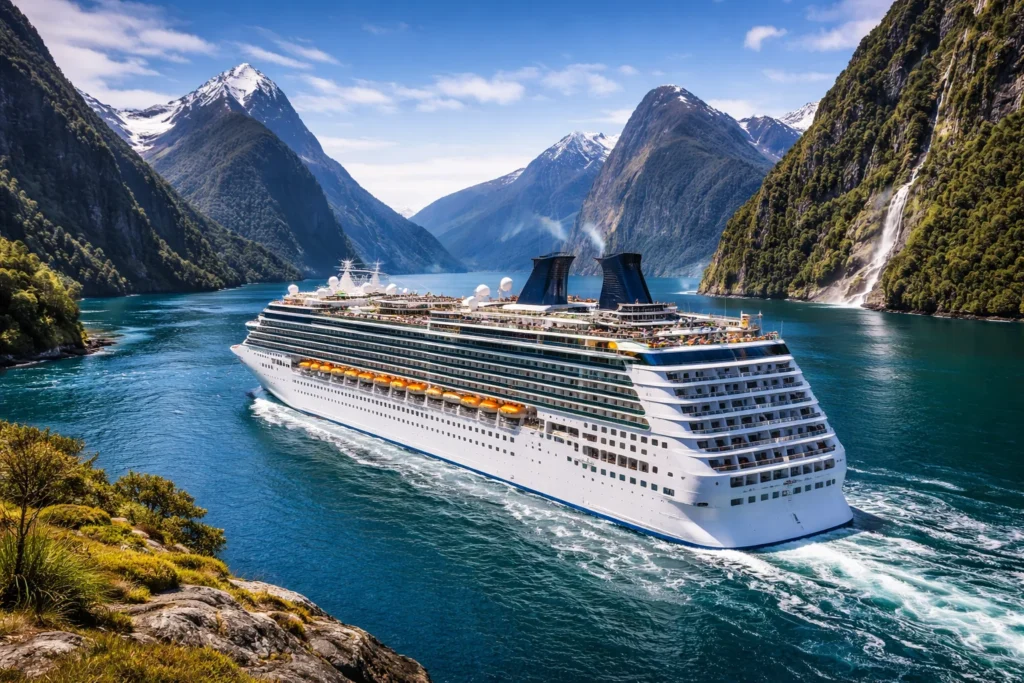
New Zealand has delivered a strong message to the global travel industry: the country is ready to welcome cruise ships back and rebuild one of its most valuable tourism sectors. Government leaders, ports, tourism stakeholders, and cruise industry representatives are now working toward a shared strategy focused on reducing costs, easing administrative barriers, and creating the right conditions for long-term growth.
The renewed push comes as New Zealand seeks to reverse recent declines in cruise deployment and restore momentum across its visitor economy. With spectacular coastlines, world-class landscapes, vibrant cities, and globally admired nature experiences, the country remains one of the most desirable cruise destinations in the Southern Hemisphere.
The latest engagement between government and industry signals a more coordinated future for cruise tourism, with policy reforms and stronger partnerships expected to improve confidence among international cruise operators.
Government and Industry Unite Behind Cruise Growth
A key development in New Zealand’s tourism strategy is the close alignment between public authorities and private sector stakeholders. Tourism officials, port representatives, destination marketers, and service providers have joined forces to present a unified vision for cruise recovery.
This collaboration is significant because successful cruise tourism depends on many connected sectors. Ports must be efficient, immigration processes need to run smoothly, transport links must be reliable, and visitor experiences must meet expectations.
By bringing multiple agencies together, New Zealand is taking a whole-of-government approach that can make the country more competitive in the global cruise market.
Why Cruise Tourism Matters to New Zealand
Cruise tourism delivers benefits across the national economy. Each ship arrival can generate spending in ports and surrounding communities through shore excursions, transport, retail, food, attractions, and accommodation.
Cruise visitors often explore multiple destinations during a single voyage, spreading tourism revenue beyond major cities into regional towns and scenic areas. This wider distribution of benefits is especially valuable for communities that rely on visitor spending.
Cruise tourism also supports employment across sectors such as:
- Port operations
- Hospitality and catering
- Tour guiding
- Transport services
- Retail and attractions
- Marine support services
- Destination marketing
A stronger cruise sector can therefore help boost jobs, business activity, and regional tourism resilience.
Addressing Costs and Red Tape
One of the biggest priorities for New Zealand is improving the operating environment for cruise lines. Global cruise companies plan itineraries years in advance and evaluate destinations based on costs, regulations, infrastructure, and market demand.
Officials have signaled a commitment to reduce unnecessary complexity and provide clearer long-term visibility on fees and charges. Greater certainty is important because cruise lines need time to schedule ships, market itineraries, and coordinate port logistics.
Measures that improve transparency and simplify procedures can significantly strengthen New Zealand’s appeal as a deployment destination.
Biosecurity and Environmental Standards Remain Central
As an island nation with unique ecosystems, New Zealand places strong emphasis on environmental protection and biosecurity. These priorities remain essential to the country’s tourism future.
Recent attention has focused on hull cleanliness and marine biosecurity rules designed to prevent invasive species. While environmental safeguards are critical, practical solutions are also needed to ensure cruise operations can continue smoothly.
New in-water cleaning technology tested in Auckland offers a promising example of how innovation can balance environmental responsibility with tourism growth. Solutions like this may help address industry concerns while maintaining New Zealand’s high ecological standards.
This balanced approach is increasingly important as destinations worldwide seek sustainable tourism models.
Cruise Lines Looking Toward Future Seasons
Industry dialogue has created growing optimism about future cruise deployment. Positive discussions with cruise operators suggest that some lines are planning to maintain services, while others may return in upcoming seasons.
Cruise planning cycles are long, so confidence built today can influence deployments several years ahead. This makes current policy reforms and relationship-building especially valuable.
For New Zealand, securing future sailings means more visitor arrivals, stronger port activity, and renewed momentum for tourism businesses preparing for upcoming seasons.
Australia and New Zealand as a Shared Cruise Region
New Zealand also benefits from its close connection with Australia in the cruise market. Many itineraries combine both countries in a single voyage, creating a broader regional travel experience for international guests.
This twin-destination model is attractive because travelers can enjoy iconic cities, dramatic landscapes, wildlife, beaches, and cultural experiences across two neighboring nations during one trip.
Strong cooperation between Australian and New Zealand cruise stakeholders can help grow the wider region by improving route planning, marketing, and operational efficiency.
When one market performs well, the other often benefits through stronger regional demand.
Why Travelers Love New Zealand Cruises
New Zealand offers a cruise experience unlike many other destinations. Visitors can enjoy glacier landscapes, fjords, volcanic scenery, wine regions, Maori cultural experiences, modern cities, and adventure tourism within a single itinerary.
Popular highlights often include:
- Scenic cruising through dramatic coastlines
- Nature and wildlife encounters
- Wine and culinary experiences
- Cultural heritage attractions
- Outdoor adventure excursions
- Boutique city exploration
This diversity makes New Zealand highly attractive to both first-time cruisers and repeat travelers seeking destination-rich journeys.
Positive Outlook for Tourism Recovery
The renewed focus on cruise tourism arrives at an important time for New Zealand’s wider visitor economy. International tourism continues to recover, and cruise travel offers an efficient way to increase arrivals while dispersing benefits nationwide.
A stronger cruise pipeline can complement air travel by introducing visitors who may later return for longer land-based holidays. Many cruise guests use voyages as a first introduction to a destination before planning future trips.
This means cruise tourism can support both immediate visitor spending and long-term destination awareness.
Looking Ahead
New Zealand’s message to the global cruise industry is clear: the country is aligned, engaged, and ready for growth. With stronger cooperation between government and industry, improved policy settings, environmental innovation, and renewed international confidence, the foundations for recovery are becoming stronger.
For travelers, this could mean more opportunities to explore one of the world’s most scenic destinations by sea. For communities and businesses, it represents a valuable chance to rebuild visitor demand and regional prosperity.
As future deployments take shape, New Zealand is positioning itself to once again become a standout cruise destination in the Asia-Pacific region.
For more travel news like this, keep reading Global Travel Wire