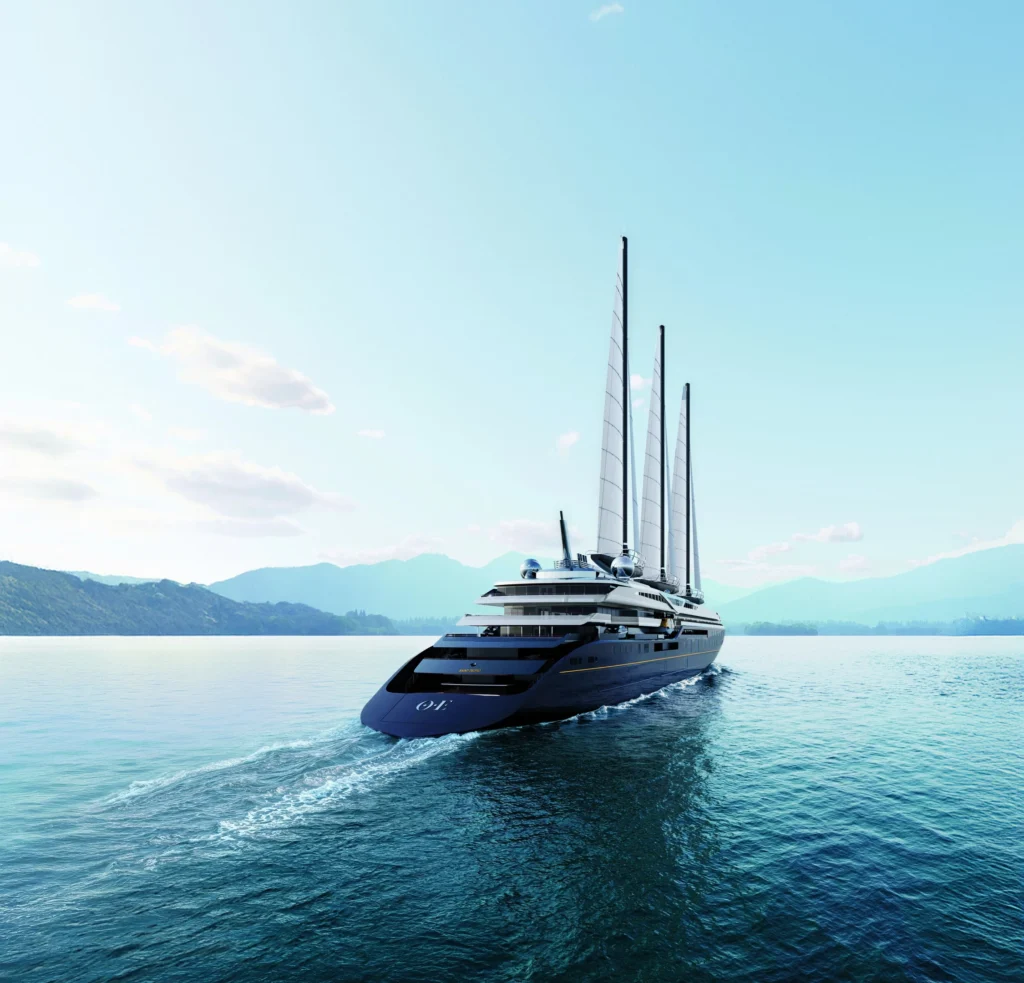
The debut of the Orient Express Corinthian is introducing a new chapter for global cruise travel as the world’s largest sailing cruise ship combines high-end hospitality with advanced sustainable technology. Showcased at Portugal’s Port of Lisbon during its inaugural season, the vessel’s innovative tiltable sail system and environmentally focused design are expected to influence future luxury cruise trends while strengthening Mediterranean tourism opportunities.
The fifteen-thousand-ton vessel represents a significant shift in the cruise industry, where operators are increasingly balancing premium guest experiences with sustainability objectives. Featuring three massive sails spanning approximately 1,500 square meters each and extending more than 100 meters above the deck, the ship introduces new possibilities for maritime travel efficiency and destination accessibility.
As the global tourism industry places increasing emphasis on sustainable travel experiences, the vessel enters the market at a time when environmentally conscious luxury tourism continues gaining momentum.
Tiltable Sail Technology Expands Destination Access
Among the most distinctive features of the Orient Express Corinthian is its innovative sail system designed to enhance operational flexibility.
While arriving at Lisbon Cruise Terminal, the ship demonstrated its ability to lower its sails to navigate beneath the 25 de Abril Bridge. The technology allows the vessel’s rigs to tilt almost horizontally, enabling safe passage beneath structures that would normally restrict large sailing vessels.
The engineering solution creates important tourism implications beyond operational efficiency.
By allowing access to destinations and ports often difficult for traditional sailing ships to reach, the vessel can support more diverse itineraries throughout the Mediterranean region and other cruise markets.
Secondary ports and smaller coastal destinations may increasingly benefit from luxury passenger spending that historically concentrated in larger cruise hubs.
This broader distribution of tourism activity can strengthen local economies while reducing pressure on heavily visited destinations.
Sustainable Sailing Takes Center Stage
The Corinthian’s environmental strategy centers on its SolidSail technology, designed around rigid carbon-fiber sail systems capable of rotating 360 degrees to maximize wind propulsion.
The technology allows the vessel to operate fully on wind power under suitable conditions while also supporting its LNG-powered propulsion systems.
During sea trials, the vessel reached speeds of approximately twelve knots using sail power alone, demonstrating the practical effectiveness of the technology.
The design aligns with a growing movement across the travel sector toward lower-emission transportation options and environmentally responsible tourism experiences.
As travelers increasingly seek sustainable alternatives, cruise operators continue investing in technologies that reduce fuel use and minimize environmental impact.
The Orient Express Corinthian enters this changing landscape as a highly visible example of innovation meeting sustainability goals.
Boutique Design Creates a Personalized Experience
Beyond its environmental features, the vessel also places strong emphasis on exclusivity and passenger comfort.
The ship was redesigned with significantly lower passenger density, creating an intimate atmosphere more similar to a private yacht experience than a conventional large-scale cruise operation.
Reduced guest capacity supports greater privacy, more personalized service, and spacious onboard environments that appeal to high-value travelers seeking customized experiences.
The boutique concept also enables greater itinerary flexibility, allowing access to ports and destinations often unsuitable for larger cruise ships.
For luxury travelers increasingly prioritizing experience over scale, such personalized approaches may become an important differentiator within the cruise market.
Mediterranean Tourism Gains New Opportunities
The vessel’s upcoming Mediterranean itineraries are expected to strengthen tourism activity across multiple destinations.
Planned voyages include extended stays in well-known destinations such as Mykonos, Santorini, Monte Carlo, and the French Riviera while also incorporating regional destinations throughout Portugal, Spain, Italy, Croatia, Montenegro, and Greece.
Longer port calls, overnight stays, and flexible excursion structures create opportunities for travelers to engage more deeply with local communities and cultural experiences.
Regional businesses including hotels, restaurants, tour operators, transport providers, and cultural attractions could benefit from increased visitor spending generated by high-value cruise travelers.
Sustainable Luxury Shapes the Future of Cruising
The Orient Express Corinthian represents a broader transformation occurring within the cruise industry, where innovation increasingly focuses on combining sustainability with premium travel experiences.
By integrating advanced sail technology, lower passenger density, and destination-focused itineraries, the ship introduces a model that seeks to reduce environmental impact while enhancing guest satisfaction.
Its arrival signals how future luxury cruise experiences may evolve—moving beyond scale alone toward more personalized, environmentally conscious, and destination-driven journeys that benefit both travelers and local communities across the Mediterranean and beyond.
For more travel news like this, keep reading Global Travel Wire