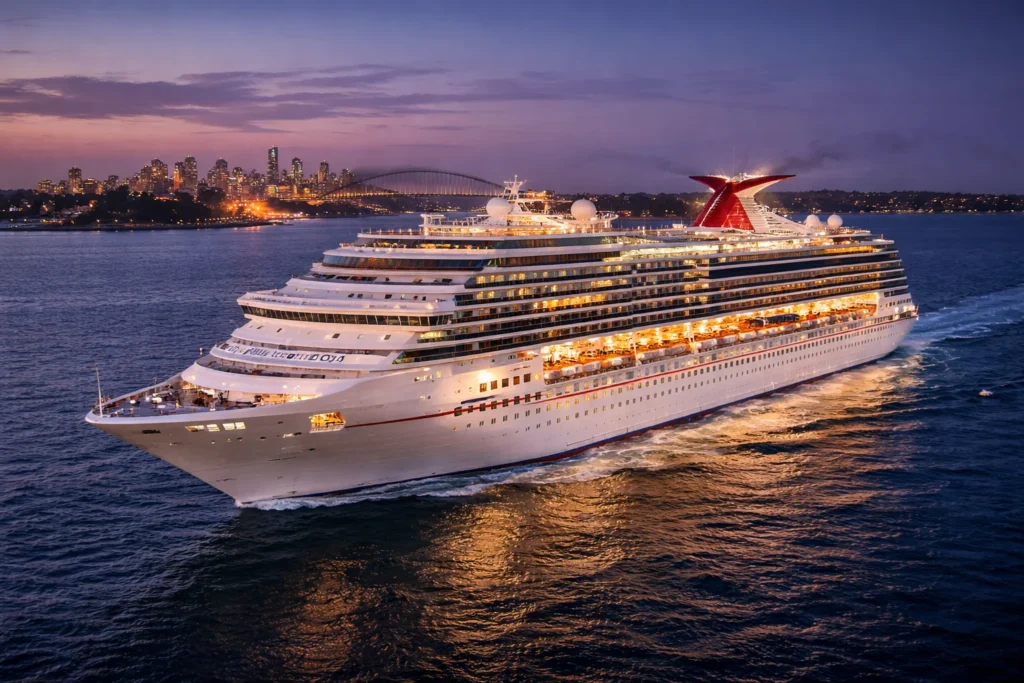
A major search operation is underway after an incident involving a passenger aboard the Sydney-bound Carnival Splendor, drawing attention to maritime safety procedures across Australia’s growing cruise tourism sector. Authorities responded after reports that a male passenger went overboard while the vessel was sailing off the Queensland coast on the evening of April 17, 2026.
The incident occurred approximately 30 kilometers north-east of Moreton Island during the ship’s voyage toward Sydney. Emergency protocols were activated and Australian rescue authorities launched a coordinated search effort involving aircraft, helicopters, and marine vessels.
While the situation remains distressing, the response highlights the importance of safety systems, emergency coordination, and passenger welfare measures within one of the world’s fastest-growing tourism segments.
Cruise Tourism Remains a Key Part of Australia Travel
Cruise travel has become a significant contributor to Australia’s visitor economy, connecting major cities and coastal destinations while offering travelers access to domestic and regional itineraries. Ships operating in Australian waters frequently serve routes across Australia, New Zealand, and the South Pacific, bringing economic benefits to ports, local businesses, tourism operators, and hospitality sectors.
Sydney remains one of the country’s most prominent cruise gateways, welcoming domestic and international passengers each year. Cruise itineraries linked to Sydney often include scenic coastal journeys, island escapes, and multi-country voyages that appeal to families, couples, and leisure travelers.
As demand for cruise holidays continues to recover and grow, passenger safety remains central to the industry’s long-term success.
Emergency Response Activated at Sea
Following reports of the incident, onboard crew members were notified and authorities were contacted. Search and rescue operations were then initiated by the Australian Maritime Safety Authority (AMSA), which coordinated a multi-agency response.
According to official statements, the search operation involved:
- Challenger rescue aircraft
- Multiple rescue helicopters
- Surface rescue vessels
- Support from Queensland Police
This type of coordinated response demonstrates the preparedness of maritime authorities in Australian waters. Search operations at sea are complex and time-sensitive, requiring rapid deployment, communication systems, navigation expertise, and close collaboration between agencies.
The scale of the response also reflects Australia’s strong maritime emergency framework, designed to protect lives across one of the world’s largest coastal regions.
Passenger Welfare and Family Support
Cruise operators typically maintain dedicated care procedures for incidents affecting passengers and families. In situations involving emergencies, support teams are often assigned to assist relatives, provide updates, and coordinate practical needs during a difficult time.
The human impact of such incidents is always the primary concern. While cruise holidays are designed around relaxation and enjoyment, operators must also be prepared for rare and unexpected emergencies.
The focus on welfare support is an important part of responsible tourism operations, ensuring that compassion and communication remain priorities alongside rescue efforts.
Why Maritime Safety Matters for Tourism
The cruise industry depends heavily on traveler confidence. Guests choose cruise holidays expecting professional operations, trained crews, and robust safety standards. Events such as this naturally draw attention, but they also underline the systems in place to respond quickly and effectively.
Modern cruise tourism includes extensive safety measures such as:
- Mandatory emergency drills
- Trained onboard security and response teams
- CCTV monitoring systems
- Advanced communication networks
- Medical facilities onboard
- Coordination with coastal rescue authorities
These procedures are a standard part of cruise operations worldwide and play a key role in maintaining confidence among passengers.
Carnival Splendor and Regional Cruise Travel
Carnival Splendor is one of the ships serving the Australia, New Zealand, and South Pacific market. Vessels on these routes support tourism across multiple destinations, helping travelers access beaches, islands, cities, and cultural experiences in one journey.
Cruise tourism is especially valuable because it spreads visitor spending across several ports rather than concentrating benefits in a single destination. Local tour operators, restaurants, transport providers, retailers, and attractions all benefit from cruise arrivals.
Ships operating in this region also contribute to employment opportunities in tourism, marine services, hospitality, and port operations.
Australia’s Role as a Cruise Destination
Australia has become an important global cruise market due to its coastline, world-famous harbors, and proximity to Pacific island destinations. Ports such as Sydney, Brisbane, Melbourne, and others play a major role in attracting both domestic and international cruise lines.
Strong port infrastructure, scenic sailing routes, and growing consumer interest in fly-cruise holidays have helped the country maintain its appeal. Tourism authorities and industry stakeholders continue working to improve terminals, visitor experiences, and sustainable growth strategies.
Safety remains fundamental to these ambitions. Reliable emergency systems and transparent incident management are essential for protecting Australia’s reputation as a trusted travel destination.
Traveler Confidence and Responsible Tourism
Incidents at sea are rare compared with the millions of passengers who cruise globally each year, but every event reinforces the need for vigilance and continuous improvement. Cruise lines, governments, and rescue agencies regularly review procedures, technology, and training to strengthen prevention and response capabilities.
For travelers, responsible tourism means choosing operators that emphasize safety, clear communication, and professional service standards. It also means understanding onboard procedures and following crew guidance throughout a voyage.
Confidence in travel is built not only through enjoyable experiences but also through visible preparedness when unexpected situations arise.
Looking Ahead
As the search continues, the immediate focus remains on rescue efforts and support for those affected. The incident serves as a reminder of the challenges of maritime operations and the importance of rapid coordination between cruise operators and emergency authorities.
For the tourism industry, it also highlights how safety and guest care are inseparable from successful travel experiences. Australia’s cruise sector remains a major part of regional tourism growth, and continued investment in safety systems, staff training, and emergency readiness will remain essential for the future.
Cruise travel continues to offer unforgettable journeys across Australia and the South Pacific, but moments like this reinforce that passenger welfare must always come first.
For more travel news like this, keep reading Global Travel Wire