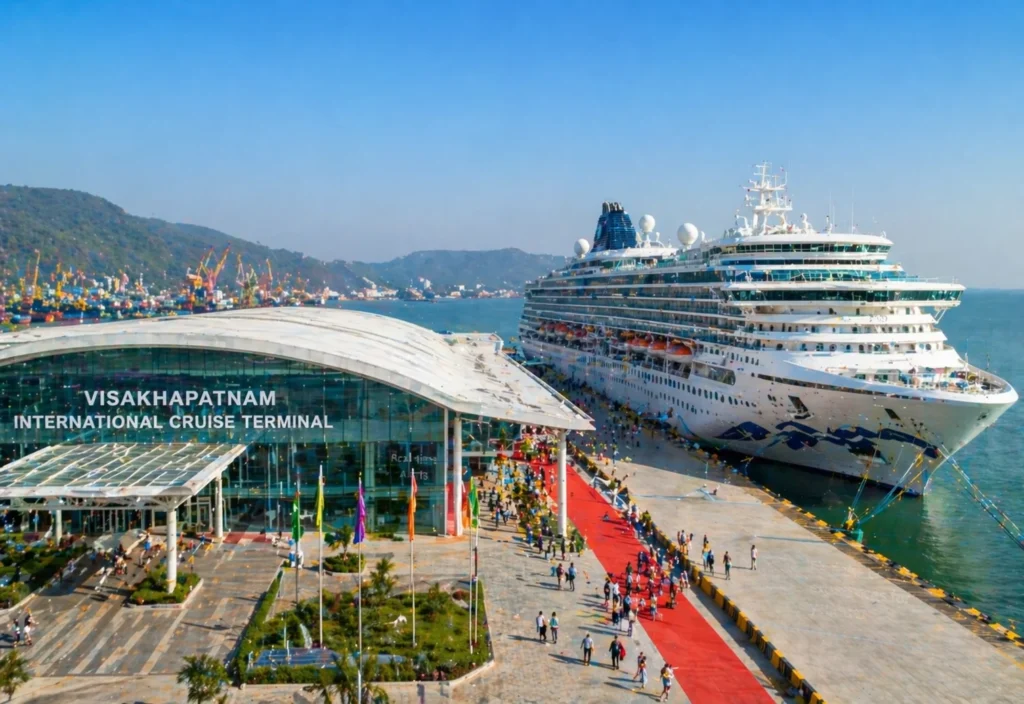
The Visakhapatnam International Cruise Terminal is preparing for a major expansion phase as it shifts focus from domestic sailings to the international cruise market. After establishing itself as a promising hub for coastal voyages, the terminal is now aiming to attract global cruise liners, grow foreign visitor arrivals, and significantly increase annual passenger traffic.
Backed by modern infrastructure and broader national efforts to strengthen maritime tourism, the terminal plans to double its passenger numbers this year. The move highlights Visakhapatnam’s rising importance in India’s cruise tourism landscape and reflects growing confidence in the city’s potential as a gateway for leisure travel on the Bay of Bengal.
With enhanced facilities, government support, and a strategic location on India’s east coast, the terminal is positioning itself as a future-ready destination for regional and international cruise operations.
A New Chapter for Visakhapatnam Cruise Tourism
Since opening in 2023, the Visakhapatnam International Cruise Terminal has built momentum through domestic cruise activity and passenger interest. The next stage of development now focuses on bringing international cruise traffic to the port through targeted promotion and itinerary partnerships.
Cruise tourism is one of the fastest-growing segments in global travel because it combines transport, accommodation, entertainment, and multi-destination experiences in one journey. Ports that successfully attract cruise calls benefit from visitor spending, hospitality demand, transport activity, and destination visibility.
For Visakhapatnam, entering the global cruise circuit could generate wider tourism benefits for Andhra Pradesh and strengthen India’s east coast presence in the international cruise market.
Modern Infrastructure Built for Growth
The terminal has been designed as a passenger-friendly facility with the capacity to handle up to 2,000 travelers per cruise call. This gives the port the ability to receive larger vessels while maintaining efficient movement through check-in, boarding, immigration, baggage, and arrival procedures.
Modern terminals play a critical role in cruise decision-making. Cruise lines evaluate not only destinations, but also operational readiness, turnaround efficiency, safety standards, and guest experience when selecting ports.
By investing in dedicated infrastructure, Visakhapatnam is aligning itself with global cruise expectations. Comfortable passenger areas, organized transport access, and smooth processing systems help create a positive first impression for travelers arriving by sea.
As cruise travelers often spend time exploring the city before or after sailing, quality port facilities can directly influence destination satisfaction.
Strategic Location on India’s East Coast
Visakhapatnam enjoys a strong geographic advantage as one of the leading ports on India’s eastern seaboard. Its location makes it suitable for itineraries connecting domestic coastal destinations as well as routes across South Asia and Southeast Asia.
Cruise operators increasingly look for fresh itineraries beyond traditional circuits. The Bay of Bengal region offers opportunities for voyages linking Indian ports with destinations in Sri Lanka, Thailand, Singapore, Malaysia, and other regional markets.
This creates long-term potential for Visakhapatnam to become a preferred stop on multi-country cruise journeys.
The city also benefits from air, rail, and road connectivity, making it easier for travelers to join cruises or extend their holidays inland.
Government Support Under Cruise Bharat
The growth strategy is being supported by broader tourism and maritime initiatives from central and state authorities. India has been placing greater emphasis on cruise tourism as part of its wider travel economy development, infrastructure modernization, and destination diversification plans.
National initiatives such as Cruise Bharat aim to improve port readiness, simplify procedures, encourage private investment, and create stronger cruise circuits across the country.
These efforts are important because cruise tourism depends on coordination between multiple agencies, including port authorities, tourism departments, customs, immigration, transport providers, and hospitality stakeholders.
When systems work smoothly together, ports become more attractive to international operators and more enjoyable for passengers.
For Visakhapatnam, this collaborative support can accelerate growth and improve competitiveness against established cruise hubs in Asia.
Economic Benefits for the Region
Cruise tourism brings economic value far beyond the port itself. Each arriving vessel can generate spending across hotels, restaurants, taxis, tour operators, guides, retail shops, and local attractions.
Passengers may book city tours, beach excursions, heritage visits, food experiences, or nature trips during their stopover. Crew members also contribute to local spending when they go ashore.
As passenger volumes rise, more jobs can be created in transport, event management, hospitality services, security, retail, and tourism operations.
For local businesses in Visakhapatnam, stronger cruise traffic could open new opportunities to serve an international customer base and showcase regional culture, cuisine, and craftsmanship.
What Visitors Can Experience in Visakhapatnam
One of the city’s strengths is the variety of attractions available for cruise guests. Visakhapatnam combines coastline, hills, heritage, and urban convenience in a way that appeals to short-stay visitors.
Popular experiences include beaches, scenic viewpoints, museums, temples, parks, and nearby natural attractions. The city’s blend of maritime identity and cultural character makes it suitable for shore excursions of different styles and durations.
Travelers can enjoy local seafood, handicrafts, and regional hospitality while experiencing a destination that remains less crowded than many larger tourism centers.
This balance of accessibility and authenticity is increasingly valuable in today’s travel market.
Why Cruise Tourism Is Growing in India
India’s cruise sector has gained attention due to rising domestic travel demand, improving port infrastructure, and growing interest in experiential holidays. More travelers now seek journeys that combine comfort with multiple destinations and curated entertainment.
International cruise growth adds another layer of opportunity by bringing overseas visitors into Indian cities through maritime routes.
As more ports develop cruise-ready facilities, India has the chance to build a stronger position in the Asian cruise network. Both west and east coast terminals can contribute by offering varied itineraries and gateway experiences.
Visakhapatnam’s expansion is part of this larger national shift.
Outlook for Visakhapatnam International Cruise Terminal
The terminal’s plan to double passenger traffic signals strong ambition and confidence in future demand. With modern infrastructure, policy support, and a strategic coastal location, Visakhapatnam is well placed to attract more cruise lines and grow visitor arrivals.
Success will depend on sustained promotion, reliable operations, quality visitor experiences, and continued collaboration between tourism and maritime stakeholders.
If momentum continues, Visakhapatnam could emerge as one of India’s leading cruise gateways and a major contributor to the country’s growing cruise tourism economy.