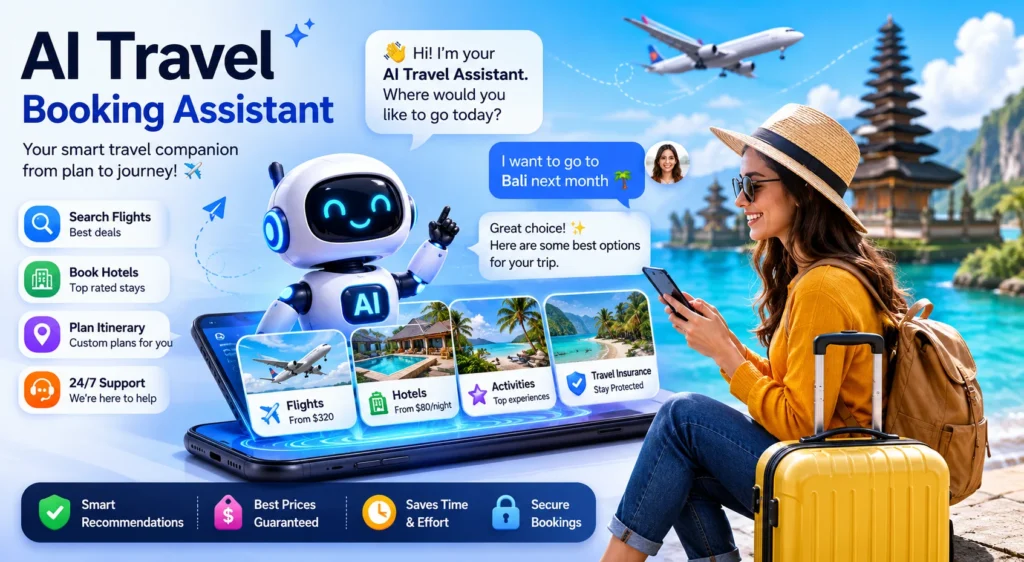
The landscape of online vacation planning has undergone a structural shift as Priceline officially announced the deployment of its next-generation, fully agentic AI travel booking assistant. The digital assistant, known as Penny, has been upgraded to execute end-to-end travel transactions, transitioning from a basic conversational search tool into an automated transaction agent. Travelers can now articulate complex, multi-destination itineraries and complete structural bookings across flights, hotels, and vehicle rentals directly within a unified chat interface.
According to official engineering releases from the online travel agency, the technology stack underlying Penny pairs proprietary reservation databases with advanced large language models. The integration marks a major milestone in consumer-facing travel utility, specifically targeting consumer decision friction and simplifying technical procurement for global tourists.
Multi-Model Architecture and Specialized AI Agents
Official technical specifications released on June 3, 2026, reveal that the next-generation booking ecosystem operates on an integrated multi-model network. The core conversational reasoning, long-running context management, and complex problem-solving capabilities are driven by the latest Claude models developed by Anthropic.
This core engine functions as a centralized coordinator for a system of more than 10 specialized, sub-tier digital agents. These independent units are programmatically designated to manage distinct facets of the booking pipeline, including targeted hotel catalog filtering, real-time commercial flight tracking, car rental inventory assessments, and customer support databases.
To complement this reasoning framework, Priceline’s AI infrastructure simultaneously utilizes specialized technologies from Google Cloud and OpenAI to anchor advanced search retrieval and natural voice recognition systems. The unified system connects users directly to live inventory from thousands of travel brands and hospitality providers across more than 110 countries.
Interactive Interfaces and Tailored Preference Mapping
A key structural feature of the upgraded platform is its live, interactive map interface. Rather than requiring users to toggle through isolated browser tabs, filter sidebars, or multiple search windows, the next-generation interface adjusts dynamically as a conversation unfolds. For example, a traveler can input a request to compare flight options from New York to Paris, Berlin, or Madrid for a specific seasonal window, and the platform will render cross-destination comparisons, pricing trade-offs, and geographic details in real time.
The updated framework also introduces a localized data layer focusing on user preference learning and memory retention. This system is designed to synthesize past booking behaviors with real-time, user-stated parameters to distinguish between historical habits and the unique requirements of an upcoming trip. It cross-references variables such as exact corporate budget limits, geographical proximity to local transit nodes, airline loyalty program memberships, and the fundamental purpose of the journey.
To address ongoing industry discussions surrounding digital privacy, the system incorporates user-facing data controls. Travelers maintain full visibility over what specific information the agent can access, providing an administrative foundation for data security as automated tools take a more active role in transaction management.
Editorial Features: Structured Data and Targeted Insights
The deployment includes specialized analytical features engineered to guide consumers through qualitative travel decisions. The system introduces two structured components: “Penny’s Pick” and “Penny’s Take.”
The first feature evaluates conversational context and overall financial value to deliver a single top recommendation across available transport and lodging options. The second feature, currently in a beta implementation phase for hotel properties, acts as a localized data synthesizer. It generates targeted, property-specific summaries explaining why a specific accommodation aligns with the stated goals of the trip, alongside essential operational details like pet allowances, bedding options, and property cancellation parameters.
| System Component | Technical Engine & Infrastructure | Target Travel Functionality |
| Conversational Core | Anthropic Claude Models | Multi-step reasoning and coordination of 10+ specialized agents. |
| Search & Voice Layer | Google Cloud & OpenAI Technology | Natural language processing, voice commands, and real-time query mapping. |
| Visual Mapping | Live Interactive Map Grid | Dynamic rendering of routes, hotel locations, and pricing parameters. |
| Preference Layer | Proprietary Memory & Data Stacks | Contextual differentiation between past history and current trip parameters. |
Documented Efficiency Gains and Market Impact
Statistical evaluations released by Priceline indicate that the implementation of agentic automation directly correlates with reduced booking friction and accelerated planning timelines. In early operational testing phases, consumer groups interacting with the automated assistant demonstrated stronger platform engagement and measurably higher booking conversion rates compared to traditional text-search baselines.
Internal performance metrics indicate that travelers utilizing the automated system saved an average of nearly 10 minutes per trip itinerary compared to consumers who utilized traditional phone-based customer care channels. Furthermore, independent industry verification from a March 2026 Evercore ISI evaluation ranked the system as a highly efficient end-to-end booking tool among tested AI-driven travel utilities.
By handling structural questions regarding booking policies in the moment, the system mitigates decision-making hesitation. As international tourism demand continues to expand throughout 2026, the stabilization of fully automated, agentic transaction layers is expected to redefine standard customer service frameworks, allowing international travelers to navigate global travel inventories with greater precision and structural speed.
For more travel news like this, keep reading Global Travel Wire