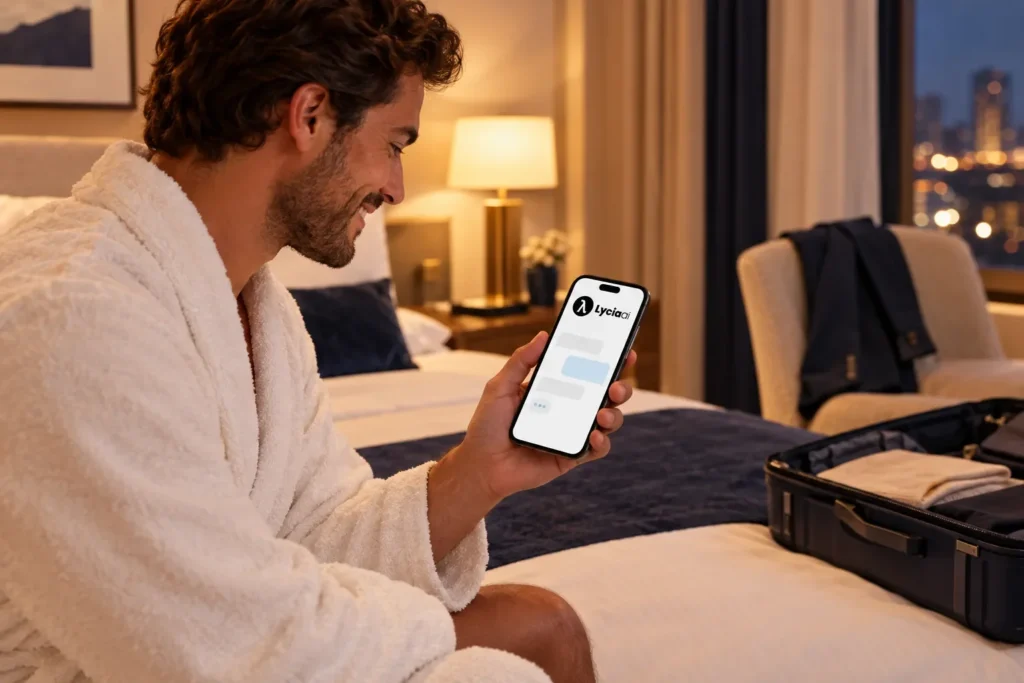
Voice-controlled rooms, digital check-in and automated deliveries are broadening the ways hotels can serve guests. Hospitality examples from the UAE, Singapore and China illustrate growing interest in technology that handles routine requests and gives travellers more control over their stay.
The supplied account describes extensive government coordination and cross-border biometric integration, but provides insufficient evidence to establish those claims. The clearest practical story concerns individual hotel services, how guests use them and whether reliable assistance remains available when digital tools fail.
Personalisation Begins With Useful Guest Preferences
A personalised room might allow guests to adjust lighting, temperature or entertainment through a digital interface. Hotels can also invite visitors to share preferences before arrival.
Those features become useful when they respond accurately to an individual request. A traveller arriving late may value a straightforward check-in process, while another guest may prefer help from an employee.
Operators need to explain which preferences they can accommodate and how information will be used. Clear choices help guests decide what they want to share.
The quality of the experience depends on delivery at the property.
Digital Services Cover Several Different Technologies
The term smart hotel can describe a broad range of systems. Voice assistants, mobile keys, automated messages and connected room controls perform different tasks.
Some functions operate through preset instructions. Others may use AI to interpret requests or generate responses.
For travellers comparing accommodation, the practical question is what a particular feature does. A description of its operation is more useful than a broad claim about intelligence or automation.
Hotels should identify supported languages, compatible devices and any steps guests need to complete before using a service.
China’s FlyZoo Example Highlights Connected Hospitality
Alibaba’s FlyZoo Hotel in Hangzhou features in the supplied material as an example of technology-led accommodation.
Its described services include facial-recognition access, robotic deliveries and interaction with the Tmall Genie voice assistant. These features show how several digital tools can form part of one property’s guest experience.
However, the account provides no basis for claiming that rooms learn guests’ biological rhythms or that employees perform only emergency maintenance.
Those assertions require evidence beyond the presence of connected controls and automated equipment. Property-level examples also need to be distinguished from a nationwide operating model.
Workforce Support Remains Central to Implementation
The Singapore discussion raises an important operational issue: employees need training to use new systems and assist guests.
Automation can handle repetitive requests, leaving staff more time for tasks requiring judgement or personal attention. That outcome depends on how the hotel organises work.
Employees still need to understand reservations, room access and escalation procedures when a digital process produces an unexpected result.
The supplied text identifies government programmes and mandatory standards without supporting documentation. Those details cannot establish specific funding entitlements or obligations for hotels.
Privacy Questions Start With the Information Collected
Personalised services can involve information about preferences, identity or behaviour. Guests should receive understandable explanations of what a hotel collects and why.
A preferred room temperature involves different information from a facial image used for access. Combining several services can make those distinctions harder to follow.
Travellers can ask whether participation is optional and what alternatives are available. Hotels can make the choice easier by presenting clear instructions during booking and arrival.
The supplied material does not substantiate claims of automatic immigration-triggered room lockouts or indefinite retention of hotel biometric records.
Reliable Alternatives Shape the Guest Experience
A mobile key or voice assistant needs a practical backup when a guest cannot use it.
Device problems, connectivity issues and unfamiliar interfaces can interrupt an otherwise straightforward task. Staff assistance and alternative access arrangements help keep those problems manageable.
Accessibility also matters. A voice-led service may suit some guests, while others need physical controls, readable instructions or direct support.
Before promoting a feature, hotels should understand who can use it and how a visitor completes the same task another way.
Travellers Need Property-Specific Details
Visitors considering AI hotel rooms should compare the advertised features with their own requirements.
Useful details include how check-in works, whether an app is necessary and how to contact staff. Guests staying for work may also want to confirm workspace facilities and internet arrangements.
The supplied examples establish interest in technology-supported hospitality, while broader claims about a universal biometric travel identity remain unverified.
For hotels, the opportunity lies in delivering services that work consistently. For guests, the benefit will come from clear choices, dependable room functions and accessible help throughout the stay.
For more travel news like this, keep reading Global Travel Wire