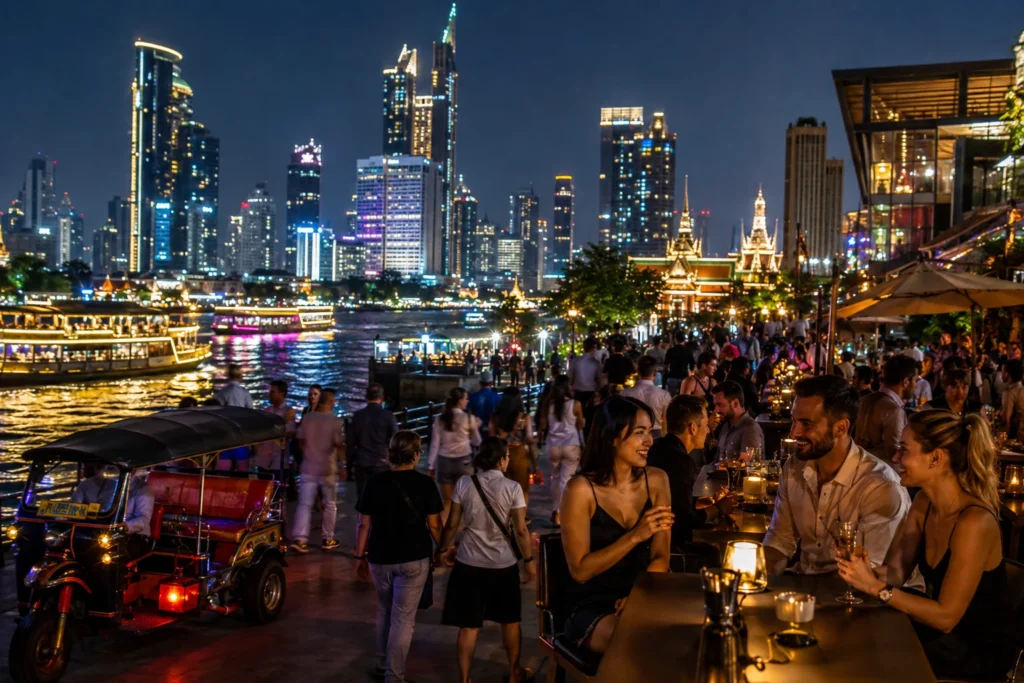
The global hospitality landscape is experiencing a significant shift as Southeast Asia’s most iconic metropolis expands its international appeal. Moving far beyond historic perceptions, Thailand’s capital has surged to the forefront of global entertainment, combining world-class entertainment venues, elevated culinary destinations, and traditional street experiences. Official arrival metrics and international hospitality assessments confirm the city’s position as both a top-tier destination for international visitors and a global leader in urban after-dark culture.
According to official tourism statistics released by the Ministry of Tourism and Sports, Thailand continues to register major international visitor volumes, with cumulative foreign arrivals passing 18.5 million in the first seven months of the year alone. Bangkok remains the central gateway for incoming foreign traffic, welcoming millions of international guests annually who contribute significantly to the national hospitality sector.
Architectural Diversity and Neighborhood-Level Transformation
The city’s rapid ascent in global entertainment surveys reflects its diverse operational formats across historic and modern districts. Unlike destinations that restrict nightlife activities to centralized districts, the Thai capital integrates hospitality venues seamlessly within residential, commercial, and heritage zones.
In historic Chinatown, traditional commercial streets have undergone comprehensive cultural preservation and adaptive reuse. Multi-story historic shophouses along prominent lanes now host specialized craft cocktail establishments and live performance spaces alongside long-established culinary vendors. This balanced co-existence allows traditional food heritage and modern hospitality to operate within the same physical footprint, offering international travelers a rich, multi-layered evening experience.
A prominent example of this operational model is the continued success of cultural venues like Sing Sing Theatre, which caters to an international mix of residents, expatriates, and overseas travelers. Venue diversity across the metropolis spans from intimate listening lounges to expansive multi-level performance centers, catering to a wide range of global traveler preferences.
Elevated Hospitality and Skyline Developments
A key driver of the capital’s growing international reputation is the rapid expansion of its high-altitude hospitality sector. Property developers and hotel operators have increasingly utilized high-rise infrastructure to establish premium rooftop venues, transforming the city’s skyline into a primary tourism draw.
Among the notable developments highlighted in global destination surveys is ÆTHER, situated on the 44th floor of Dusit Central Park, offering panoramic urban views and refined hospitality services. Similarly, venues like Sato San, located on the 32nd floor of Moxy Bangkok Ratchaprasong, demonstrate how modern hotel design leverages elevated spaces to attract international visitors seeking lifestyle-oriented experiences.
These high-altitude establishments operate alongside an extensive late-night culinary ecosystem at ground level. Midnight dining culture plays a crucial structural role in the city’s tourism economy, with traditional food stalls and local eateries remaining operational deep into the night. The continuous availability of freshly prepared regional cuisine provides seamless continuity between formal entertainment venues and public streetscapes.
Inclusivity and Specialized District Economies
The capital’s nightlife economy is further strengthened by specialized commercial zones catering to diverse traveler segments. The Silom district continues to serve as an international benchmark for LGBTQ+-friendly tourism, hosting a dense concentration of hotels, performance venues, and dining establishments within a central business location. High weekday and weekend traffic from office workers, local residents, and international tourists ensures year-round economic viability for the area.
Meanwhile, other commercial districts provide contrasting hospitality models tailored to distinct market segments:
Thong Lor: Focuses on premium dining lounges, high-end clubbing, and luxury concepts targeted at affluent travelers and resident communities.
Khao San Road: Serves as an established hub for independent budget travelers, characterized by outdoor social venues, street side services, and accessible leisure options.
Riverside Precinct: Integrates luxury hotel lounges and historic waterfront dining facilities along the Chao Phraya River.
While historical entertainment districts such as Patpong, Nana Plaza, and Soi Cowboy continue to draw international attention due to legacy tourism associations, official tourism policies emphasize strict regulatory oversight, safety enhancements, and broader diversification across all nightlife corridors.
Strategic Economic Impact on National Tourism
The integration of varied hospitality formats—ranging from street vendors to luxury sky lounges—provides the destination with a distinct competitive advantage over major international peers. The Ministry of Tourism and Sports notes that late-night commercial activity generates significant direct spending across transport networks, accommodation providers, and food service sectors.
As the Tourism Authority of Thailand continues implementing targeted marketing initiatives and streamlined entry procedures, the capital’s dynamic after-dark economy remains a key pillar of its global tourism identity. By pairing rich cultural heritage with world-class service standards, the city secures its standing as a primary hub for global travel and urban exploration.
For more travel news like this, keep reading Global Travel Wire