European tourism markets are attracting renewed investor attention as hospitality groups expand their acquisition strategies across major gateway cities and high-demand leisure destinations. The latest signal comes from Trinity Investments, which is widening its investment criteria for Europe after identifying strong long-term opportunities in premium hotels located in resilient travel markets.
The move reflects a broader trend across the tourism sector: investors are increasingly seeking quality assets in destinations with strong visitor demand, limited new supply, and long-term growth potential. From Barcelona and London to Zurich and Southern Europe, hotel real estate is becoming a key indicator of confidence in Europe’s travel recovery and future tourism expansion.
Europe Remains a Prime Tourism Investment Zone
Europe continues to be one of the world’s most visited regions, supported by rich cultural heritage, mature transport networks, strong domestic travel demand, and year-round international appeal.
Major cities such as London, Barcelona, Paris, Rome, Zurich, Amsterdam, and Lisbon attract a mix of leisure visitors, business travelers, luxury guests, and event attendees. Coastal destinations and Mediterranean resorts add seasonal strength, creating broad opportunities for hotel operators and investors.
For this reason, European hotel investment remains highly attractive. Investors are not only buying buildings; they are buying exposure to future tourism demand, rising room revenues, and long-term destination appeal.
Trinity Broadens Its Strategy in Europe
After entering Europe with several notable acquisitions, Trinity Investments has indicated that it is broadening the type of opportunities it will consider across the region.
Traditionally, the company focused on larger hotels in strong leisure markets with high barriers to entry. These are destinations where land is limited, development is restricted, and tourism demand remains consistently high.
However, Europe’s hotel market is fragmented. Many attractive opportunities involve smaller properties, mixed-use assets, or urban lifestyle hotels rather than only large-scale trophy assets.
By adapting its criteria, the company can access a wider range of opportunities while still focusing on high-quality destinations and premium hospitality products.
This flexibility mirrors a growing industry mindset: smart investment now depends on agility as much as scale.
Barcelona, London and Zurich Show the Trend
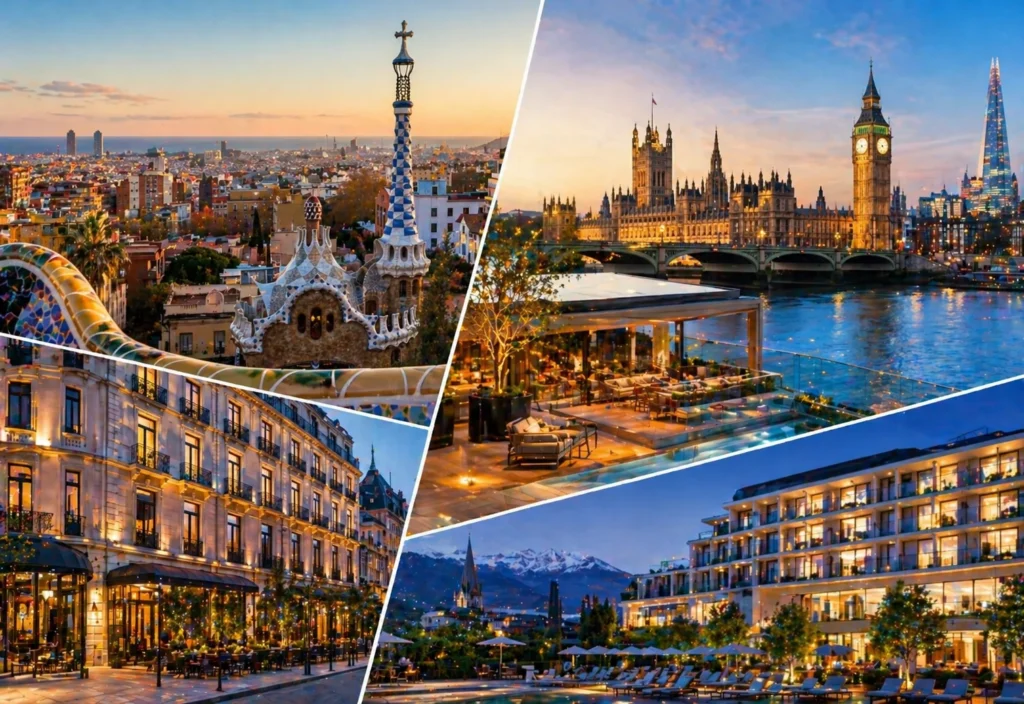
The group’s existing European portfolio includes properties in Barcelona, London, and Zurich, three cities that represent different but equally strong tourism fundamentals.
Barcelona combines beach appeal, architecture, events, gastronomy, and strong international demand. It is one of Europe’s leading city-break destinations and remains popular with both leisure and lifestyle travelers.
London offers unmatched global connectivity, corporate demand, entertainment, culture, and premium hotel performance. It remains one of the world’s most liquid and sought-after hospitality markets.
Zurich brings a different profile, with financial sector demand, high-end tourism, strong spending power, and a reputation for stability.
Together, these cities highlight a clear investment thesis: quality hotels in quality markets.
Why Quality Assets Matter in Tourism
Investors often favor premium assets in strong destinations because they tend to perform better during market volatility.
When economic uncertainty, geopolitical shocks, or travel disruptions occur, the best-located hotels in desirable destinations often recover faster. Guests continue choosing trusted markets and recognized products even during softer periods.
High-quality assets may also command stronger room rates, attract international brands, and generate better long-term value through refurbishment or repositioning.
For tourism destinations, this is positive news. It means leading cities continue receiving capital that can improve hotel stock, raise standards, and enhance visitor experiences.
Southern Europe Draws Growing Interest
Southern Europe remains especially attractive thanks to powerful leisure demand. Countries across the Mediterranean continue benefiting from sun-and-sea tourism, cultural travel, cruise activity, food tourism, and rising remote-work stays.
Spain, Portugal, Italy, Greece, Croatia, and parts of southern France have all seen strong interest from travelers seeking warm-weather escapes and lifestyle experiences.
For hotel investors, these markets offer strong seasonal performance and international appeal. However, many available properties are smaller, family-owned, or individually operated, which can make large-scale acquisitions more complex.
That challenge is encouraging investors to consider portfolios, partnerships, and creative deal structures rather than waiting only for landmark single-asset transactions.
Urban Hotels Are Back in Focus
Another important shift is growing interest in urban hotels. City properties were once viewed cautiously during the travel slowdown, but strong returns of international tourism, events, and corporate travel have improved confidence.
Modern urban hotels now benefit from multiple demand streams:
Leisure city breaks
Business meetings
Concert and event travel
Weekend tourism
Bleisure trips combining work and leisure
Lifestyle brands, design-led hotels, and mixed-use properties are particularly attractive because they appeal to younger travelers and experience-focused guests.
This helps explain why cities like Barcelona and London remain high on investor watchlists.
What This Means for Travelers
For travelers, renewed investment often leads to better hotel experiences.
When properties change ownership or attract fresh capital, guests may benefit from:
Renovated rooms and public spaces
Improved service standards
New food and beverage concepts
Enhanced wellness facilities
Upgraded technology and digital services
Stronger sustainability features
In practical terms, this means more choice and better quality across Europe’s accommodation market.
Whether visiting for a luxury holiday, business conference, family city break, or cultural tour, travelers often benefit directly from the investment cycle.
Supply Constraints Add Value
One reason many European cities remain attractive is limited new hotel supply. Historic centers, planning restrictions, land shortages, and preservation rules can make large-scale new development difficult.
This creates value for existing hotels in prime locations because demand can grow faster than available rooms.
Cities with lodging restrictions or slower development pipelines may see stronger long-term performance for well-positioned assets.
For investors, scarcity supports pricing power. For destinations, it reinforces the need to maintain quality and diversify accommodation options.
Long-Term Outlook for European Tourism
Europe’s tourism fundamentals remain strong. The region offers unmatched diversity, from world capitals and beach resorts to ski destinations, wellness retreats, vineyards, and heritage towns.
Improved air connectivity, rail networks, and digital booking systems continue making multi-country travel easier than ever.
As global travel demand grows, Europe is likely to remain a core destination for long-haul visitors from North America, the Middle East, Asia, and within the continent itself.
That is why hotel capital continues to flow into the region.
Final Take
European hotel investment is entering a more flexible and opportunity-driven phase. Rather than focusing only on mega deals, investors are widening their search to include lifestyle hotels, city assets, portfolios, and strategic leisure markets.
For tourism, this is an encouraging sign. Capital investment supports better hotels, stronger destinations, and improved guest experiences across the continent.
From Barcelona to Zurich and from London to Southern Europe’s coastlines, Europe’s travel economy continues to prove that quality destinations remain powerful magnets for both visitors and investors.