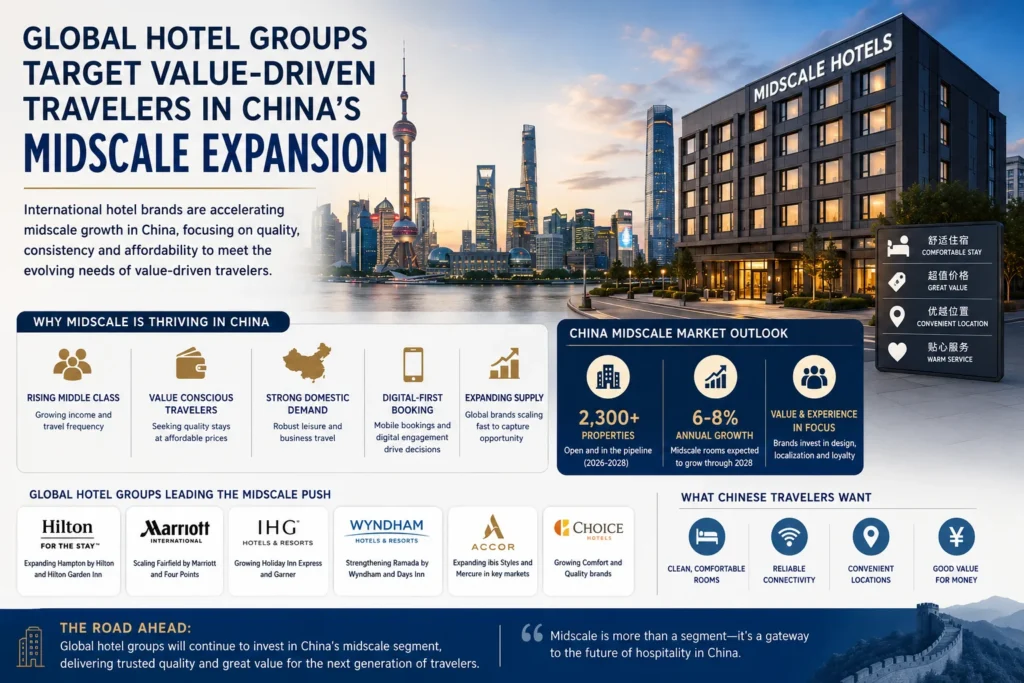
As domestic tourism trends reflect strong overall volume combined with mindful consumer spending, international hotel chains are rapidly expanding their footprint across China’s midscale and upper-midscale lodging segments. Global hotel operators are recalibrating development strategies to capture price-sensitive travelers who prioritize high-quality accommodations, reliable service standards, and brand reputation at accessible daily price points.
Recent announcements from major international hotel groups demonstrate a deliberate strategic pivot toward lifestyle, select-service, and midscale brands across first-tier metropolises and emerging secondary cities. This expansion comes as domestic leisure travelers, young working professionals, and cross-border visitors seek value-driven travel experiences without compromising on comfort or amenity quality.
Official Tourism Statistics Highlight Robust Market Volume
Official tourism statistics released by the Ministry of Culture and Tourism highlight strong consumer participation across the national travel market. According to official survey data, domestic tourist trips reached 1.90 billion during the first quarter, representing a 6 percent year-on-year increase. Total domestic tourism expenditure generated 1.86 trillion yuan over the same three-month period, demonstrating solid baseline demand for travel and leisure activities.
Concurrently, official statistics from the National Immigration Administration reveal a sharp rise in cross-border travel, supported by expanded unilateral visa-free policies and streamlined entry procedures. Inbound entries by foreign nationals surpassed 21.3 million during the first quarter, marking a 22.3 percent year-on-year surge.
While total travel volume and cross-border entries continue to expand, per-trip spending metrics indicate that domestic consumers are exercising careful budget management. The combination of high trip frequency and calculated per-visit spending has created fertile ground for midscale and upper-midscale lodging properties that offer modern architectural design, reliable digital services, and attractive room rates.
Major Global Hotel Chains Accelerate Midscale Initiatives
To capture evolving consumer preferences, multinational hospitality corporations are introducing new sub-brands and expanding existing select-service portfolios across mainland China.
Hilton has announced plans to expand its lifestyle presence in China, introducing its Tempo brand to key urban destinations, including Beijing, Xiamen, Chengdu, and Jiaxing. The move complements the group’s established upper-midscale brand, Hampton, which has grown rapidly across metropolitan and regional markets. By delivering quality amenities, contemporary interiors, and primary city locations at accessible daily rates, these brands attract younger travelers and cost-conscious corporate guests.
Marriott International introduced its Series brand in the domestic market, focusing on hotel conversions that integrate independent lodging properties into the group’s global reservation network and loyalty platform. Official statements emphasize that the launch directly addresses shifts in traveler behavior, as consumers seek reliable accommodation quality combined with local cultural experiences and attractive value propositions.
Similarly, InterContinental Hotels Group announced the expansion of its Garner brand into Beijing, introducing midscale accommodations designed for efficient property conversions and accessible price points. Hyatt Hotels Corporation has also entered strategic development partnerships with domestic hotel groups to accelerate the rollout of its select-service brands, targeting mid-to-upscale business and leisure travel corridors across secondary municipal centers.
Strategic Drivers Behind the Midscale Market Shift
The pivot into midscale lodging segments offers global hotel groups several operational advantages within China’s evolving travel ecosystem:
Loyalty Program Recruitment: Expanding midscale properties enables international chains to recruit first-time members into global loyalty programs. Younger domestic travelers entering the workforce gain early exposure to established hospitality brands through budget-friendly initial stays.
Inbound Foreign Traveler Capture: As cross-border entry policies expand and international air routes recover, overseas visitors accustomed to global hotel networks gain access to recognized brand standards outside traditional luxury properties.
Rapid Conversion Models: Franchise and conversion-led models allow hotel groups to scale efficiently by rebranding existing properties, reducing capital expenditure requirements while enforcing standardized operational criteria.
While global hotel chains possess strong international brand equity, domestic hospitality companies have established extensive property networks, efficient operating platforms, and highly engaged domestic member bases. The competition between international operators expanding downward into midscale tiers and domestic brands upgrading their service offerings is creating a highly dynamic lodging ecosystem.
Long-Term Outlook for China Hospitality Sector
The alignment between official tourism facilitation policies and international hotel investment underscores the resilience of China’s travel economy. Government measures aimed at stimulating domestic consumption, developing regional cultural tourism circuits, and expanding international transit connectivity provide a supportive framework for continued lodging sector growth.
As global hotel groups execute multi-brand development strategies, midscale and lifestyle properties will play an increasingly vital role in absorbing consumer demand. By delivering consistent hospitality standards, contemporary design, and competitive pricing, international brands are well-positioned to support the next phase of sustainable tourism development across China.
For more travel news like this, keep reading Global Travel Wire