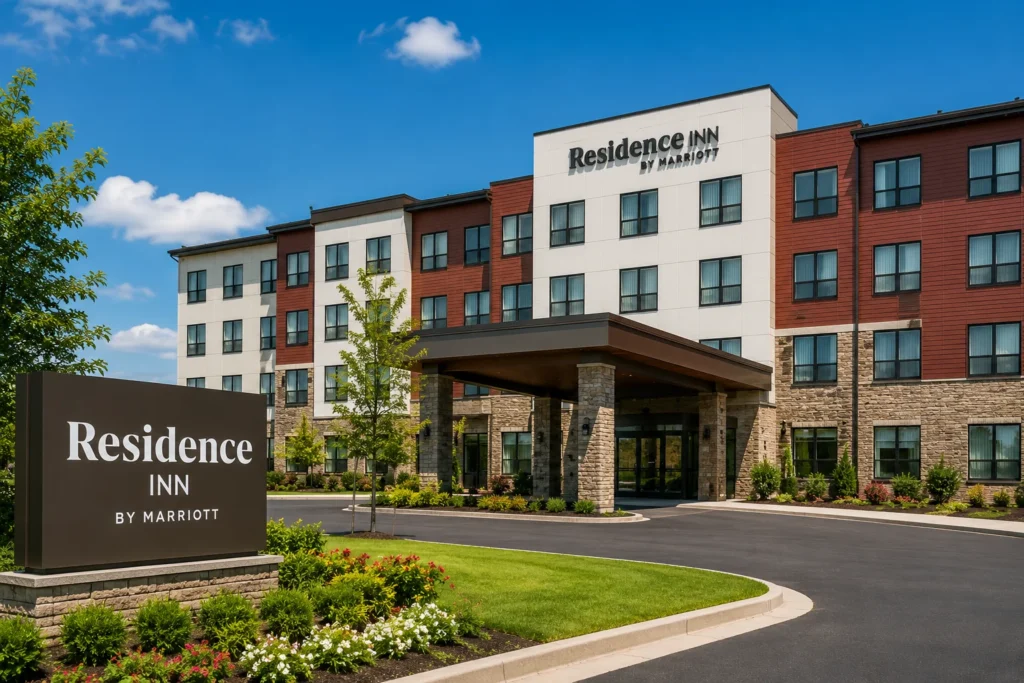
Commercial real estate capital allocation in New England continues to highlight the strategic value of extended-stay lodging assets located along major suburban transit corridors. Capital markets advisors have closed a $13.5 million acquisition sale and financing structure for the Residence Inn Boston North Shore/Danvers, a 96-room extended-stay property located in Essex County, Massachusetts.
Situated at 51 Newbury Street along U.S. Route 1, the property sits directly at the intersection of Interstate 95 and Massachusetts Route 128. Positioned roughly 20 miles north of Boston and within seamless reach of Boston Logan International Airport, the location serves as a critical lodging hub for both business travelers and regional leisure tourists exploring coastal Massachusetts.
The transaction transfers ownership from an affiliate of real estate investment group PEG Companies to buyer Torrington Properties. Under the structure of the deal, the asset continues uninterrupted hospitality operations under the Residence Inn brand while retaining municipal adaptive-reuse entitlements for future residential conversion.
Strategic Regional Positioning and Extended-Stay Hospitality Features
The hotel complex occupies a 4.11-acre site originally developed to capture regional leisure and corporate accommodation demand across the North Shore corridor. Built in 1989, the property features specialized suite layouts tailored for long-term travelers, featuring fully equipped kitchen facilities, open living areas, dedicated meeting space, a fitness center, and seasonal outdoor recreational amenities.
From an economic perspective, extended-stay assets located within suburban submarkets maintain strong occupancy fundamentals due to their proximity to key regional attractions and commercial centers. Guests staying at the property gain direct access to regional shopping destinations such as Liberty Tree Mall and Northshore Mall, as well as historic coastal tourism districts across Salem, Beverly, and Cape Ann.
Public records show that regional lodging supply within the immediate North Shore submarket has experienced zero new hotel additions over the past decade. This limited inventory growth reinforces strong occupancy rates and elevated average daily room rates across existing hotel properties, preserving steady cash-flow generation for regional lodging operators.
Dual-Track Asset Strategy Addresses Regional Housing and Lodging Needs
A central element driving capital investment into the 96-room asset is its dual-track valuation model. The property offers incoming ownership operational flexibility to capture current extended-stay travel demand or execute an approved real estate conversion strategy.
Prior to the transaction, previous ownership secured formal zoning approvals from the Danvers Zoning Board of Appeals. The entitlement permits the conversion of the existing lodging footprint into an 88-unit residential apartment community.
Municipal adaptive-reuse approvals provide an efficient conversion pathway within a high-barrier suburban housing market facing structural supply constraints. In urban and suburban markets across the Greater Boston metropolitan area, building costs and high land valuations create significant barriers to ground-up multifamily construction. Converting existing extended-stay hotel units—which already feature localized plumbing and kitchen configurations—offers a cost-effective alternative to satisfy local residential demand while maximizing land utilization.
Capital Allocation and Market Outlook for Regional Travel Corridors
Capital markets advisors specialized in hotel transactions and structured debt financing coordinated the investment sale and secured acquisition funding for the buyer. Transaction advisors highlighted that suburban travel markets surrounding major metropolitan regions continue to attract resilient investment capital due to their balanced mix of economic drivers.
By pairing immediate lodging income with de-risked residential entitlements, property owners can adjust asset operations based on shifting broader economic conditions. Whether operating fully within the regional tourism matrix or transitioning toward long-term residential housing, well-located suburban hospitality properties remain core drivers of regional economic activity across northern Massachusetts.
For more travel news like this, keep reading Global Travel Wire