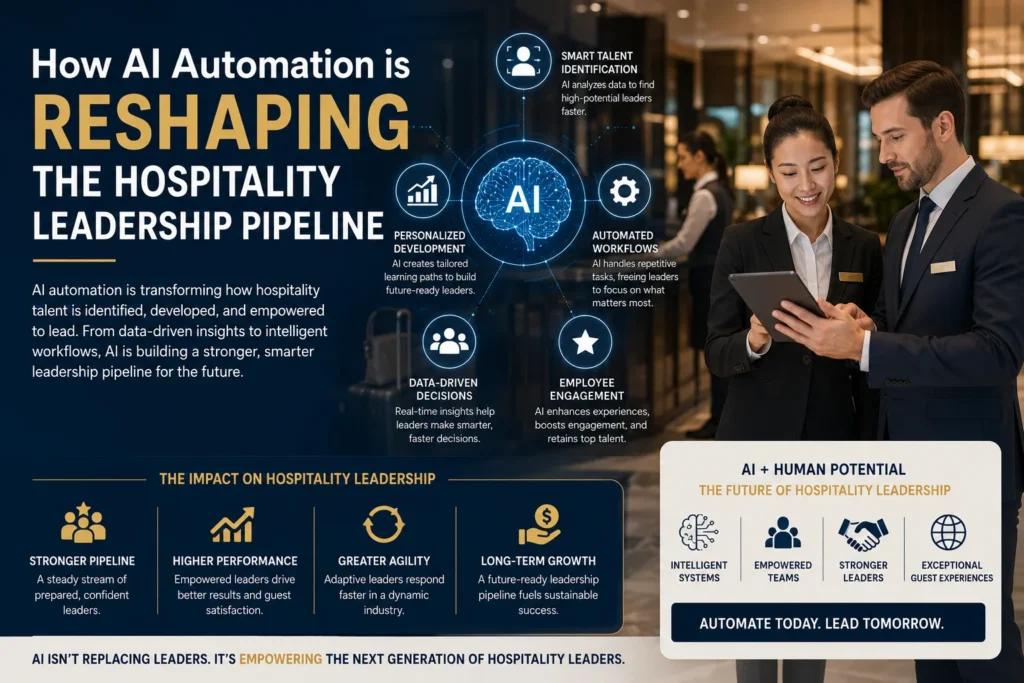
Artificial intelligence and automated service solutions are rapidly transforming the global tourism and lodging sector. From contactless digital check-in kiosks to automated revenue algorithms, hotel operators are streamlining workflows to enhance operational efficiency. However, as routine tasks and entry-level positions are automated, industry experts and tourism policy leaders are raising fundamental questions about the long-term health of the hospitality leadership pipeline.
For decades, operational entry-level roles—such as front desk agents, night managers, reservation clerks, and assistant stewards—served as the essential training ground for future general managers and corporate executives. As technology replaces these foundational roles, the traditional career pathway from entry-level hospitality staff to executive leadership faces significant structural disruption.
Eliminating Entry-Level Training Grounds in Modern Hotel Operations
The accelerated adoption of artificial intelligence in guest management systems has diminished traditional human touchpoints across mid-scale and luxury hotel properties. Guests increasingly utilize online portals to complete pre-arrival verification, select rooms, and access digital keys, bypassing front desk interaction entirely. Meanwhile, automated inventory systems handle complex revenue management functions that previously required hands-on analysis by junior analysts.
While these technological advancements reduce labor costs and eliminate administrative redundancies, they simultaneously remove the experiential learning opportunities that historically shaped hotel leaders. Managing overbooked nights, resolving real-time guest grievances at check-in, and navigating unexpected property emergencies provided junior managers with critical problem-solving skills and operational judgment.
Without exposure to these foundational experiences, upcoming industry professionals face a gap between technical theory and practical crisis resolution. The traditional career trajectory—where executives earned authority through years of frontline operational problem-solving—is being altered by digital interfaces that process transactions without human intervention.
The Shift From Hands-On Operational Mastery to Data Management
As automation handles daily administrative tasks, the role of the hotel employee is shifting from executing operational routines to evaluating and interpreting data points. Frontline staff are increasingly tasked with overseeing digital dashboards, managing automated guest requests, and auditing AI-generated pricing models.
While digital literacy is essential in modern hotel management, over-reliance on automated systems risks diluting core service skills. In many contemporary hotel environments, staff reliance on digital search engines and automated messaging applications has reduced direct, intuitive guest engagement. Experienced hoteliers emphasize that operational judgment is built through repeated, hands-on practice over time.
Much like commercial flight pilots who must maintain manual flying competency despite advanced autopilot technology, hotel managers require foundational operational skills to step in during system outages, unexpected service spikes, or complex guest disputes. Understanding core cost structures, kitchen logistics, and room management from the ground up remains vital to leading teams effectively.
Restructuring Hospitality Education and Vocational Career Pathways
The rapid integration of AI coincides with broader workforce challenges across the global travel and tourism sector. Official workforce projections from international tourism organizations highlight a growing talent supply gap across key global markets. At the same time, enrollment in specialized tourism, hotel management, and event administration programs has experienced noticeable declines worldwide.
To adapt to these structural shifts, academic institutions and hotel training academies are working closely with national tourism boards and government education ministries to update curricula. Modern educational frameworks are placing greater emphasis on hybrid learning models that combine advanced technology management with intensive practical simulations.
To preserve core operational competencies, several international hotel schools are introducing specialized training modules that require students to execute hotel management tasks without automated assistance. By mastering manual inventory allocation, hands-on culinary preparation, and face-to-face conflict resolution, future leaders maintain a clear understanding of the operational fundamentals that underpin high-quality guest service.
Cultivating Transferable Skills to Secure Future Hotel Leadership
To safeguard the future leadership pipeline, hotel groups and corporate recruiters are shifting away from rigid career path models. Rather than relying solely on traditional step-by-step promotions within a single department, organizations are prioritizing transferable leadership skills, such as emotional intelligence, adaptive decision-making, strategic communications, and team mentorship.
Industry recommendations for building a resilient workforce pipeline include:
Developing Cross-Functional Rotation Programs: Structuring management trainee initiatives that expose rising professionals to food and beverage operations, guest relations, asset management, and digital strategy.
Integrating Human-Centric AI Training: Teaching junior staff how to leverage automated tools to enhance guest personalization rather than using technology as a substitute for service.
Forming Strategic Academic Partnerships: Collaborating with accredited hospitality universities to ensure degree programs align with evolving industry technology while maintaining practical vocational standards.
Promoting Internal Talent Mobility: Identifying non-traditional talent pools within broader service sectors and transferring leadership skill sets into hotel management roles.
As artificial intelligence continues to automate routine hospitality operations, industry stakeholders must actively design structured learning environments for rising talent. Ensuring that the next generation of hotel executives develops both technical fluency and authentic human leadership skills remains essential to sustaining global tourism quality and operational excellence.
For more travel news like this, keep reading Global Travel Wire