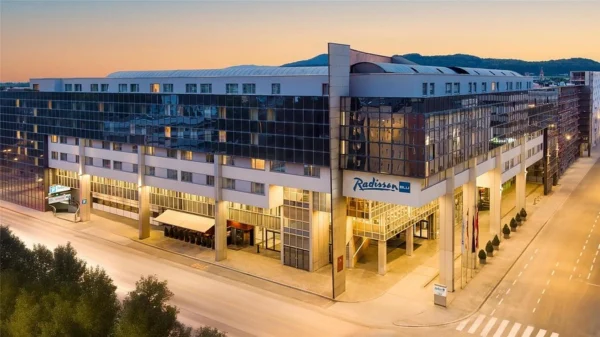
Radisson Blu Hotel & Conference Centre, Salzburg has officially opened as the Austrian city’s largest conference hotel, adding 262 rooms and suites alongside 1,785 square metres of meeting and event space to one of Central Europe’s best-known cultural destinations.
The upper-upscale property features 16 flexible event venues and a 960-square-metre ballroom capable of accommodating up to 1,000 guests. Its combination of accommodation, conference infrastructure, dining and wellness facilities gives Salzburg a significant new platform for attracting international congresses, corporate meetings, incentive groups and large social events.
The opening strengthens Salzburg’s ability to combine business events with cultural and Alpine tourism. Delegates can attend conferences while accessing the historic centre, classical music venues and regional attractions, creating opportunities for longer stays and greater visitor spending.
Large Ballroom Anchors Event Offering
The Salzburg Hall forms the centrepiece of the hotel’s meetings infrastructure. The ballroom can operate as one 960-square-metre venue or be divided into two spaces measuring 540 and 420 square metres.
This flexibility allows organisers to stage congresses, exhibitions, product launches, gala dinners and corporate presentations within the same property. Smaller rooms support board meetings, workshops, breakout sessions and private gatherings.
All 16 event spaces provide modern technology and complimentary Wi-Fi, helping organisers manage hybrid meetings, presentations and multi-room programmes. The hotel’s ability to host up to 1,000 participants also introduces additional competition within Salzburg’s established convention market.
The property does not overtake Salzburg Exhibition Centre as the city’s largest overall event location. However, it becomes Salzburg’s largest hotel-based conference venue, combining substantial event capacity with guestrooms and full-service hospitality under one roof.
Central Location Improves Delegate Access
The hotel is positioned close to Salzburg Main Railway Station, providing convenient rail access for delegates travelling from Austrian and neighbouring European cities.
Direct train connections link Salzburg with Vienna, Munich and Zurich, while the historic centre can be reached on foot or by public transport. This accessibility may help event organisers reduce dependence on private transfers and simplify arrival arrangements for international groups.
Salzburg Airport provides additional access for overseas participants and serves more than 1.8 million passengers annually. The city’s road and rail connections also support regional events attracting visitors from Germany, Switzerland, the Czech Republic and other Central European markets.
The hotel offers an underground parking garage, supporting domestic delegates and conference suppliers arriving by road.
Rooms Support Business and Leisure Stays
The property’s 262 rooms and suites are designed for both conference delegates and leisure guests. Accommodation includes standard, superior, premium, family and executive options, as well as suites.
Executive rooms and suites provide access to a rooftop Club Lounge with views towards the Alps. The combination of workspaces, Wi-Fi and multiple room categories allows organisers to accommodate speakers, executives, families and larger corporate groups within the same building.
The integrated inventory may reduce the need to distribute major event participants across several hotels. This can simplify group logistics while generating additional demand for food, beverages, meetings and extended stays.
Dining and Wellness Encourage Longer Visits
Baroque Restaurant, Bistro and Bar provides Austrian and regional cuisine, placing local flavours within the conference and hotel experience. Tamino serves breakfast and offers terrace access during warmer periods.
The wellness area includes an indoor swimming pool, sauna, fitness facilities and relaxation spaces. These amenities support the growing “bleisure” market, in which delegates extend professional trips for leisure or combine meetings with wellness and destination experiences.
For Salzburg’s tourism economy, longer delegate stays can benefit restaurants, cultural venues, retailers, guides and transport providers beyond the hotel itself.
Culture Strengthens Salzburg’s MICE Appeal
Salzburg’s international identity gives the new property an advantage beyond its conference facilities. The UNESCO-listed historic centre, Mozart heritage, Hohensalzburg Fortress and internationally recognised performance calendar provide ready-made programmes for incentive groups and accompanying travellers.
The Salzburg Festival will run from July 17 to August 30 in 2026, presenting opera, theatre and concerts. Such major cultural events can create opportunities for corporate hospitality, pre-event visits and extended itineraries, although they may also increase seasonal pressure on room availability.
Groups can also combine city meetings with excursions to the Salzkammergut lake district, Alpine communities and surrounding natural attractions.
New Capacity Strengthens Central European Competition
The Radisson Blu opening does not automatically make Salzburg Central Europe’s leading MICE destination, where established convention cities continue to compete through larger venues and extensive international air connectivity.
However, the hotel substantially improves Salzburg’s ability to bid for events requiring guestrooms, large plenary capacity and breakout spaces in one location.
Its scale, railway access, international branding and proximity to major cultural attractions create a strong proposition for organisers seeking alternatives to larger capitals.
As business travel and incentive programmes increasingly combine productivity with memorable local experiences, the Radisson Blu Salzburg conference hotel gives the city a valuable new asset. The opening could support stronger hotel occupancy, visitor spending and international event demand while reinforcing Salzburg’s position as a distinctive cultural and meetings destination in Central Europe.
For more travel news like this, keep reading Global Travel Wire