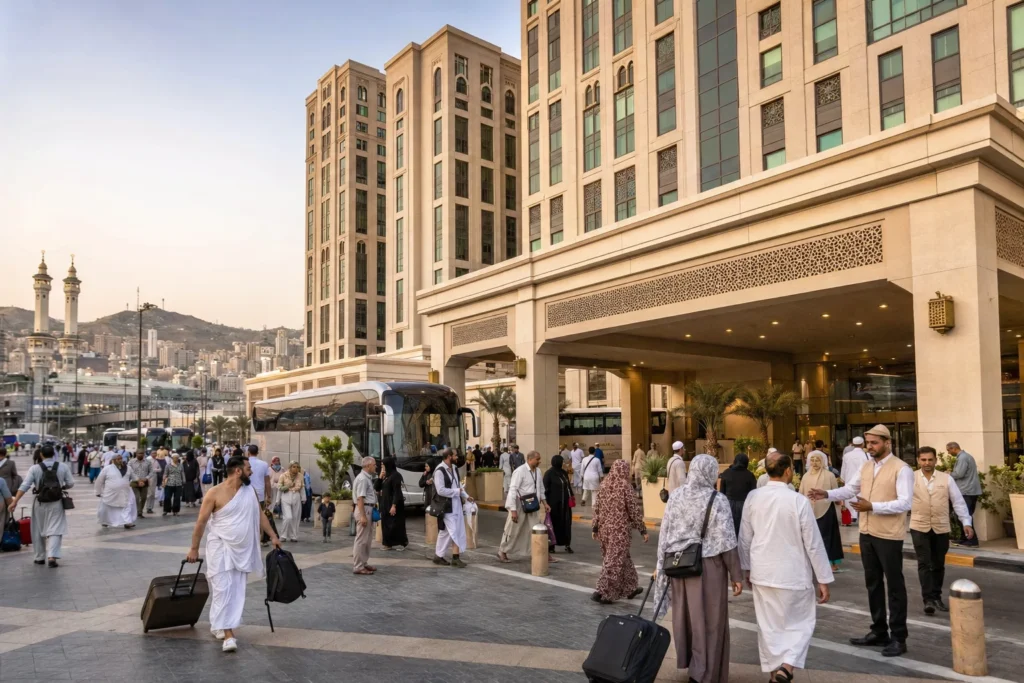
The landscape of spiritual hospitality in the Kingdom of Saudi Arabia is undergoing an unprecedented operational evolution as multi-tiered infrastructure investments realign to support record-breaking crowds. In a major development, global hotel manager Accor has finalized a long-term corporate partnership with real estate investment firm Saleh Abdulaziz Al Rajhi & Partners to debut the ibis Makkah Al Maabdah. The massive 518-key property is scheduled to welcome international arrivals by 2031, marking a structural turning point in the destination’s midscale urban footprint. Strategically positioned just three kilometers from the Holy Mosque (Al-Masjid al-Haram), this high-volume hotel project responds directly to changing travel patterns among global visitors, who increasingly demand reliable, cost-effective corporate standard lodging during their sacred journeys.
Official baseline statistics published by the Ministry of Tourism and monitored under the comprehensive Pilgrim Experience Program confirm that Saudi Arabia religious tourism has entered a historic phase of volume growth. The Kingdom successfully welcomed more than 123 million international and domestic visitors by the end of 2025, completely outperforming initial state estimates and prompting planning agencies to revise the national target upward to 150 million total annual visitors by 2030. At the heart of this soaring volume is the rapid influx of foreign Umrah pilgrims, a specific sub-segment projected to scale to 30 million travelers annually under the strategic framework of Saudi Vision 2030. To house this expanding global demographic without creating real estate bottlenecks near historical sites, development agencies are shifting focus away from traditional independent properties toward globally recognized, high-efficiency brand options.
Reshaping the Makkah Hospitality Inventory
For decades, the accommodation landscape in the holy cities was distinctly polarized, heavily dominated by independent, unbranded regional hotels or highly exclusive luxury suites located immediately adjacent to the central prayer courtyards. However, active consumer tracking data maintained by the Ministry of Hajj and Umrah indicates a dynamic shift in traveler behaviors. Modern pilgrim groups—particularly multi-generational families and cost-conscious travelers arriving from growing hubs in Southeast Asia, Central Asia, and Africa—are extending their average lengths of stay, demanding structured, international economy and midscale options.
The upcoming property addresses this supply-demand gap by bringing an established global hospitality model to one of the most critical spiritual centers in the world. The structural layout of the facility includes dual full-service dining establishments, a dedicated lounge, and flexible, state-of-the-art banqueting spaces engineered to comfortably process massive daily guest turnarounds during peak travel seasons like Ramadan. By adding this inventory, the international operator expands its market leadership footprint within the holy cities, scaling an active portfolio that already features 15,000 live rooms alongside an additional 8,000 rooms currently navigating the regional development pipeline.
Strategic Alignment with Saudi Vision 2030 Core Mandates
Regional corporate leadership teams confirm that the rapid expansion of affordable, reliable travel options is a foundational requirement to achieve the economic diversification targets set by the state. The modern traveler ecosystem expects consistent service delivery, and by introducing highly recognizable international value brands, infrastructure developers can ensure that Makkah remains competitive, accessible, and smooth-flowing for visitors of all socio-demographic backgrounds.
The joint agreement strengthens a highly successful, long-term commercial alliance between the asset management corporation and the hotel brand. Previous co-developed real estate undertakings include the upscale Fairmont Ramla Riyadh Serviced Residences and the Novotel Riyadh Al Wurud Hotel. Private sector builders note that injecting international service benchmarks into Makkah’s next urban growth corridors gives global real estate funds the confidence to invest capital into secondary municipal districts, decentralizing peak transit pressure away from the immediate perimeter of the Grand Mosque.
Digital Innovation and Regional Vetting Hubs
To optimize consumer journeys across its expanding portfolio, the hospitality group is backing its physical structural developments with digital integration tools. The launch of dedicated internal reservation networks, such as the specialized ALL Makkah Madinah digital portal, functions to streamline room booking visibility, connect transport reservations to lodging packages, and enhance cross-property communications for foreign travelers navigating the holy sites.
To ensure continuous, real-time coordination with municipal zoning bodies and private property holders, the hotel group has set up a dedicated regional headquarters in Jeddah. This localized operational center allows field teams to quickly monitor supply chains, adjust brand standards to match local cultural frameworks, and maintain strict quality compliance across all regional properties.
Long-Term Travel Market Projections
As the final phases of Saudi Vision 2030 accelerate across the peninsula, the continuous expansion of domestic transport networks—such as the high-speed Haramain Railway connecting Makkah, Madinah, and Jeddah—will continue to reshape visitor habits. The integration of Umrah visa permissions with standard tourism authorization documents means that incoming visitors are increasingly mixing their spiritual rituals with regional cultural exploration, historical site tours, and cross-provincial leisure travel.
By building a resilient foundation of high-volume, midscale lodging options, Saudi Arabia ensures its urban hospitality networks can absorb massive international passenger streams while lowering cost barriers for the global traveling public. This intentional blend of public infrastructure optimization and strategic private capital injection guarantees that the Kingdom remains perfectly equipped to serve the evolving needs of the international tourism community for decades to come.
For more travel news like this, keep reading Global Travel Wire