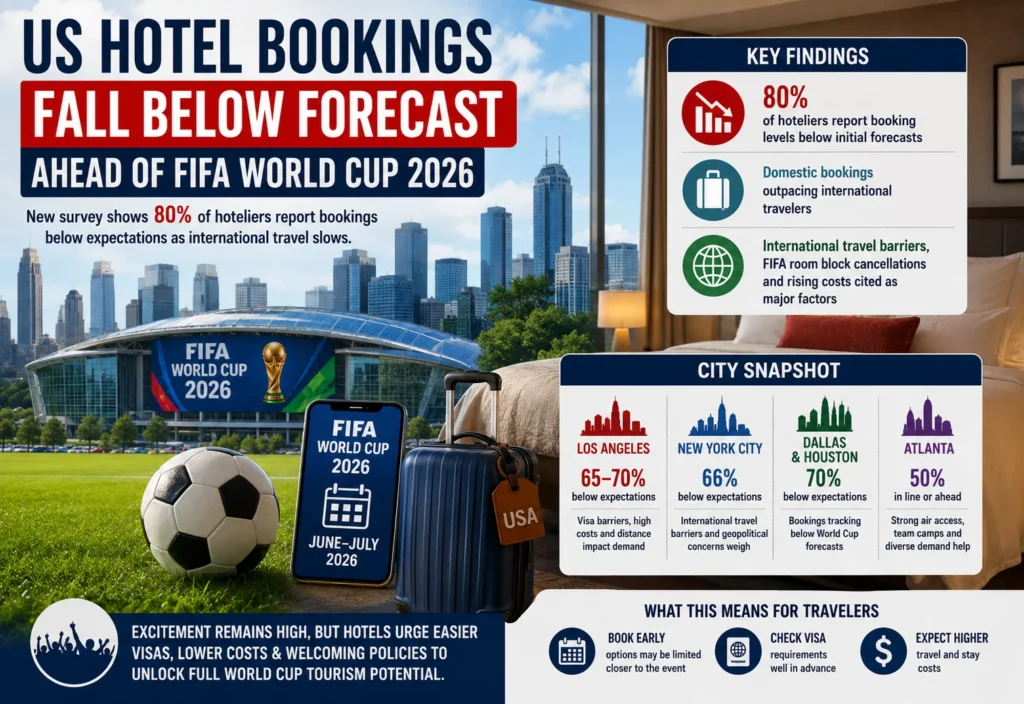
The United States hospitality and tourism industry is preparing for the arrival of FIFA World Cup 2026 visitors, but hotel booking trends across several host cities are developing more slowly than initially expected. Hotel operators, tourism boards, and travel organizations are reporting that international visitor demand has not yet matched earlier forecasts tied to one of the world’s largest sporting events.
The FIFA World Cup, held every four years, is expected to bring millions of football fans, media personnel, sponsors, and international travelers to North America in 2026. The tournament will be hosted across the United States, Canada, and Mexico, with several major American cities preparing for significant tourism and hospitality activity.
However, recent hospitality industry assessments indicate that hotel reservations in several US host markets remain below original projections, particularly among overseas travelers.
Tourism experts say rising travel costs, visa processing challenges, geopolitical uncertainty, and shifting global travel sentiment are contributing to slower international hotel demand ahead of the tournament.
Despite the softer booking pace, tourism authorities and hotel operators continue expressing optimism that visitor numbers will strengthen as the tournament approaches.
Domestic Travelers Lead Current Booking Trends
Hotel industry data indicates that domestic travelers are currently driving the majority of early World Cup-related accommodation demand across the United States.
Tourism organizations stated that American football fans, corporate travelers, sports media groups, and event organizers are making reservations at a stronger pace than international visitors.
Hospitality leaders explained that domestic travel patterns often differ from international booking behavior, with local travelers more likely to finalize plans closer to event dates.
The increasing popularity of short-term rental platforms and alternative accommodations is also affecting traditional hotel reservation trends. Tourism analysts believe many international and group travelers may be opting for vacation rentals, apartments, and flexible lodging options rather than conventional hotels.
Host cities continue preparing for substantial visitor arrivals during the tournament period despite current hotel booking patterns.
Industry officials emphasized that hotel occupancy trends can change significantly in the final months before major international sporting events.
Visa Processing and Travel Costs Affect International Tourism
Tourism and hospitality leaders identified visa processing delays and rising travel expenses as major factors influencing slower international booking activity.
International visitors traveling to the United States for the World Cup may face higher airfare costs, expensive accommodation rates, increased transportation expenses, and premium match ticket pricing compared to previous FIFA tournaments.
Hotel industry representatives noted that international travelers are increasingly cautious regarding long-haul travel budgets amid global economic uncertainty and fluctuating exchange rates.
Tourism experts also highlighted concerns related to visa application processing times and broader travel entry requirements affecting some overseas markets.
Hospitality organizations stressed the importance of maintaining efficient travel procedures and welcoming visitor experiences to support international tourism growth ahead of the tournament.
Industry leaders continue encouraging collaboration between tourism authorities, transportation agencies, airlines, and event organizers to improve accessibility for international visitors.
FIFA Room Block Adjustments Influence Hotel Market
Hotel operators reported that adjustments to FIFA-related room block reservations also influenced booking expectations across several host cities.
Hospitality industry officials explained that large-scale room allocations initially created strong early demand signals for hotels near tournament venues. However, subsequent releases and recalibrations of room blocks have softened projected occupancy levels in some markets.
Hotels across major host destinations have spent years preparing for increased tourism demand linked to the World Cup through staffing expansion, infrastructure upgrades, and operational planning.
Tourism experts stated that room block revisions are common during major international events as organizers reassess projected attendance patterns and logistical requirements.
Even with revised booking forecasts, hotel operators continue preparing for increased visitor volumes during the tournament period.
Hospitality groups believe late-stage demand from football supporters, media organizations, sponsors, and business travelers may still significantly boost occupancy closer to kickoff dates.
Major Host Cities Experience Different Tourism Patterns
Booking trends vary considerably across World Cup host cities depending on infrastructure, air connectivity, local attractions, and tourism capacity.
In Los Angeles, hospitality operators reported booking levels generally tracking close to standard summer demand patterns rather than the exceptional increases originally anticipated. Industry representatives cited visa challenges, high labor costs, and distance between venues as contributing factors affecting tourism expectations.
New York City also reported softer-than-expected hotel reservation growth, with tourism officials identifying international travel uncertainty and geopolitical tensions as key concerns affecting overseas visitor demand.
Dallas and Houston experienced similar booking patterns, with many hotels reporting slower reservation growth than originally projected for the tournament period.
Atlanta emerged as one of the more stable markets among surveyed host cities, supported by strong airline connectivity, diversified tourism demand, and team base camp activity linked to the tournament.
Tourism organizations noted that each host city possesses unique market conditions influencing accommodation trends and visitor behavior.
Tourism Industry Remains Optimistic About Long-Term Benefits
Despite current booking concerns, tourism officials continue emphasizing the broader long-term economic and promotional value associated with hosting the FIFA World Cup.
The tournament is expected to generate significant spending across transportation, dining, entertainment, retail, hospitality, and tourism sectors throughout the United States.
Tourism leaders believe the World Cup will also strengthen destination branding, international media exposure, and future tourism development opportunities for host cities.
Many host markets have invested heavily in airport upgrades, transportation infrastructure, public event spaces, fan zones, and tourism services in preparation for the tournament.
Sports tourism experts explained that large global events often produce economic benefits extending beyond immediate hotel occupancy through increased destination visibility and long-term travel interest.
Hospitality businesses remain focused on improving guest experiences, strengthening staffing readiness, and enhancing operational flexibility ahead of the tournament.
US Tourism Sector Continues Preparing for Global Event
Tourism boards, convention bureaus, airlines, airports, and hospitality organizations throughout the United States continue working together to prepare for FIFA World Cup 2026 operations.
Host cities are expanding public transportation services, enhancing tourism infrastructure, and coordinating with event organizers to manage visitor arrivals efficiently during the tournament period.
Industry leaders believe that while international booking trends may currently appear softer than expected, overall demand could accelerate significantly closer to the event as travel plans finalize and excitement surrounding the tournament increases globally.
The FIFA World Cup remains one of the world’s most influential tourism and sporting events, and the United States continues positioning itself as a major destination for football fans, international media, and global travelers in 2026.
As preparations continue nationwide, tourism officials remain focused on delivering strong visitor experiences, improving accessibility, and supporting the long-term growth of sports tourism across the country.