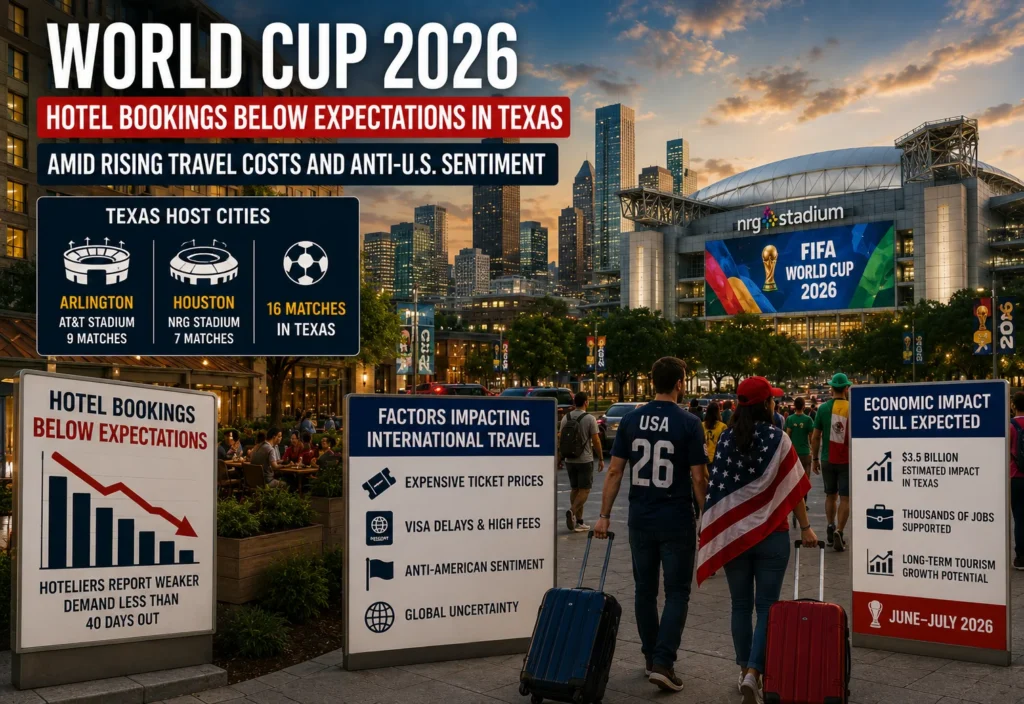
Texas tourism officials and hospitality leaders are preparing for one of the biggest global sporting events of the decade as FIFA World Cup matches arrive in Dallas, Arlington, and Houston during the summer of 2026. However, despite expectations of massive international tourism growth, hotel bookings across key host markets have not reached the levels originally projected.
The FIFA World Cup remains one of the world’s most watched sporting events, attracting millions of spectators, international media representatives, sponsors, and global tourism activity every four years. Texas is expected to play a central role in the 2026 tournament, hosting multiple matches across major venues including AT&T Stadium in Arlington and NRG Stadium in Houston.
Tourism organizations, airport authorities, convention bureaus, and hospitality businesses across Texas have invested heavily in preparations for the event. Yet recent tourism and hotel industry assessments indicate that international accommodation demand has developed more slowly than anticipated ahead of the tournament.
Hospitality officials stated that while ticket sales remain strong, the majority of demand appears to be driven primarily by domestic travelers rather than international visitors.
International Tourism Demand Faces Multiple Challenges
Tourism industry leaders identified several factors influencing the softer-than-expected international travel demand connected to the World Cup. Rising travel costs, visa processing delays, global geopolitical uncertainty, and changing international travel sentiment have all contributed to more cautious booking behavior among overseas visitors.
Hotel industry data from Dallas and Houston showed that many accommodation providers are experiencing booking trends closer to a normal summer season rather than the sharp surge typically associated with major global sporting events.
Tourism experts noted that international travelers face higher travel expenses for the 2026 tournament compared to previous World Cup editions. Increased airfare costs, elevated hotel prices, and expensive match tickets may be limiting international visitor participation, particularly for leisure tourists and large fan groups.
Travel industry organizations also pointed to ongoing visa processing challenges affecting some international travelers seeking entry into the United States ahead of the tournament.
Despite the slower pace of international hotel reservations, local tourism authorities emphasized that overall excitement surrounding the event remains high and that match attendance is still expected to reach full capacity.
Domestic Travelers Drive World Cup Tourism Momentum
Hospitality and tourism reports suggest that domestic travel demand is currently playing a larger role in supporting World Cup tourism activity throughout Texas.
Hotels, restaurants, entertainment venues, and short-term rental operators continue reporting increased interest from American travelers planning to attend matches, fan festivals, and related tourism activities during the tournament period.
Tourism analysts explained that domestic visitors often make travel decisions closer to event dates, meaning hotel occupancy patterns could continue shifting as the tournament approaches.
Short-term rental platforms are also experiencing increased booking activity, particularly in Houston and the wider Dallas-Fort Worth region. Tourism authorities believe vacation rentals may absorb part of the visitor demand not currently reflected in traditional hotel booking data.
The growth of alternative accommodation options has become an increasingly important factor in modern sports tourism economics, especially during large-scale global events where travelers seek flexible and group-friendly lodging arrangements.
Texas tourism officials remain optimistic that the combination of domestic spectators, corporate visitors, media personnel, and international fans will still generate significant economic activity during the tournament.
Houston and Arlington Continue Major Event Preparations
Houston and Arlington remain among the most important World Cup host locations in the United States, with both cities continuing large-scale preparations for international visitors and tournament operations.
AT&T Stadium in Arlington is scheduled to host several major matches, while Houston’s NRG Stadium will welcome additional games and fan-related tourism activity.
Local organizing committees continue working alongside transportation agencies, tourism bureaus, airport operators, hotels, and public safety departments to ensure smooth operations throughout the tournament.
Infrastructure improvements, transportation planning, fan zones, public event spaces, and hospitality services remain central components of the host city strategies.
Houston tourism officials reported year-over-year growth in selected travel indicators for June and July, including increases in domestic bookings and international air travel activity through major regional airports.
Airport authorities are also preparing for elevated passenger volumes, expanded international arrivals, and increased charter flight activity during the tournament period.
Tourism organizations believe that late-stage bookings from football fans, corporate sponsors, and international media could still strengthen hotel occupancy levels as the event draws closer.
Economic Impact Expectations Under Review
The World Cup is expected to generate significant economic activity across host cities through tourism spending, transportation services, entertainment, retail, hospitality, and international media exposure.
However, tourism economists noted that projected economic benefits may vary depending on the final balance between international and domestic visitors.
International tourists generally contribute more heavily to hotel demand, restaurant spending, extended stays, and destination tourism activities compared to local attendees who may not require overnight accommodation.
Hospitality experts explained that local spending alone does not create the same level of incremental tourism impact as new international visitor arrivals.
At the same time, tourism agencies emphasized that the broader value of hosting the World Cup extends beyond short-term hotel occupancy. Global media visibility, destination branding, future tourism marketing opportunities, and long-term infrastructure investment are also considered major benefits for host cities.
Texas tourism leaders continue viewing the World Cup as a long-term opportunity to strengthen the state’s international tourism profile and global business visibility.
International Sentiment Influences Travel Decisions
Tourism analysts acknowledged that international perceptions and geopolitical developments can strongly influence travel demand during major global events.
Some international travelers have expressed caution regarding long-haul travel costs, visa uncertainty, and broader geopolitical tensions affecting international mobility and tourism confidence.
European travel markets in particular have shown mixed interest levels for certain World Cup travel packages and hospitality experiences.
Travel industry officials emphasized that global sporting events are increasingly affected by wider economic conditions, exchange rates, airline pricing, and international political developments.
Despite these challenges, tourism experts believe strong football fan culture, media attention, and the global popularity of the FIFA World Cup will continue driving significant travel demand throughout the tournament.
Texas Tourism Sector Remains Optimistic
Tourism authorities throughout Texas remain optimistic that visitor numbers will increase as the World Cup approaches and final travel decisions accelerate.
Hotels, airports, restaurants, entertainment districts, and transportation providers continue preparing for millions of visitors expected across host regions during the tournament.
Local tourism organizations believe that the combination of sports tourism, fan experiences, business events, and entertainment activities will still generate substantial economic benefits throughout the state.
The 2026 FIFA World Cup represents one of the largest tourism opportunities ever hosted in North America, and Texas remains positioned as one of the tournament’s most important travel and hospitality destinations.
As international travel patterns continue evolving, tourism officials remain focused on enhancing visitor experiences, improving transportation efficiency, and promoting Texas as a welcoming destination for football fans from around the world.