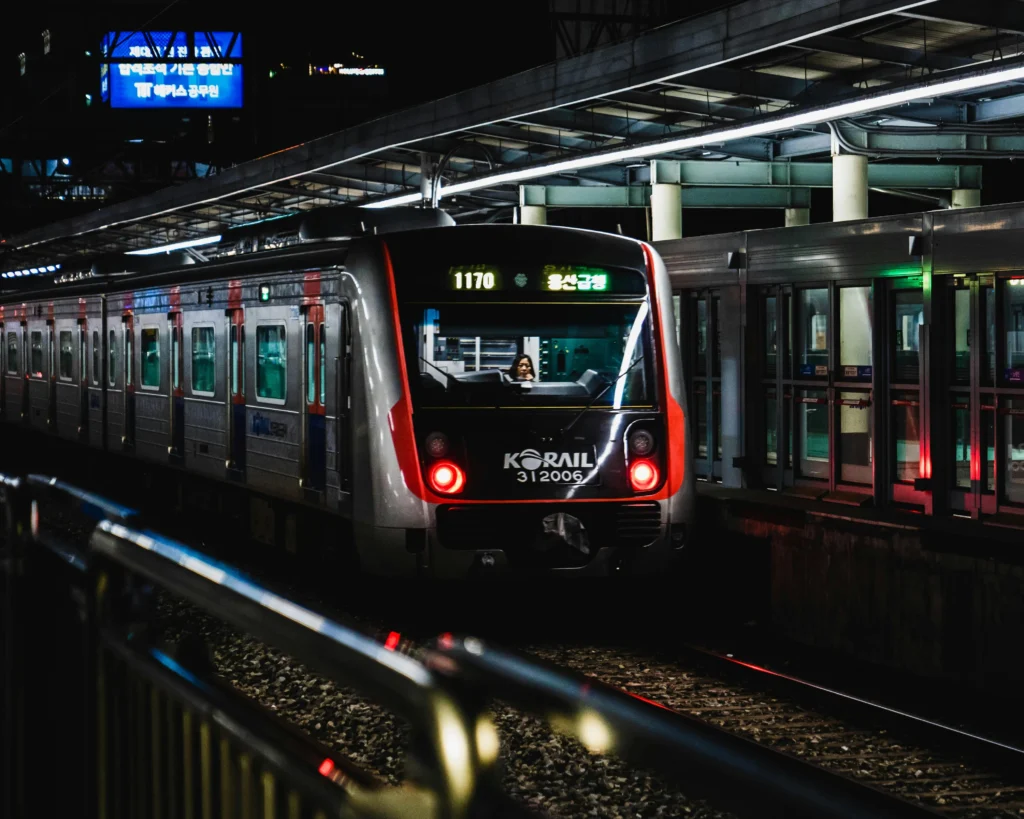
The international transit landscape is entering a highly competitive era centered on rapid overland connectivity. As global destinations look to reduce transport-related emissions and optimize regional commerce, high-speed mass transit infrastructure has become a key indicator of national economic capability. Standing at the cutting edge of this movement, South Korea‘s Ministry of Land, Infrastructure and Transport has officially announced the successful development of core components for its next-generation high-speed trainset, the EMU-370.
This innovative electric multiple unit platform is engineered to sustain a commercial operating speed of 370 kilometers per hour, with a maximum technical design ceiling reaching 407 kilometers per hour. By clearing the engineering hurdles required to operate safely above the standard 350 kilometers per hour threshold, the project positions the nation to operate the world’s second-fastest commercial rail technology. The initiative represents a major structural shift that will fundamentally reshape travel dynamics across major East Asian corridors.
The Engineering Evolution Behind Ultra-High-Speed Operations
Developing rail rolling stock capable of exceeding traditional transit speeds requires a complete overhaul of conventional aerodynamics and mechanical systems. The completion of the EMU-370 project is the result of a concentrated three-year and nine-month national research and development initiative overseen by the Korea Railroad Research Institute. Operating with a joint public and private investment totaling 22.5 billion Korean won, the project successfully delivered six foundational technological innovations designed to counter the extreme physical forces generated at high speeds.
To achieve the necessary acceleration, engineers developed a 560-kilowatt high-efficiency asynchronous traction motor. This system delivers a massive 47.4 percent increase in continuous power output compared to the existing KTX-Cheongryong fleet, utilizing highly dense component cooling layouts to prevent thermal stress under full loads.
Aerodynamic modifications are equally substantial, with the vehicle’s nose profile extended to over 10 meters and smoothed to mimic high-performance sports car styling. By integrating the ventilation systems directly into the primary body structure and applying streamlined protective fairings over the lower bogies, developers cut overall air resistance by 12.3 percent. Furthermore, advanced vibration-damping installations and optimized air suspension frameworks reduced lateral swaying by more than 30 percent while capping interior cabin noise between a quiet 68 and 73 decibels.
Production Timelines and the Verification Framework
The transition from a validated laboratory prototype to an active passenger fleet follows a strict, multi-stage regulatory timeline. State transport declarations confirm that national rail operator Korail is commencing initial vehicle manufacturing for the first production run of the 16-car fleet.
Once assembly is finished, these initial trainsets will undergo extensive, automated field trials beginning in 2030 along the specialized Pyeongtaek to Osong high-speed rail corridor. This rigorous testing phase will systematically validate safety protocols, check wheel-rail contact stability, and stress-test localized digital signaling networks under real-world weather and load variations. Following the successful completion of these track trials, full commercial deployment is scheduled to roll out to the public starting in 2031, providing a thoroughly vetted, highly reliable transit asset for the domestic travel network.
Transforming Domestic Commerical and Leisure Travel Times
The practical value of this massive technological leap is measured by the dramatic reduction in travel times between primary economic hubs. When deployed onto upgraded high-speed tracks, the EMU-370 will compress transit timetables significantly, allowing passengers to move between virtually all major domestic regions in under two hours.
The Seoul to Busan Route: The transit interval between the capital city and the principal southern port city will drop to just 1 hour and 53 minutes. This represents a 25-minute reduction compared to current express services, making rail travel highly competitive with short-haul domestic flights.
The Suseo to Gwangju Songjeong Route: Commuters traveling along this major economic corridor will reach their destinations in roughly 75 minutes, shaving up to 47 minutes off current standard schedules.
For international vacationers and domestic business travelers, this level of speed completely reshapes destination accessibility. Travelers can easily combine multi-city itineraries—such as exploring Seoul’s urban core, historical cultural landmarks, and southern coastal resort districts—within a tightly structured travel window without losing entire days to highway congestion or airport security queues.
Enhancing Global Export Leverage Across Asian Rail Networks
Beyond expanding domestic tourism, the completion of the platform serves as a powerful calling card for the nation’s engineering sector in the international transport market. Major nations throughout Europe and Asia typically operate their premium high-speed links at around 320 kilometers per hour. By advancing past this baseline, South Korea joins a select tier of nations capable of delivering ultra-high-speed transit systems.
As developing economies across Southeast Asia, Central Asia, and the Middle East aggressively expand their high-speed rail networks to meet growing tourism demand, proven operational history becomes a critical requirement for manufacturing tenders. With preliminary vehicle production frameworks already established in emerging international markets, the debut of this 370-kilowatt platform cements the country’s status as a major supplier for the next generation of global transit corridors.
This video provides an in-depth look at South Korea’s existing KTX infrastructure, high-speed rail layout, and onboard passenger amenities, offering valuable context on the foundational systems that the new 370 km/h train will build upon.
For more travel news like this, keep reading Global Travel Wire