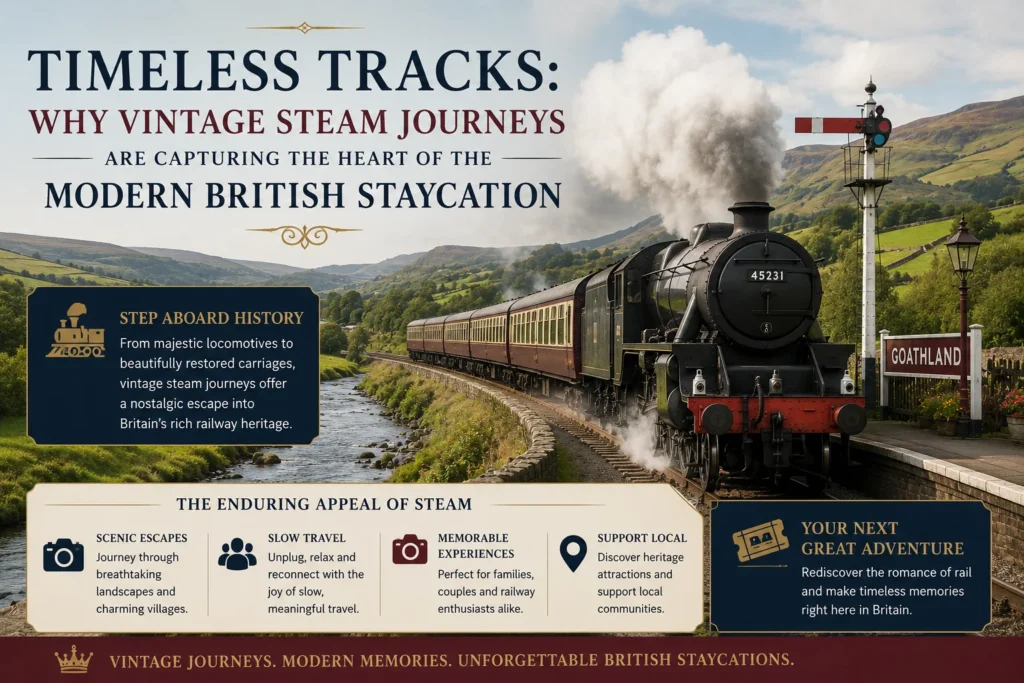
The landscape of domestic tourism is experiencing a profound structural shift. As travelers look for sustainable alternatives to international transit and seek deeper connections with regional history, the appeal of classic overland exploration is growing rapidly. National tourism boards report that experiential leisure travel is leading the recovery of rural economies. At the absolute forefront of this movement is a renewed fascination with historic rail networks, positioning traditional train travel as a primary choice for vacationers.
Rather than viewing transport as a simple way to get from point A to point B, modern holidaymakers are embracing the journey itself as a primary destination. By stepping aboard masterfully preserved locomotives, visitors can experience the engineering triumphs of a bygone era while supporting vital preservation trusts. From the rugged peaks of the Scottish Highlands to the rolling hills of the English countryside, these vintage routes offer a unique view of the nation’s diverse landscapes.
Navigating the Highlands on the Historic Strathspey Railway
The natural wilderness of the Scottish Highlands has long been a major draw for international and domestic travelers alike. To experience this dramatic landscape through a historic lens, visitors frequently gather at the Aviemore transport hub. According to operational briefs from VisitScotland, the regional tourism organization, the Strathspey Railway provides an authentic, ten-mile nostalgic journey that closely follows the original mainline route connecting Perth to Inverness.
The vintage steam or heritage diesel trainsets take passengers on a scenic tour through the heart of the Cairngorms. Leaving the adventure hub of Aviemore, the train glides along the valley of the River Spey, passing pristine moorlands and dense pine woods before arriving at the beautifully restored stations of Boat of Garten and Broomhill.
This historic corridor offers more than just window sightseeing. Boat of Garten is globally recognized for its proximity to major avian conservation projects, particularly the osprey protection reserves managed within the nearby wetlands. Meanwhile, at the Broomhill terminus, hikers and cyclists can step directly onto the Speyside Way, a specialized trail built partly on disused trackbeds. This path allows travelers to actively explore the famous whisky country on foot or by bicycle, creating a perfect blend of active recreation and historical tourism.
Engineering Grandeur Along the Iconic Settle and Carlisle Line
Moving southward into the rugged borders of Northern England, the railway network transforms into an open-air museum of Victorian civil engineering. Tourism development assessments frequently cite the line linking Leeds to Carlisle as one of the most structurally impressive passenger routes in northern Europe. Operated as a key asset within the national rail infrastructure, the path navigates the sheer topography of the Pennine valleys.
The defining highlight of this cross-regional journey is the passage over the monumental Ribblehead Viaduct. Rising high above the valley floor, this spectacular twenty-four-arch masonry structure stands as a testament to the thousands of historical workers who carved the rail network through solid rock.
As the train winds past the majestic, windswept peaks of Yorkshire and Cumbria, the route functions as a critical economic artery for isolated valley communities. National tourism statistics demonstrate that this specific corridor remains an incredibly popular choice for mainline steam excursions. It draws thousands of photography enthusiasts and heritage travelers every season, all eager to witness vintage steam locomotives tackling some of the steepest railway inclines in the country.
Exploring Coastal Horizons on the West Somerset Railway
In the South West of England, heritage rail operations take on a distinct coastal and rural character. Official documentation from Somerset regional councils identifies the West Somerset Railway as England’s longest standard-gauge preserved line, stretching over twenty miles through highly protected landscapes.
The journey starts at the inland gateway of Bishops Lydeard, where the tracks sit nestled between the Quantock Hills Area of Outstanding Natural Beauty on one side and the Brendon Hills on the other. As the vintage train moves toward the Bristol Channel coastline, it stops at ten meticulously maintained stations, each preserved to reflect a specific era of English transport history.
Key stops along the route offer direct access to classic rural attractions. Visitors can alight at Stogumber to explore local ecological gardens, or disembark at the historic village of Dunster. Dunster is famous for its ancient high street and its remarkable medieval castle, which is preserved and managed under national heritage trusts. By linking these disparate cultural landmarks, the railway operates as a highly successful sustainable tourism model, bringing over 100,000 annual visitors into the local hospitality and retail ecosystem.
Embracing Green Innovation at Audley End
While adult travelers often focus on historical accuracy and landscape views, the heritage rail sector is also adapting to younger demographics by blending historic charm with modern environmental standards. In the county of Essex, the miniature railway installation at Audley End serves as an excellent example of this modern transition.
The woodland attraction utilizes a custom-built, fully electric locomotive that features a traditional steam-outline design. This clever engineering allows families to experience the classic elements of early rail travel—including the iconic train whistle and mock chimney aesthetics—while operating with zero localized emissions.
Winding through a deeply forested estate, the miniature route integrates live storytelling and interactive woodland installations to engage children. This approach demonstrates how heritage tourism can successfully evolve, using cutting-edge sustainable technology to keep the magic of vintage rail travel alive for future generations.
For more travel news like this, keep reading Global Travel Wire