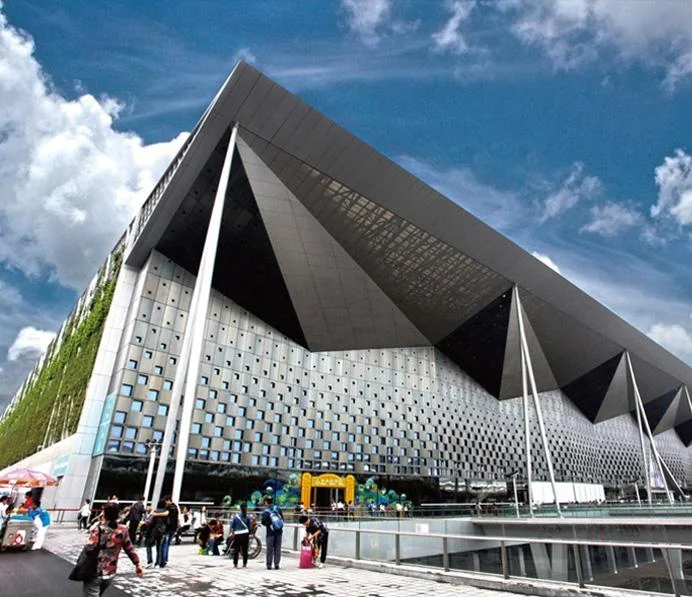
The global travel industry cooperation landscape has reached a historic operational milestone following the conclusion of ITB China 2026 at the Shanghai World Expo Exhibition and Convention Center. The premier business-to-business travel trade forum recorded a massive 20% year-on-year expansion in net exhibition space, underscoring the rapid, systemic recovery and growth momentum of international inbound and outbound commerce networks.
Official public data released by event organizers and municipal trade bureaus confirmed that the three-day convention welcomed over 23,500 industry professionals. Reflecting the intensive demand for structural cross-border product development, ground teams facilitated more than 44,000 high-value business meetings. This massive volume of strategic engagement unites over 900 travel organizations, legacy airlines, and hospitality conglomerates representing 85 distinct countries and territories with 1,700 highly vetted hosted buyers.
Continental Delegations Expand Presence to Capture High-Yield Segments
The structural composition of the exhibition showcased a synchronized global push to secure a share of the expanding Chinese outbound travel market. Regional participation across Europe, Asia, the Americas, the Middle East, and Africa experienced double-digit growth, enabling destination management organizations to diversify their portfolios.
The Asia-Pacific sector led the expansion, tracking a substantial 40% year-on-year increase in representation. The Ministry of Tourism of Malaysia deployed a large-scale delegation of over 60 premier enterprises, including Malaysia Airlines and regional tourism boards, while Turkey recorded a striking 93% surge in its exhibition footprint, heavily promoting historical and cultural hubs like Cappadocia and Trabzon.
Parallel growth vectors emerged across other prominent continental zones:
Geographical Zone | Year-on-Year Growth | Core Participating Destinations & Entities Asia-Pacific | 40% Increase | Malaysia Tourism Board, Malaysia Airlines, Cappadocia, Trabzon Americas & Caribbean | 26% Increase | Brazil, Peru, Argentina, Mexico City, Los Angeles Tourism Europe | 20% Increase | Italy, Greece, Spain, European Travel Commission, Malta, Cyprus Africa | 11% Increase | Morocco, Egypt, South Africa, Côte d’Ivoire, Ethiopian Airlines Group
European tourism resources were heavily reinforced by destination promotion organizations from 29 nations working in tandem with the European Travel Commission. Concurrently, Middle Eastern hubs—led by official tourism authorities from Abu Dhabi and Qatar alongside network carriers like Emirates—showcased advanced premium infrastructure designed to enhance global connectivity and capture high-spending luxury demographics.
Shifting Buyer Demographics Signal Rise in Specialized Travel Products
An analysis of the 1,700 hosted buyers in attendance reveals a profound shift in consumer purchasing trends across mainland China, Hong Kong, Macao, and Taiwan. State tourism data indicates that standard, low-cost group itineraries are steadily being replaced by specialized, high-yield demands.
Specifically, 34% of the registered purchasing agents focused exclusively on customized itineraries, unique themed travel, and high-end luxury operations. Furthermore, 25% of the corporate buyer base was dedicated entirely to the Meetings, Incentives, Conferences, and Exhibitions (MICE) sector and business travel markets. This clear orientation toward premium procurement models aligns with recent global data showing that contemporary travelers are prioritizing experiential upgrades, cross-sector integration with art and wellness, and personalized educational or sports-related itineraries.
Sovereign representatives and commercial executives emphasized the critical importance of utilizing centralized trade platforms to fortify market positioning. Official ministry statements from the Department of Tourism of Hainan Province and the Ministry of Economy of Georgia—which served as the official Partner Destination for the forum—highlighted that these structured B2B environments provide the baseline security and logistical networks necessary to establish multi-country vacation agreements and seamless transit routes.
Integrating Travel Technology and Sustainable Corporate Practice
A central focus of the associated industry conference, which featured over 180 expert speakers addressing 70 distinct topics, centered on the rapid commercial implementation of travel technology innovations. Operational panels demonstrated how advanced scenario-based applications and predictive artificial intelligence are actively restructuring the travel industry value chain, from automated destination marketing to real-time aircraft rotation management.
The forum also addressed how modern environmental, social, and governance (ESG) metrics are successfully translating into measurable business value within the hotel and accommodation sectors. Industry leaders noted that international tourists are increasingly selecting hospitality brands that demonstrate verified sustainability practices, forcing corporate developers to integrate energy-efficient infrastructure and transparent local sourcing into their standard operational models.
Looking forward, civil aviation authorities and global tourism boards are already aligning their resources for the upcoming decade. The organizing committee finalized the operational dates for the 10th anniversary edition of the forum, ITB China 2027, scheduled to take place from May 25 to 27, 2027, in Shanghai. With early-bird registration windows open through June 30, 2026, global transport providers and sovereign destination managers are moving rapidly to lock in their exhibition frameworks, ensuring long-term institutional stability and the continuous expansion of safe, predictable global mobility networks.
For more travel news like this, keep reading Global Travel Wire