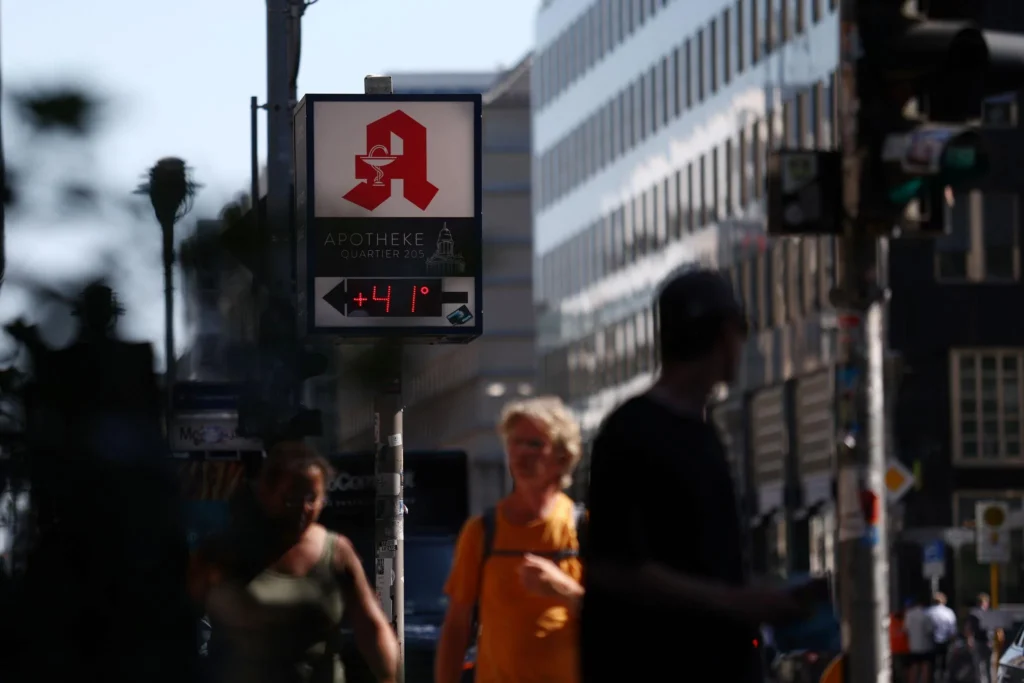
A historic, early-season extreme European heatwave has altered standard spring travel across the continent, prompting national meteorological agencies and public health ministries to issue immediate, high-level weather advisories. Driven by a powerful, static high-pressure ridge—commonly identified as a heat dome—originating from northern Africa, temperatures have escalated far beyond seasonal baseline norms. Daily maximums have crossed 35°C in several primary urban tourist destinations, placing unexpected strain on municipal transit infrastructure, regional rail corridors, and major open-air visitor attractions.
With the unseasonal thermal surge disrupting standard sightseeing itineraries, public safety departments in France, Spain, the United Kingdom, and Portugal have activated emergency protocols. Tourism boards are urging international visitors to fundamentally modify their outdoor activities, emphasizing that the architectural composition of historic European capitals can drastically compound extreme heat through localized urban heat island effects.
National Weather Services Monitor Historic Temperature Anomalies
Meteorological data collected from state weather monitoring networks reveals the unprecedented scale of the atmospheric anomaly. Météo-France officially confirmed that the country experienced some of its warmest May conditions on record, registering national average temperature spikes reminiscent of peak mid-summer cycles. Official tracking stations across southwestern France logged localized maximums as high as 37.1°C, forcing the national forecaster to deploy orange-level heatwave alerts across multiple departments to mitigate public health risks.
Simultaneously, the United Kingdom’s Met Office documented unprecedented spring conditions, with London’s Kew Gardens recording a record-shattering peak of 35.1°C. The sudden rise prompted the UK Health Security Agency to issue sweeping yellow and amber heat-health warnings, particularly for dense urban centers.
Parallel shifts have been tracked throughout adjacent Mediterranean and central European corridors:
Sovereign State | Official Monitoring Authority | Documented Localized Anomalies
France | Météo-France | 37.1°C recorded in southwestern Landes; orange alerts activated
United Kingdom | Met Office | 35.1°C peak at Kew Gardens; multi-region amber health warnings
Spain | State Meteorological Agency (AEMET) | Temperatures reaching 38.0°C in Bilbao, Badajoz, and southern plains
Portugal | Portuguese Sea and Atmosphere Institute | High-temperature yellow alerts; peaks reaching 40.3°C in Mora
Spain’s State Meteorological Agency (AEMET) verified that temperatures approached 38.0°C across both northern hubs like Bilbao and southern agricultural plains within the Guadiana and Guadalquivir valleys. Furthermore, Portugal registered a striking 40.3°C peak in Mora, signaling a prolonged stretch of “tropical nights” where minimum evening temperatures remained above 20.0°C, preventing standard structural cooling.
Operational Strain on Rail Logistics and Public Transit Corridors
The premature heat surge has introduced direct operational complications for regional and international travel logistics. In the United Kingdom, major rail infrastructure operators were forced to implement localized speed restrictions across prominent commuter lines due to the risk of track defects and signaling hardware failures induced by high thermal stress. Commuters and international tourists navigating older transit assets, such as non-air-conditioned sections of the London Underground, encountered internal carriage temperatures exceeding 34.0°C.
Beyond urban transit friction, the prolonged lack of spring precipitation alongside intense afternoon heat has sharply accelerated regional drought indexes across Southern Europe. Forestry departments and emergency services in Portugal, Spain, and Italy have updated their seasonal hazard maps early, warning that high fuel-load levels in rural areas have vastly escalated the threat of premature wildfires. This ecological shift has prompted park authorities to temporarily restrict access to certain unshaded wilderness corridors and hiking trails frequently favored by eco-tourists.
State Health Initiatives and Public Safety Directives
To protect vulnerable traveler demographics—including young children, the elderly, and individuals unaccustomed to navigating steep urban topography under high thermal loads—governments have rapidly adjusted their communication frameworks. The Italian Ministry of Health reactivated its daily heatwave forecasting system ahead of schedule, broadcasting localized threat matrix updates for 27 primary municipal areas to guide civic emergency response teams.
In France, the City of Paris has mobilized its network of cool islands, cataloging over 1,400 shaded squares, public fountains, air-conditioned museums, and municipal libraries where visitors can seek immediate thermal relief. Public health statements across all affected nations explicitly remind travelers that extreme heat exposure can escalate into severe clinical heatstroke rapidly, requiring strict behavioral adjustments.
Practical Adaptation Strategies for Summer Travel Planning
As global transportation providers and hospitality groups adjust to the reality of shifting continental climates, tourism boards are advising independent travelers to implement proactive planning measures. To maintain safety and comfort, itineraries should be restructured to prioritize indoor, climate-controlled venues such as national museums, galleries, and historic cathedrals during the peak solar radiation window between noon and late afternoon.
Furthermore, destination management agencies strongly encourage the adoption of early-morning outdoor excursions, aggressive hydration using accessible municipal drinking networks, and the integration of flexible booking policies. Selecting travel services that allow for seamless cancellations or adjustments provides an essential safety net, enabling visitors to comfortably navigate environmental changes while preserving the continuity of their international journeys.
For more travel news like this, keep reading Global Travel Wire