The Brenner Railway has reopened between Innsbruck in Austria and Brennero on the Italian border following the completion of scheduled tunnel repairs, track maintenance and infrastructure upgrades.
Passenger and freight services resumed on 2 August 2026, ending temporary replacement-bus operations, train diversions and travel restrictions introduced during the maintenance programme.
The reopening restores one of Europe’s most important north–south railway links. It improves mobility for tourists, commuters, local communities and freight operators travelling between Austria and northern Italy.
The route is also a major tourism corridor. It connects Innsbruck and the Austrian Tyrol with South Tyrol, Bolzano, the Dolomites and several established Alpine destinations.
Its return comes during the busy European summer season, when travellers depend heavily on rail services for city breaks, mountain holidays and cross-border itineraries.
Tunnel repairs completed
The Austrian maintenance programme focused on repairing frost-related damage inside the Mühltaltunnel and servicing railway infrastructure between Patsch and Brenner.
High-altitude railway routes face repeated freezing and thawing conditions. These temperature changes can affect tunnel surfaces, drainage systems, tracks and surrounding infrastructure.
Timely repairs are therefore essential for maintaining passenger safety, operational reliability and the long-term performance of the railway.
Track maintenance was also completed across the affected section. This work included inspections, adjustments and repairs to infrastructure exposed to heavy passenger and freight traffic.
With the programme finished, temporary restrictions between Innsbruck and Brenner have been removed.
Regional trains return
Regional railway services between Innsbruck Hauptbahnhof and Brennero were suspended from 23 July until 1 August.
During the closure, passengers used replacement buses serving major communities and stations along the route. A dedicated taxi shuttle maintained access to St. Jodok, where regular bus connections were more limited.
Around 50 buses were deployed to support local and international passengers during the disruption.
The temporary transport network allowed journeys to continue. However, travellers often faced longer travel times, additional transfers and reduced flexibility compared with direct rail services.
The reopening means passengers can once again travel directly between Innsbruck, the Wipptal valley and communities near the Italian border.
The restored services are especially important for commuters, students, tourism employees and residents who depend on the railway for everyday travel.
International services resume
Long-distance services between Innsbruck and Bolzano were also affected by infrastructure works along the wider Brenner corridor.
Direct and express replacement buses operated between the two cities to maintain international connectivity. However, these arrangements created additional challenges for travellers carrying luggage, bicycles or travelling with children.
Several long-distance trains were diverted through the Tauern route and Tarvisio during the closure.
These diversions allowed selected services to continue between Austria and Italy, although passengers faced altered timetables, longer journeys and changes to normal station stops.
The reopening allows international trains to return to their regular route through Innsbruck, Brennero and Bolzano.
Passengers should continue checking current departure information during the transition back to standard timetables.
Tourism access improves
The reopening provides an immediate boost for tourism across Austria and northern Italy.
Innsbruck is a major gateway to the Austrian Alps. The city attracts visitors for hiking, mountain sports, cultural experiences and urban breaks.
South of the border, Bolzano provides access to South Tyrol, the Dolomites, vineyards, historic towns and established mountain resorts.
The Brenner route also supports onward journeys to Trento, Verona, Venice, Bologna and other Italian destinations.
Direct rail services make it easier for visitors to create multi-country itineraries without relying on rental cars or short-haul flights.
This supports more sustainable tourism while reducing pressure on busy Alpine roads.
Hotels, restaurants, attractions and local businesses along the corridor may also benefit from the return of dependable passenger access.
Freight operations strengthen
The reopening is equally important for European freight transport.
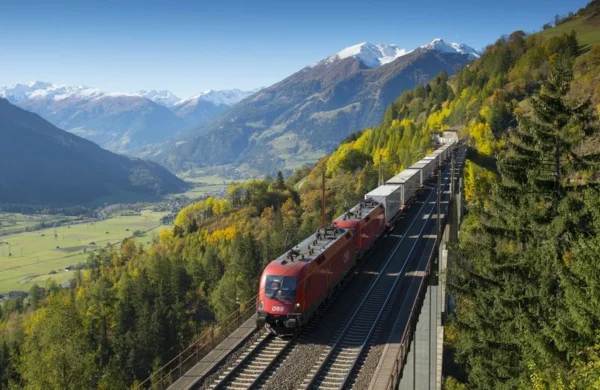
The Brenner Railway forms part of a strategic corridor linking Germany, Austria and Italy. Large volumes of goods move through the route between industrial regions, distribution centres and Italian ports.
Temporary closures can force freight operators to delay trains, alter schedules or use alternative Alpine corridors with limited capacity.
The return of regular freight services improves reliability across the wider European railway network.
It also reduces pressure on neighbouring routes and supports efforts to shift more goods from road transport to lower-emission rail services.
Rail freight remains particularly important in the Brenner region because Alpine roads frequently face congestion, capacity limits and environmental restrictions.
Coordinated works reduce disruption
Austria coordinated its maintenance programme with infrastructure works on the Italian side of the route.
This shared closure period allowed essential work to be completed on both sides of the border without creating another major interruption soon after services resumed.
The coordinated approach reduced repeated disruption for tourists, local communities, railway operators and freight companies.
Regional trains can now serve stations between Innsbruck and Brennero again. International passenger services are returning to their usual schedules, while freight trains can use the regular Alpine corridor.
The reopening strengthens cross-border connectivity at the height of the summer travel season.
For tourists, it restores convenient access to Alpine cities, mountain destinations and cultural attractions.
For local communities and freight operators, it brings back a dependable connection across one of Europe’s most strategically important transport routes.
For more travel news like this, keep reading Global Travel Wire