China, Iran, Pakistan and Kazakhstan are drawing renewed attention to overland transport corridors across Asia as the US-Iran conflict increases pressure on aviation, maritime routes and international travel planning in 2026.
The changing security environment has highlighted the vulnerability of transport networks that depend heavily on sensitive Middle Eastern airspace and maritime gateways. Airlines operating long-distance services between Europe and Asia can face rerouting, congestion and operational uncertainty when regional airspace becomes restricted or unavailable.
ICAO documentation in 2026 has described significant Middle Eastern airspace challenges linked to military activity, route restrictions, diversions and greater pressure on neighbouring air traffic systems.
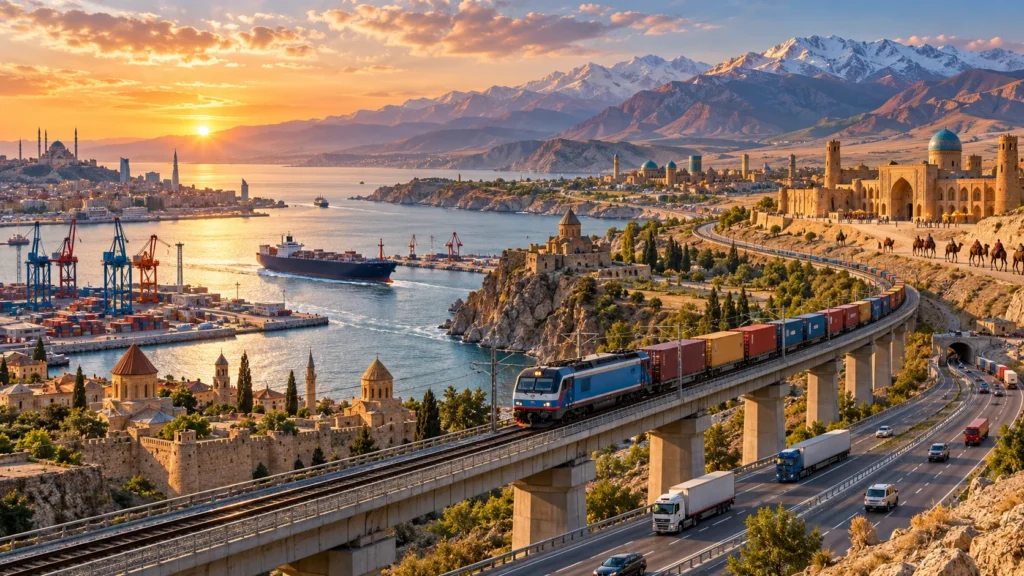
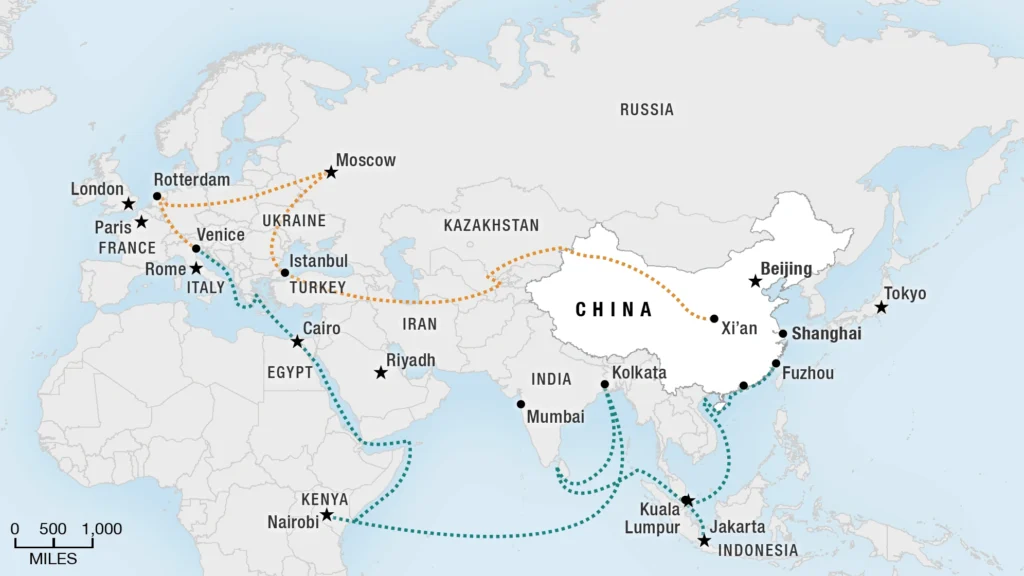
Against this backdrop, the wider network often described as the New Silk Road is gaining strategic importance.
However, it is not a single passenger railway capable of replacing aviation or the Strait of Hormuz. Instead, it represents interconnected rail, road, logistics and multimodal corridors linking China, Central Asia, Iran, Pakistan, Türkiye and wider Eurasian markets.
China anchors Asia’s eastern transport gateway
China remains central to this emerging connectivity landscape because of its extensive domestic railway infrastructure and cross-border links into Central Asia.
For tourism, continued investment in railway stations, border infrastructure and regional transport can eventually make multi-country journeys easier while opening lesser-known destinations to international visitors.
Air China also remains important within the broader mobility ecosystem because aviation continues to provide the fastest connection between China and major global markets.
However, Air China should not be described as operating the New Silk Road railway corridor.
Its relevance lies in connecting travellers with Chinese gateways from which future air-and-rail itineraries could develop.
Kazakhstan strengthens the Central Asian bridge
Kazakhstan currently offers one of the clearest examples of how overland Eurasian connectivity can support both transport strategy and future tourism.
The country sits between China, Russia, Central Asia and routes leading toward the Caspian region and Iran.
Kazakhstan’s government has repeatedly highlighted its transit role between Europe and Asia and the importance of railway corridors running through Kazakhstan, Turkmenistan and Iran. Official information also describes the country’s broader New Silk Road strategy and its extensive railway network.
For travellers, Kazakhstan presents a more practical tourism opportunity than conflict-affected sections farther south.
Visitors can fly into Almaty or Astana and combine aviation with domestic rail journeys, cultural destinations and nature-based tourism.
Air Astana supports this model by providing international access to Kazakhstan, although the airline itself does not operate the transcontinental railway corridors.
Iran remains strategically important but high risk
Iran occupies a critical geographic position between Central Asia, Pakistan, Türkiye, the Caucasus and the Persian Gulf.
This makes the country potentially important to future east-west and north-south transport corridors.
Kazakhstan and Iran have continued discussing stronger transport connectivity, demonstrating the long-term importance governments place on developing these routes.
However, strategic potential should not be confused with an established tourism corridor.
Current conflict conditions, airspace uncertainty and changing border circumstances mean Iran-linked itineraries require exceptional caution.
For ordinary tourists, the New Silk Road should therefore not be marketed as a seamless China-to-Iran leisure railway.
Freight development is considerably more advanced than international passenger tourism across the entire corridor.
Pakistan could unlock another connectivity route
Pakistan also has long-term potential within the wider regional transport network.
Rail connectivity through the Taftan-Zahedan border area could eventually strengthen links between Pakistan and Iran, while broader regional projects may improve access toward Türkiye, Central Asia and western China.
Yet significant challenges remain.
Infrastructure quality, border procedures, security, customs requirements and dependable scheduling must improve before such routes can become straightforward international tourism products.
Pakistan International Airlines remains important for international access to the country, but PIA should likewise be viewed as part of the wider air-and-land travel ecosystem rather than as an operator of New Silk Road rail services.
Aviation disruption drives multimodal thinking
The strongest tourism opportunity emerging from the current transport uncertainty is multimodal travel.
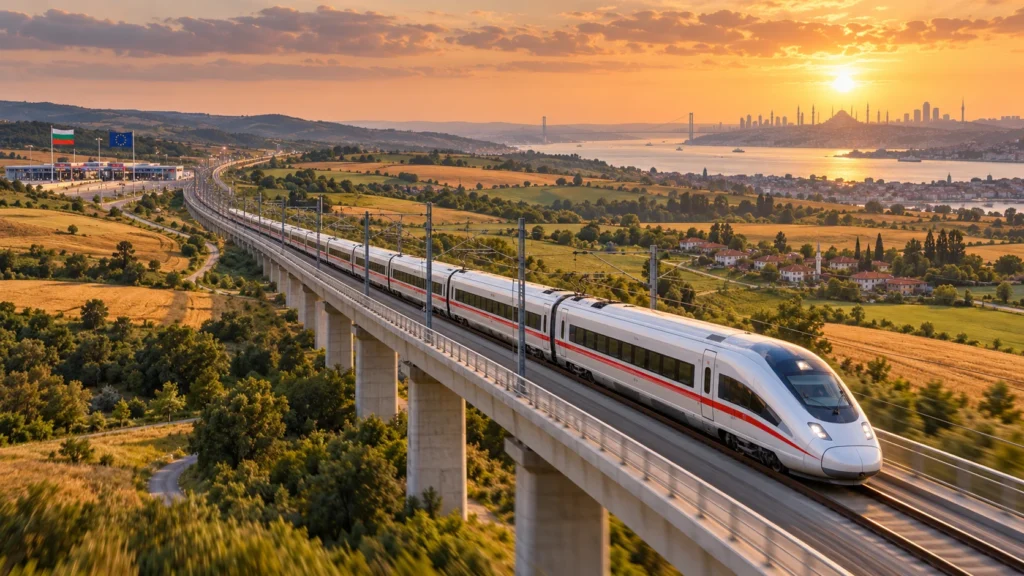
Instead of relying on one continuous railway from East Asia to Europe, travellers could increasingly combine international flights with safe and reliable sections of regional rail networks.
A visitor might fly into Kazakhstan, continue by train across selected Central Asian destinations, or combine Chinese high-speed rail with international aviation.
Such modular journeys can reduce dependence on a single transport corridor while creating opportunities for slower, experience-focused tourism.
Strait of Hormuz remains impossible to replace
The New Silk Road is sometimes presented as an alternative to the Strait of Hormuz, but that comparison requires caution.
Overland rail can diversify transport options and reduce dependence on vulnerable maritime corridors for some cargo and regional movement.
However, it cannot currently replace the enormous strategic role of maritime shipping through the Gulf.
For tourism, the same principle applies.
Rail can complement aviation rather than replace it.
Asia’s next tourism opportunity takes shape
The biggest long-term opportunity is the creation of integrated Silk Road journeys linking aviation, modern railways, historic cities and emerging destinations.
China and Kazakhstan currently provide some of the strongest foundations for such tourism.
Iran and Pakistan remain strategically important to future connectivity, but operational and security conditions will determine how quickly broader passenger corridors can develop.
As conflict reshapes travel patterns across Asia, the New Silk Road is becoming more relevant.
Its tourism revolution, however, is likely to emerge gradually through connected air-and-rail experiences rather than through one uninterrupted transcontinental tourist train.
For more travel news like this, keep reading Global Travel Wire