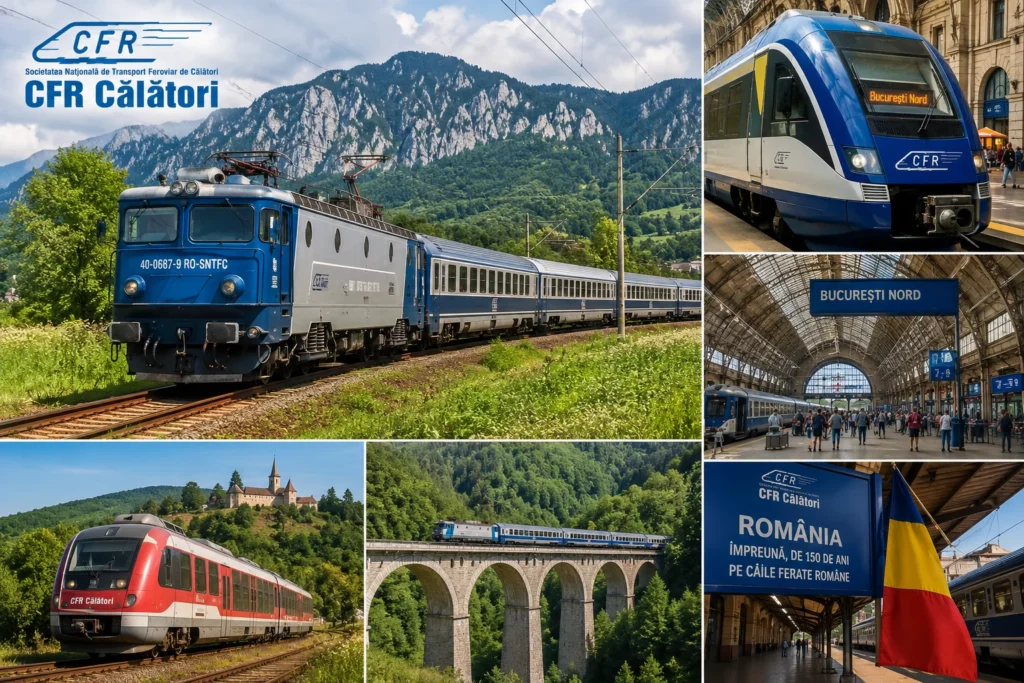
The operational framework of Romania’s municipal transit system is under close evaluation following a localized low-speed train collision inside the capital city. Official security logs from the Bucharest-Ilfov Emergency Situations Inspectorate (ISU) confirm that a regional shunting incident occurred at Bucharest Basarab Railway Station, a secondary transport hub located adjacent to the central Gara de Nord terminal. The localized collision involved an isolated operational locomotive and a stationary multi-car passenger train, prompting an immediate activation of regional emergency protocols.
According to verified statements released by municipal first responders, the impact resulted in minor to moderate injuries for at least 15 individuals, including passengers and onboard technical staff. Local emergency dispatchers immediately activated the “Red Plan of Intervention,” a standardized national emergency mechanism reserved for mass-transit incidents requiring large-scale rescue coordination. The rapid deployment ensured that all affected passengers received immediate medical triage directly on the platform before further evaluation.
Comprehensive Emergency Triage and Medical Logistics
The response infrastructure of the Romanian capital demonstrated complete readiness as emergency teams arrived at the tracks within minutes of the initial notification. To manage the scene and ensure comprehensive safety coverage, local dispatch centers deployed a robust array of tactical equipment and specialized personnel:
Heavy Mobilization: A total of 10 fully equipped structural fire engines were stationed around the terminal perimeter to eliminate secondary electrical or environmental hazards.
Specialized Rescue Vehicles: Two advanced extrication units and a specialized multiple-victim transport vehicle were integrated into the staging area to streamline passenger movement.
On-Site Field Hospital: Medical directors established a temporary mobile field hospital adjacent to the platform gates, enabling real-time diagnostic screening and stabilizing care.
Hospital Transitions: Following initial on-site stabilization, regional emergency services confirmed that eight individuals required transition to nearby municipal trauma units for further observation, while the remaining affected travelers were cleared at the scene.
The prompt, systematic execution of the emergency protocol minimized structural bottlenecks within the station, preventing cascading operational delays across the wider municipal transit framework.
Technical Analysis Points to Component Anomalies
To determine the precise structural cause of the collision, the Romanian Railway Investigation Agency (AGIFER) has launched an official, independent technical inquiry. Preliminary evidence reviewed by state inspectors and transit safety engineers indicates that the incident was likely caused by a localized mechanical anomaly within the locomotive’s speed-regulation systems.
Specifically, early data points to a blocked dimmer mechanism, a technical fault that can restrict a train operator’s ability to modulate electrical current and control deceleration during low-speed shunting configurations inside a terminal grid. The investigation agency is conducting a thorough metallurgical and software review of the involved rolling stock to verify this hypothesis. Investigators will also check maintenance registries to ensure full compliance with regional safety frameworks and to prevent similar technical malfunctions across other regional routes.
Tourism Context and Urban Regeneration Frameworks
While rail incidents naturally draw immediate scrutiny from international travel operators, transit specialists emphasize that the incident at Basarab Station represents an isolated mechanical occurrence rather than a systemic failure of national travel infrastructure. The broader Romania railway network continues to function as a vital, high-volume corridor for international backpackers, domestic commuters, and cross-border leisure travelers exploring Eastern Europe.
The incident occurs alongside significant municipal investments aimed at modernizing the capital’s central transport gateways. The Ministry of Transport, in coordination with the Bucharest Municipality, is actively advancing a major urban regeneration blueprint designed to transform the historic Gara de Nord and the adjacent Basarab overpass area into an integrated, green mobility hub. This long-term development master plan incorporates the installation of modern electronic signaling systems, the procurement of new energy-efficient rolling stock, and the creation of suspended leisure parks and pedestrian walkways to connect rail, metro, and municipal bus networks seamlessly.
Ensuring Long-Term Passenger Safety Across National Corridors
National tourism boards and transport directorates remain thoroughly committed to preserving a transparent, highly secure environment for all transit users. In accordance with standardized European rail compliance mandates, state-operated rail divisions are utilizing the insights gained from the AGIFER investigation to update preventive maintenance checklists across all active passenger and freight fleets.
For international visitors planning regional itineraries through the Carpathian mountains, the historic cities of Transylvania, or the Black Sea coast, the rapid containment of the Basarab station incident highlights the reliability of Romania’s emergency response networks. By enforcing strict safety reviews, maintaining immediate emergency readiness, and investing continuously in modern urban transport frameworks, the nation ensures that its extensive rail infrastructure remains a reliable, scenic, and secure choice for global travelers exploring the region.
For more travel news like this, keep reading Global Travel Wire