Train operations on Himachal Pradesh’s historic Kalka-Shimla railway were disrupted after a landslide blocked tracks between Gumman and Koti stations on August 18, forcing railway authorities to modify services while engineering teams worked to restore the mountain corridor.
The obstruction affected the narrow-gauge heritage railway during the Himalayan monsoon season, when intense rainfall can increase landslide and debris risks across steep terrain.
According to the operational details provided, debris reached the railway near kilometre 11/7-8 at around 3:15 pm. A train approaching Koti could not continue beyond the affected section and was short-terminated as a safety precaution.
Two evening services between Shimla and Kalka were also cancelled while railway teams assessed and cleared the track.
The incident adds another travel challenge for visitors heading to Shimla during a period of unsettled monsoon weather across Himachal Pradesh.
Landslide blocks historic mountain railway
The affected stretch between Gumman and Koti lies along one of India’s best-known mountain rail journeys.
Following the landslide, railway personnel immediately focused on preventing train movement through the obstructed section.
Engineering teams estimated that debris clearance and restoration could require several hours. However, train operations could only resume after inspections confirmed that the track and surrounding slope were safe.
That precaution is particularly important on mountain railways, where falling rocks, loose soil and additional rainfall can create secondary hazards even after an initial obstruction has been removed.
Passenger safety therefore remained the main priority while clearance work progressed.
Train cancellations affect Shimla travellers
Two scheduled evening services operating between Shimla and Kalka were cancelled following the disruption.
Such cancellations can have a wider effect on tourist itineraries because Kalka functions as the principal connection between the mountain railway and India’s broader rail network.
Travellers reaching Kalka can connect towards major cities, including Chandigarh and Delhi. Likewise, visitors arriving from outside Himachal Pradesh frequently use the heritage railway as part of their journey to Shimla.
A temporary closure can therefore affect hotel arrivals, onward rail connections and sightseeing schedules.
Visitors travelling during periods of unstable weather should allow additional journey time and avoid scheduling tight connections between mountain trains and long-distance services.
Heavy monsoon weather pressures transport networks
The railway disruption occurred during the wider southwest monsoon season, when Himachal Pradesh routinely faces heightened risks from heavy rain, landslides and blocked transport corridors.
The India Meteorological Department has issued repeated heavy-rain advisories for parts of Himachal Pradesh during August 2026 as monsoon activity continues across the state.
Mountain roads can also become vulnerable during prolonged rainfall.
This means rail disruption may coincide with road restrictions, making alternative transport arrangements more difficult for travellers.
Tourists visiting Himachal Pradesh during the monsoon should therefore monitor official weather forecasts and transport updates throughout their journey rather than relying only on conditions at departure.
Kalka-Shimla railway remains major tourism attraction
The Kalka-Shimla railway is far more than a conventional transport route.
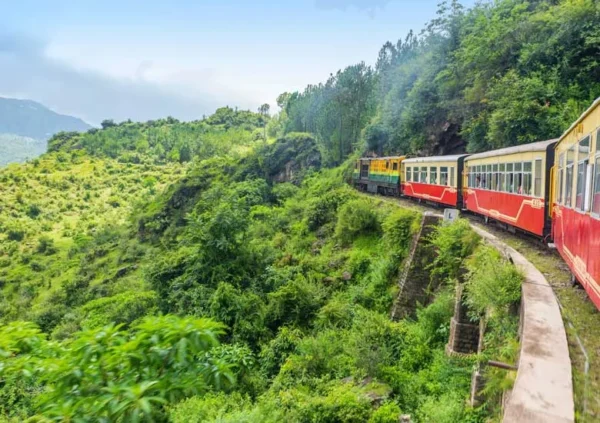
The narrow-gauge line climbs from Kalka towards Shimla through dramatic Himalayan terrain, passing tunnels, bridges and hillside settlements.
It forms part of the Mountain Railways of India heritage network and remains one of the country’s most recognisable railway tourism experiences.
The journey itself attracts domestic and international tourists who use the train not simply to reach Shimla but to experience the landscape and historic railway engineering.
That tourism importance makes operational disruptions particularly significant.
Temporary closures can affect local taxi operators, hotels, restaurants and other tourism businesses that depend on steady visitor flows into Shimla and nearby destinations.
Monsoon creates recurring railway challenge
Mountain railway infrastructure requires constant monitoring during periods of intense rainfall.
Steep slopes can become unstable as soil absorbs water, while rocks and vegetation may fall towards tracks.
Railway teams regularly inspect vulnerable sections and carry out clearance, drainage and engineering work where necessary.
Operational restrictions can also be introduced when conditions create unacceptable risks.
Although such measures may inconvenience passengers, temporary cancellations or short-terminations allow authorities to prioritise safety while track conditions are assessed.
The August 18 incident highlights why these procedures remain essential on heritage mountain railways.
Travellers should check services before departure
Passengers planning journeys on the Kalka-Shimla railway should confirm the latest operating status before reaching the station, particularly during periods of heavy rainfall.
Weather conditions can change rapidly in Himalayan areas, and fresh landslides may occur with little warning.
Travellers should also keep flexible accommodation and onward transport plans where possible.
Those visiting Shimla should follow official railway, weather and Himachal Pradesh government advisories before travelling through affected areas.
Rail restoration remains critical for Shimla tourism
Restoring the Gumman-Koti section safely is important for both daily mobility and Himachal Pradesh’s tourism economy.
The Kalka-Shimla railway remains a distinctive gateway to the state capital and an attraction that contributes directly to the visitor experience.
As engineering teams work to maintain safe operations, the latest landslide demonstrates the challenge of protecting historic mountain transport infrastructure during increasingly demanding monsoon conditions.
For travellers, the key message is straightforward: the heritage railway remains an unforgettable way to reach Shimla, but during the monsoon, flexibility and close attention to official travel updates are essential.
For more travel news like this, keep reading Global Travel Wire