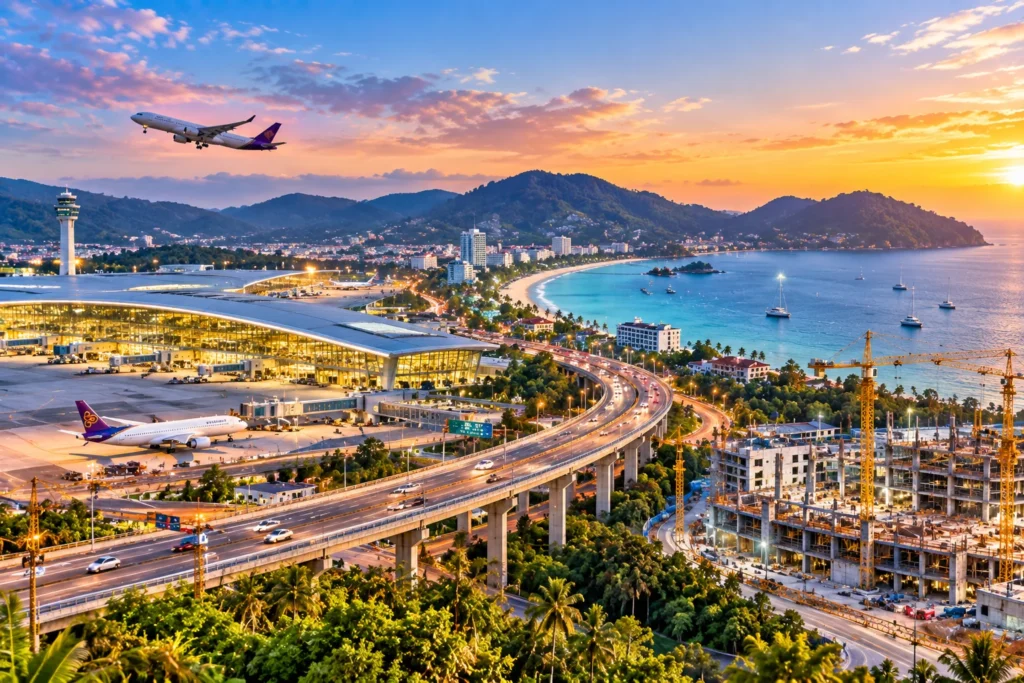
Phuket is rapidly expanding beyond its traditional reputation as a tropical resort destination. Driven by verified public and private development initiatives totaling more than THB 214 billion, Thailand’s largest island is undergoing a comprehensive urban restructuring. These multi-sector investments encompass aviation expansion, modern rail networks, healthcare facilities, commercial retail hubs, and luxury real estate, establishing a durable foundation for year-round economic diversification.
Official market research highlights that this multi-billion-baht capital injection addresses urban constraints while elevating regional service capacity. By enhancing transportation logistics, public health services, and housing supply simultaneously, local authorities and private partners aim to transform the island from a seasonal holiday getaway into an integrated international trade, tourism, and service hub.
Massive Capital Injection Reshapes Aviation and Public Transport
A central pillar of the island’s urban transformation focuses on aviation and transport capacity. To accommodate long-term growth in passenger arrivals and commercial movement, major airport infrastructure expansions are moving forward across the Andaman region.
Among the largest undertakings is the development of the New Andaman Airport, with an estimated project value of THB 80 billion. Complementing this mega-project, the existing Phuket International Airport is advancing plans for its second phase of expansion, budgeted at approximately THB 10 billion. These dual aviation investments aim to significantly boost passenger handling capabilities, streamline international arrivals, and support long-haul transit connections.
Equally critical to the island’s economic evolution is the overhaul of internal transit networks. The first phase of Phuket’s mass transit light rail system represents an estimated budget of THB 35.35 billion. Designed to connect primary residential districts, commercial zones, and coastal areas, the light rail network aims to alleviate roadway congestion, reduce reliance on private vehicles, and improve mobility for both residents and visitors.
Integrated transport planning also incorporates the Pa Khlok–Bang Ku expressway alongside broader intermodal concepts. Regional transport frameworks highlight future projects such as the Andaman Ring Ports network, dedicated seaplane facilities, and expanded monorail routes, reflecting a permanent shift toward an interconnected, multi-modal transport grid.
Real Estate and Mixed-Use Developments Fuel Market Growth
The momentum generated by public transit upgrades has catalyzed substantial private investment in real estate and mixed-use destination projects. Official development tracking recorded 4,166 new housing units launched across the island during the first half of 2026 alone. High-end villa properties led this surge, accounting for over 61% of total new residential project value.
Large-scale commercial developments are further redefining the island’s urban landscape. Iconic destination initiatives, such as the Synthesis Ark Phuket project valued at an estimated THB 50 billion, demonstrate growing investor confidence in the island’s long-term commercial potential.
The convergence of luxury housing, international medical facilities, and premier shopping centers reflects a shifting demographic profile. Phuket is increasingly attracting long-term foreign residents, digital nomads, and international retirees who seek comprehensive urban amenities alongside high quality of life.
Diversifying Beyond Seasonal Travel to Ensure Economic Resilience
Historically, regional economic output relied heavily on seasonal visitor cycles. The current wave of infrastructure development seeks to mitigate this vulnerability by building a multi-faceted service economy.
Upgraded transit corridors open previously underutilized land to commercial, light industrial, and residential usage. By linking residential communities directly with medical hubs, educational campuses, and business parks, regional planning strategies foster a self-sustaining local economy capable of generating steady, year-round revenue.
Improved accessibility across the island ensures that economic benefits extend beyond primary beach enclaves into inland communities. Modernized logistics, healthcare infrastructure, and digital accessibility positional the island as a competitive hub for corporate gatherings, wellness tourism, and international service enterprises across Southeast Asia.
A Transforming Model for Island Urbanization
The ongoing transformation of Phuket offers a clear roadmap for island economies seeking long-term resilience. By pairing major aviation and transit upgrades with high-value private real estate and commercial services, the island is successfully balancing public mobility with commercial growth.
As construction progresses across major transit lines, airport facilities, and mixed-use precincts, the region is well-positioned to strengthen its standing as a world-class gateway. The combination of modern infrastructure, sustainable transit options, and diversified economic opportunities ensures that Thailand’s premier island destination will continue to thrive as a global center for living, working, and international trade.
For more travel news like this, keep reading Global Travel Wire