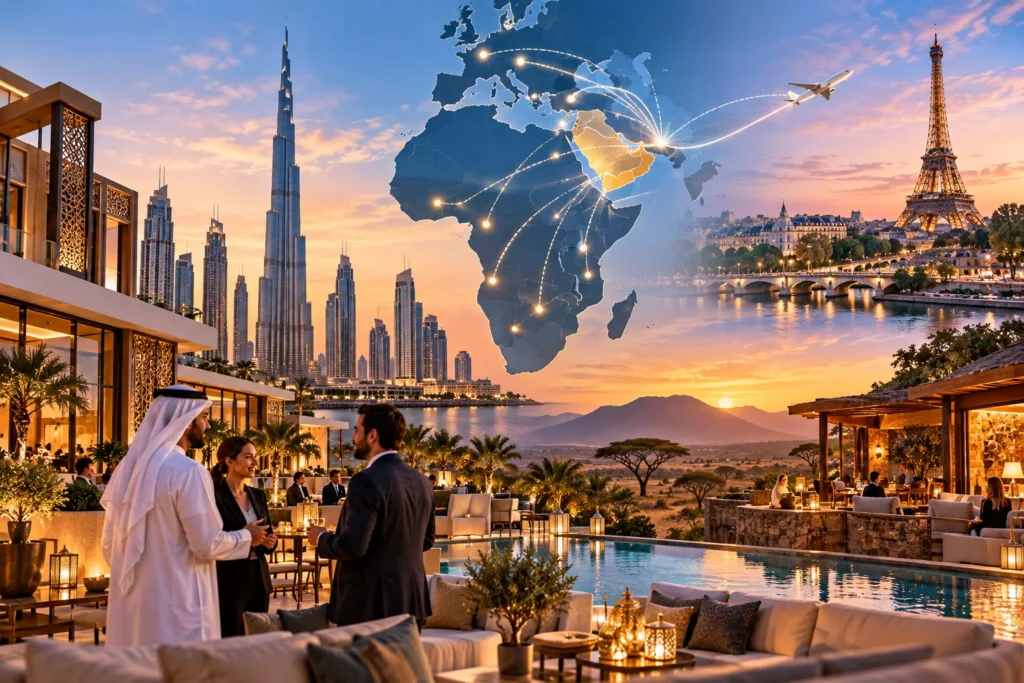
Regional hospitality management across the Middle East, Africa, and Europe is undergoing structural growth as international tourism expansion continues to demand strong operational leadership. At the center of this growth trajectory, Sandeep Walia, Chief Operating Officer for Marriott International across the Middle East and luxury operations in Europe, Middle East, and Africa, has further expanded his executive remit to encompass sub-Saharan Africa alongside global leadership of Design Hotels.
With over 25 years of international hospitality experience since joining the company in 2005, Walia’s career spans key disciplines across hotel finance, asset development, and multi-market operational leadership. His current executive mandate oversees more than 410 hotel properties comprising approximately 90,000 rooms, managing operations across established capital cities, emerging resort destinations, and high-growth African infrastructure hubs.
Regional Expansion and Asset Portfolio Growth
The scale of expansion highlights the dynamic momentum across regional travel and tourism markets. During the 2025 operational year, the hotel group successfully opened 35 new properties representing approximately 6,500 commercial rooms across the region, while establishing ambitious growth targets across sub-Saharan Africa.
Saudi Arabia remains a cornerstone of this regional strategy. A milestone 10-hotel agreement valued at approximately $1.33 billion demonstrates how multi-brand portfolio deployments are being leveraged to align with new master-planned destinations, cultural heritage sites, and evolving visitor demographics under national economic transformation initiatives. Across the broader Gulf region, the strategy emphasizes a balanced development pipeline that spans luxury, select-service, and extended-stay lodging solutions to meet international business and leisure demand.
Operating primarily through management and franchise frameworks, the operational leadership model relies heavily on building long-term investor relationships. By balancing capital owner performance expectations with strict global brand standards, executive management ensures that regional development projects remain economically viable while preserving long-term brand equity.
Human Capital Development and Talent Retention in Tourism
Rapid infrastructure growth across the Middle East and Africa has created significant demand for specialized hospitality talent, ranging from property general managers and culinary experts to commercial strategy directors and guest services personnel.
Operational leadership emphasizes that long-term service excellence cannot rely solely on international recruitment. Sustainable regional development requires comprehensive internal training programs, regional career mobility frameworks, local employment pathways, and inclusive workplace leadership. Investing in associate development ensures that expanding hotel pipelines consistently deliver authentic guest experiences that honor regional heritage and international hospitality benchmarks.
Balancing Luxury Expectations and Portfolio Individuality
Modern luxury travelers increasingly seek authentic cultural connections, personalized services, and distinctive architectural character over rigid formal standards. Operational management oversees legacy luxury flags including The Ritz-Carlton, St. Regis, and JW Marriott, while simultaneously providing creative independence to Design Hotels’ portfolio of independent, design-focused properties.
The integration of independent design-led properties within a global corporate structure represents a critical hospitality model. Independent hotels gain access to global distribution networks, loyalty platform demand, and advanced commercial systems, provided the unique identity, storytelling, and local operating character of each property remain fully intact. Operational safeguards ensure that scale enhances visibility without compromising property-level individuality.
Digital Integration, Sustainability, and Operational Efficiency
While digital tools, artificial intelligence, and predictive data analytics continue to enhance demand forecasting, dynamic pricing, and guest personalization, regional operational philosophy maintains human-centric service at its core. In markets where digital convenience is expected, destination hospitality remains judged by personal recognition, warmth, and high-touch customer care.
At the same time, environmental sustainability and property-level operational economics are increasingly intertwined. Energy efficiency, water conservation, and waste management directly influence both operational overhead and regional environmental performance. Utilizing global purchasing power and standardized sustainability frameworks allows corporate commitments to be converted into daily operating procedures across hundreds of individual hotel properties.
Through strategic talent development, adaptive portfolio expansion, and a focus on localized guest experiences, executive leadership continues to shape the evolving landscape of tourism and luxury hospitality across the Middle East, Africa, and Europe.
For more travel news like this, keep reading Global Travel Wire