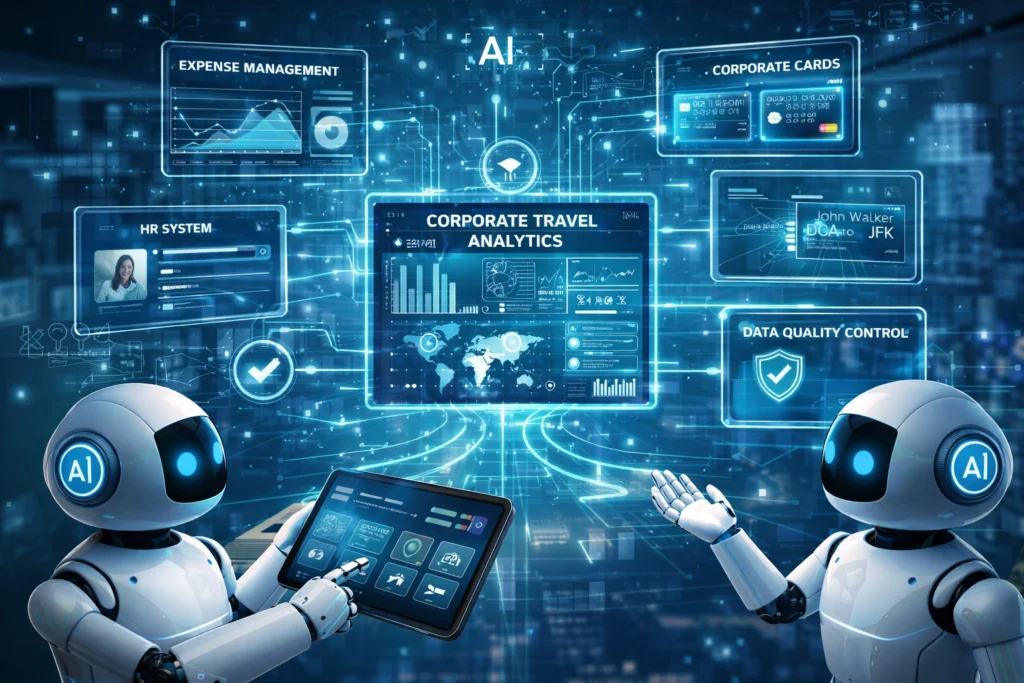
Corporate travel is becoming more data-driven, yet many companies still struggle with fragmented information spread across booking tools, expense platforms, payment systems, and HR databases. Clarasight is aiming to solve that challenge with a new suite of AI-powered agents designed to unify disconnected travel data into one intelligent, auditable model.
The launch reflects a growing shift in business travel management, where organizations want faster insights, stronger compliance, and smarter decision-making without relying on slow manual processes.
For travel managers, finance teams, and procurement leaders, the promise is clear: cleaner data, quicker reporting, and better control over travel spend.
Why Fragmented Data Slows Corporate Travel
Most corporate travel programs generate information from multiple sources. A single trip may involve a travel management company, airline bookings, hotel invoices, expense claims, corporate cards, ride-hailing receipts, and internal employee records.
When those systems do not communicate effectively, companies face delays, duplicated records, inconsistent reporting, and reduced visibility over total costs.
That creates real business problems.
Leaders may struggle to measure policy compliance, negotiate supplier contracts, forecast budgets, or track sustainability targets. Travel managers often spend too much time reconciling spreadsheets instead of improving programs.
As travel volumes rise again globally, these inefficiencies become even more costly.
AI Agents Create One Trusted Source of Truth
Clarasight’s new AI agents are designed to collect data from multiple enterprise sources and consolidate it into a single model that organizations can trust.
Instead of building lengthy custom integrations or manually cleaning incoming files, the agents automatically ingest information, assess quality, and map it into a standardized structure.
This unified dataset then becomes the foundation for downstream reporting, forecasting, automation, and strategic planning.
In practical terms, companies gain one clear view of travel activity rather than several incomplete versions spread across departments.
That kind of visibility can transform how travel programs are managed.
Faster Onboarding for New Data Sources
One of the strongest benefits of AI-led integration is speed.
Traditional data onboarding can take weeks or months when new suppliers, card feeds, or booking systems need to be connected. Clarasight says its platform can accelerate activation significantly compared with legacy methods.
That speed matters when businesses change travel policies, switch suppliers, expand into new markets, or need urgent reporting during volatile economic conditions.
The faster a company can trust its data, the faster it can act.
For global organizations managing multiple regions and vendors, quicker onboarding can deliver a major competitive advantage.
Accuracy Improves While Manual Work Falls
Data quality remains one of the biggest challenges in corporate travel reporting. Duplicate entries, missing fields, coding errors, and mismatched supplier names can distort decision-making.
AI agents help reduce those issues by validating incoming data and identifying anomalies automatically.
Instead of manually cleaning thousands of records, teams can focus on higher-value tasks such as cost strategy, traveler wellbeing, and supplier optimization.
That shift from administration to strategy is increasingly important as travel departments take on broader responsibilities beyond booking management.
Human Oversight Keeps Control in Place
Despite the automation focus, Clarasight is not removing human judgment from the process.
When the system lacks confidence in a specific data point, it flags the issue for review. This hybrid model combines AI speed with human oversight to maintain trust and accountability.
Every decision is also logged and traceable, creating an audit trail that can support governance and regulatory needs.
For companies in regulated sectors such as finance, healthcare, or government contracting, that transparency can be especially valuable.
Automation works best when it accelerates decisions without compromising control.
Smarter Analytics for Spend and Performance
Once data is unified, organizations can move beyond basic reporting.
Travel leaders can analyze spend trends, identify budget variances, compare supplier performance, and monitor policy compliance in near real time. Forecasting also becomes more reliable because inputs are cleaner and more complete.
This can support better negotiations with airlines, hotels, and travel management companies.
For example, a company may discover concentrated volume with one supplier, rising leakage outside approved channels, or opportunities to consolidate hotel programs in specific cities.
These insights can directly improve savings and traveler experience.
Sustainability and Duty of Care Gain Visibility
Modern business travel programs are no longer judged only on cost.
Companies also need to understand emissions, traveler safety, and employee wellbeing. Unified data can help organizations measure carbon output by trip type, identify high-risk travel patterns, and improve support during disruptions.
As environmental reporting standards grow and duty-of-care expectations rise, better data becomes essential rather than optional.
Why This Matters for the Travel Industry
Travel suppliers increasingly compete for corporate contracts based on value, service, and measurable outcomes. Buyers now expect stronger reporting and faster insight from every partner in the ecosystem.
Platforms that simplify data complexity can therefore influence how travel programs are structured in the future.
For travel management companies, expense providers, and enterprise tech firms, AI-driven data intelligence may become a key differentiator.
A New Chapter in Business Travel Management
Clarasight’s launch highlights a larger truth about corporate travel: smarter decisions start with better data.
As companies demand faster insight, tighter control, and more strategic value from travel programs, fragmented systems will become harder to justify.
By turning disconnected records into one intelligent model, AI agents could help redefine how organizations manage travel in the years ahead.
For business travel leaders, that future may already be arriving.
For more travel news like this, keep reading Global Travel Wire