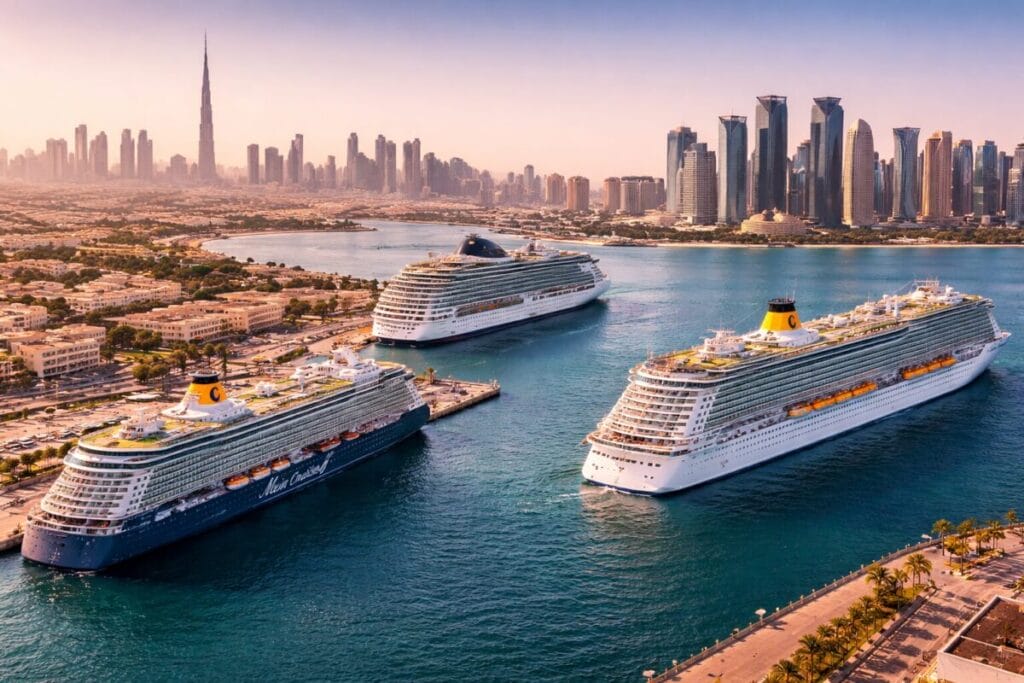
Rising military tensions in the Middle East have disrupted cruise travel across the region. Several cruise ships now remain docked in Dubai, Abu Dhabi, and Doha as security concerns halt operations.
Thousands of passengers currently stay onboard vessels operated by major cruise companies. Operators affected include TUI Cruises, MSC Cruises, Celestyal Cruises, and Aroya Cruises.
Regional airspace closures have blocked commercial flights and disrupted travel plans. Many passengers cannot leave the ships because airports remain closed.
Authorities continue to monitor the situation across the region. Cruise lines also coordinate with local governments and security agencies.
Passengers now wait for updated travel guidance while cruise ships remain at port.
Escalating Conflict Disrupts Air and Sea Travel
Military tensions in the Middle East escalated after a series of strikes and retaliatory attacks across the region. These developments triggered widespread security alerts.
Several countries responded by closing their airspace to civilian flights. Airports in Dubai, Abu Dhabi, and Doha suspended most commercial aviation operations.
Regional airspace restrictions also extend to Bahrain, Kuwait, Israel, Iraq, and parts of Jordan. These measures aim to protect civilian aircraft from potential threats.
The Strait of Hormuz also faces operational disruptions. This strategic waterway connects the Persian Gulf with global shipping routes.
Shipping companies and cruise lines must now navigate these security risks carefully.
Cruise Ships Wait for Clearance in Gulf Ports
Several cruise vessels currently remain anchored in major Gulf cruise terminals. Ships cannot depart until authorities confirm safe maritime conditions.
Passengers aboard the vessels continue their stay onboard while waiting for updates. Crew members provide regular announcements regarding travel plans.
Cruise companies must coordinate closely with port authorities before resuming operations. Security teams evaluate risks around each port and shipping route.
These evaluations determine whether ships can leave safely.
Passengers Remain Onboard While Flights Stay Grounded
Many passengers planned to fly home after completing their cruise holidays. However, airport closures have disrupted these plans.
Commercial airlines have suspended flights across the affected region. Without flights, cruise passengers cannot return home.
Some travelers waited many hours at airports before receiving cancellation notices. Airport terminals also experienced heavy congestion.
Many passengers returned to their ships after flights were cancelled. Cruise lines provided temporary accommodation onboard.
Passengers also reported luggage delays and travel confusion during the disruption.
Cruise Lines Focus on Passenger Safety
Cruise operators have emphasized passenger safety throughout the crisis. Ship captains and operations teams follow guidance from government authorities.
Security alerts have also affected onboard routines in some cases. Passengers have occasionally received instructions to remain indoors during security warnings.
Crew members continue to provide meals, entertainment, and hospitality services. Cruise ships function as self-contained environments capable of supporting passengers for extended periods.
Many passengers remain calm despite the uncertainty.
Cruise companies continue to issue regular updates as conditions evolve.
Impact on Major Cruise Operators
Several international cruise brands operate seasonal itineraries in the Persian Gulf. These voyages often depart from Dubai, Abu Dhabi, or Doha during winter months.
The current situation has disrupted several ships in the region.
TUI Cruises vessels Mein Schiff 4 and Mein Schiff 5 both experienced operational delays. One ship remained docked in Abu Dhabi while another stayed in Doha.
Passengers onboard these vessels waited for updates regarding departure schedules.
MSC Cruises also reported operational adjustments in Dubai. The company confirmed that ships remain secure while following government guidance.
Celestyal Cruises cancelled several scheduled departures from Gulf ports. The cruise line offered refunds and future cruise credits to affected travelers.
Airspace Closures Create Travel Bottlenecks
Airspace closures remain one of the biggest challenges for cruise passengers. Without flight access, cruise travelers cannot leave the region.
Airlines across the Middle East have suspended operations due to security alerts. International carriers also avoid flying through restricted airspace.
Air travel disruptions create major logistical challenges for cruise companies. Operators must arrange alternative travel plans for thousands of passengers.
These arrangements require cooperation between cruise lines, airlines, and government agencies.
Until airspace reopens, passengers must remain onboard or within port areas.
Middle East Cruise Tourism Faces Major Setback
Dubai, Abu Dhabi, and Doha have become important cruise hubs in recent years. Tourism authorities invested heavily in modern cruise terminals and visitor infrastructure.
Dubai operates one of the largest cruise ports in the Middle East. The city attracts international cruise ships each winter season.
Abu Dhabi also expanded its cruise tourism sector through port development projects. Doha opened a modern cruise terminal to welcome international visitors.
These destinations promote luxury tourism and cultural attractions to cruise passengers.
However, the current geopolitical crisis has disrupted this growing market.
Cruise companies may reconsider regional itineraries until stability returns.
Local Tourism Businesses Feel the Impact
Cruise tourism supports thousands of jobs across the region. Tour guides, transportation providers, restaurants, and retail shops benefit from cruise visitors.
When ships remain docked without excursions, local businesses lose significant revenue. Tour operators also cancel planned sightseeing trips.
Tourism officials hope that stability will return quickly. The cruise sector remains an important part of regional economic growth.
Governments across the Gulf continue to promote tourism investment despite current challenges.
Future Outlook for Gulf Cruise Travel
The Middle East remains an attractive destination for cruise tourism. The region offers luxury experiences, modern cities, and cultural heritage attractions.
Destinations such as Dubai, Abu Dhabi, and Doha continue to develop tourism infrastructure. These investments support long-term growth in international travel.
However, geopolitical stability plays a crucial role in tourism operations. Cruise companies must evaluate safety conditions before scheduling future voyages.
Industry experts expect cruise travel to resume once regional tensions ease.
For now, passengers onboard ships in Dubai, Abu Dhabi, and Doha continue to wait for clear travel pathways.
Cruise lines remain focused on passenger safety and coordination with authorities until normal operations can resume.
For more travel news like this, keep reading Global Travel Wire