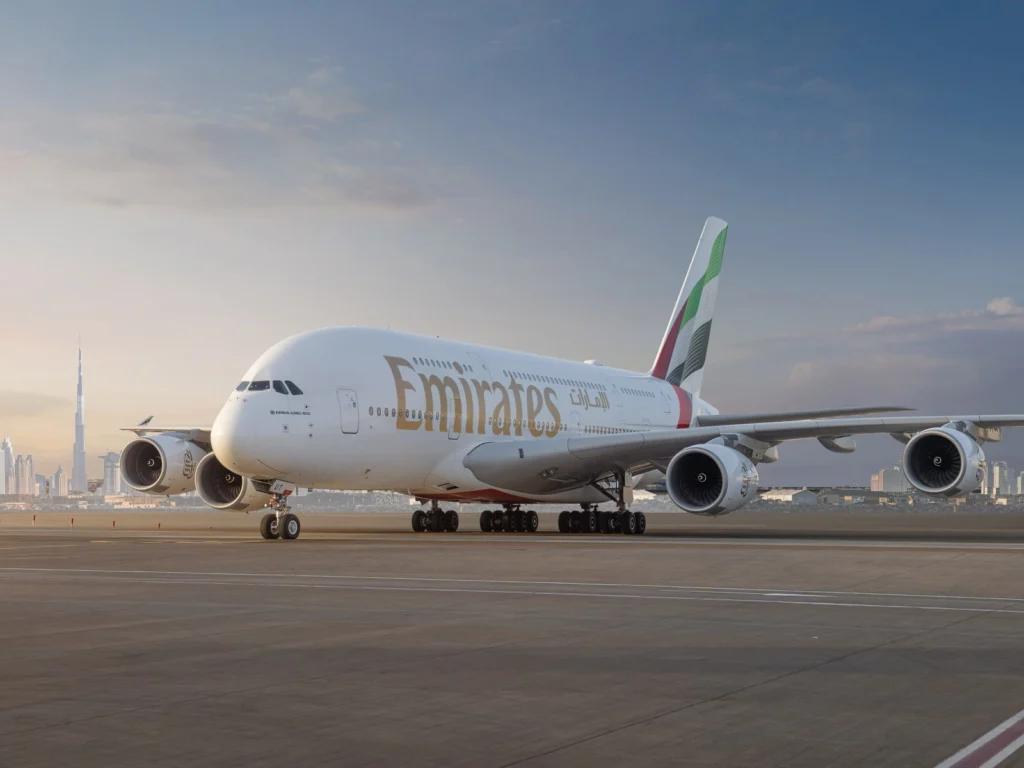
Emirates has introduced major changes to its Airbus A380 network for April 2026, temporarily removing the flagship aircraft from 15 international routes and reducing overall daily A380 departures from Dubai. The move marks one of the most significant short-term capacity adjustments by the airline in recent years and reflects the need to adapt operations during a period of regional uncertainty.
For travelers flying through Dubai, the changes may mean aircraft swaps, revised schedules and fewer seats on selected long-haul routes. For the wider travel industry, the decision highlights how quickly geopolitical pressure can reshape one of the world’s busiest global hub networks.
Major Reduction in A380 Operations
Emirates plans to operate around 45 daily A380 departures during April 2026, down sharply from previous levels.
That reduction carries weight because the A380 remains central to Emirates’ premium brand identity and high-capacity long-haul strategy. The aircraft serves some of the airline’s busiest global routes and supports strong demand in both economy and premium cabins.
When A380 frequencies fall, overall seat capacity can drop quickly, especially on routes that rely on the aircraft’s large cabin size.
For passengers, that can lead to tighter availability, higher fares on peak dates and fewer preferred departure times.
Why Emirates Is Adjusting Now
The latest Emirates A380 schedule changes come during a period of ongoing regional instability that has created a more complex operating environment for Gulf carriers.
When airspace conditions shift, airlines must often revise routings, adjust block times, reposition aircraft and protect schedule reliability. Large hub carriers feel this pressure strongly because their networks depend on smooth connections across dozens of markets.
Rather than maintain previous capacity levels at all costs, airlines often redeploy aircraft where demand and operational certainty remain strongest.
That appears to be the strategy now unfolding in Dubai.
What It Means for Dubai as a Global Hub
Dubai International Airport remains one of the world’s most important transfer airports, linking travelers between Europe, Asia, Africa, Australia and the Americas.
Any major Emirates fleet adjustment therefore has wider implications beyond the airline itself.
Fewer A380 flights can affect transfer volumes, lounge demand, airport retail activity and connecting itineraries across multiple continents. Travelers who normally rely on specific banks of departures may need to choose alternative timings or different aircraft types.
Even so, Dubai’s scale and network depth mean the hub remains highly connected despite temporary changes.
Why the A380 Matters to Travelers
The Airbus A380 is more than just a large aircraft. For many travelers, it represents a preferred way to fly long-haul.
Passengers often choose A380 services for quieter cabins, smoother boarding flows, spacious layouts and premium onboard features. Emirates has built much of its long-haul reputation around that experience.
Therefore, replacing A380 flights with smaller aircraft can change the onboard product, seat selection and availability of premium cabin inventory.
Travelers who specifically booked the aircraft type may want to monitor their reservation closely.
Possible Impact on Fares and Availability
Whenever capacity falls on popular routes, pricing pressure can rise.
Reduced A380 service means fewer total seats in the market, especially if replacement aircraft have lower capacity. During school holidays, business peaks or event periods, that can strengthen demand for remaining inventory.
Passengers booking last minute may notice higher fares or fewer nonstop choices.
Early booking, flexible dates and checking alternate departure times may become more valuable during the April schedule period.
Rebooking and Customer Flexibility
Emirates has a strong track record of offering customer support during operational changes, and affected passengers can typically expect rebooking options or schedule alternatives depending on ticket conditions.
Travelers should regularly review booking status through official channels and ensure contact details remain updated. Those with onward connections, hotel reservations or cruise departures may also want to build extra flexibility into their plans.
In periods of schedule volatility, early action often creates the best rebooking choices.
Wider Impact on Tourism and Business Travel
The schedule adjustments may also affect destinations that depend heavily on Emirates connectivity.
Many cities rely on the airline for premium long-haul access, tourism arrivals and business traffic routed through Dubai. Lower capacity can influence visitor numbers, especially in markets where Emirates provides a large share of nonstop seats.
Hotels, tour operators and airport partners in affected destinations may see shifts in demand patterns during the month.
However, because Emirates still operates a vast global network, most markets should retain meaningful connectivity.
Fleet Flexibility Becomes Essential
The latest changes also show why fleet diversity matters.
While the A380 offers unmatched capacity, smaller wide-body aircraft can give airlines more flexibility when conditions become uncertain. They allow carriers to match supply more precisely to changing demand and operational realities.
That balance between flagship capacity and agile deployment has become increasingly important in modern aviation.
Outlook for April 2026
The current Emirates A380 schedule changes appear to be a tactical response rather than a long-term retreat from the aircraft. Once conditions stabilize and demand strengthens, larger aircraft can quickly return to core markets.
For now, travelers should expect a more dynamic operating environment through April.
Dubai remains one of the world’s leading aviation hubs, but this latest adjustment shows that even the strongest global networks must stay flexible when conditions change fast.
For more travel news like this, keep reading Global Travel Wire