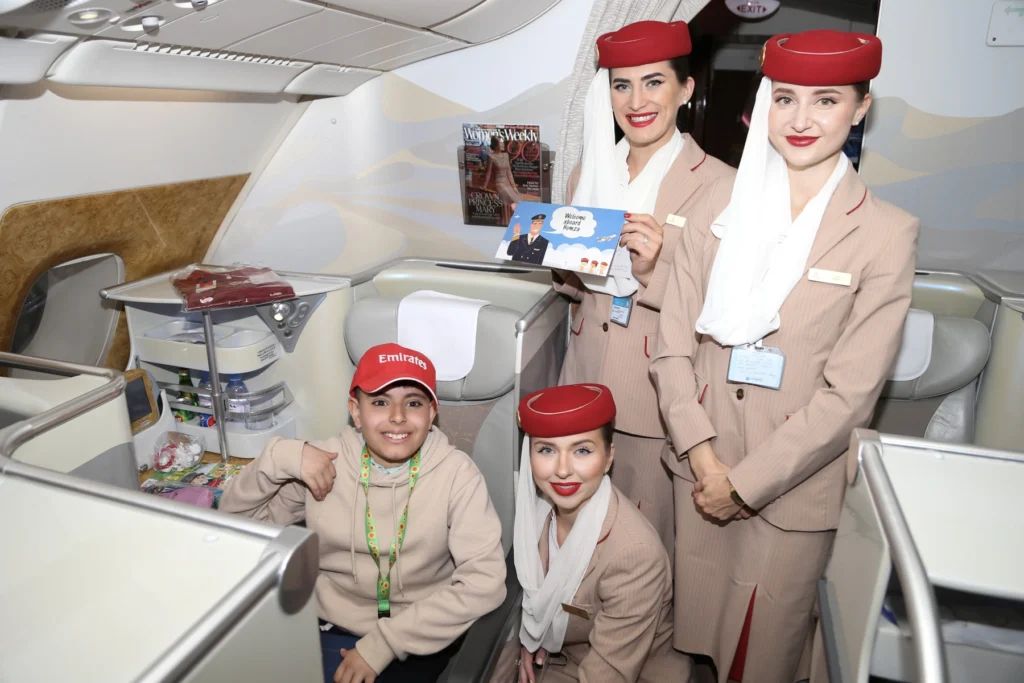
Emirates has expanded its autism-friendly flight simulation programme to 40 major cities worldwide, marking a significant step forward in inclusive air travel. Designed to help children and young adults on the autism spectrum prepare for flying, the initiative recreates the airport and onboard journey in a calm, structured environment that reduces anxiety and builds travel confidence for families.
The airline said more than 40 simulated flight experiences have been delivered over the past year, benefiting over 250 families. As demand for accessible travel grows globally, the programme is positioning Emirates at the forefront of customer-focused innovation in aviation.
How the Flight Simulations Work
The sessions are built to mirror the real travel experience from check-in to boarding. Participants move through airport processes such as entering the terminal, navigating security, waiting at the gate, and boarding an aircraft. In some cases, they also experience cabin seating, onboard announcements, and familiar aircraft surroundings.
For many autistic travelers, airports can be overwhelming because of bright lighting, loud sounds, crowds, long queues, and changes in routine. By practicing these steps in advance, passengers can become familiar with the journey before the actual day of travel.
That preparation can significantly lower stress levels for both travelers and their families, turning flying from a source of anxiety into a more manageable experience.
Why This Matters for Families
For families traveling with autistic children, uncertainty can be one of the biggest barriers to booking a trip. Concerns about sensory overload, communication challenges, and unexpected disruptions often make air travel feel difficult or inaccessible.
The simulation programme helps remove those barriers. Parents gain practical insight into what to expect, while children can experience the process gradually and in a supportive setting. Many families report greater confidence in planning future holidays or visiting relatives after taking part.
That confidence has direct tourism value. When families feel supported, they are more likely to travel, book flights, reserve hotels, and explore destinations that may previously have seemed out of reach.
A Global Rollout Across Key Regions
Emirates has rolled out the programme across cities in Europe, the Middle East, Asia, and the Americas. The global reach is important because it shows accessibility is no longer a niche concept limited to a few airports or select markets. It is becoming part of mainstream travel strategy.
By partnering with local airports, support organizations, and ground handling teams, the airline can tailor each session to reflect real-world airport conditions while maintaining a calm and controlled atmosphere.
This local collaboration model also helps expand awareness of neurodiversity across the wider travel ecosystem.
Better Training, Better Service
A key part of the initiative is staff training. Airport and airline employees involved in the programme receive guidance on supporting neurodiverse passengers, including communication methods, sensory-sensitive responses, and flexible customer care.
That training can improve service far beyond the simulation sessions themselves. Staff who better understand hidden disabilities are often more prepared to assist passengers during regular operations, delays, or unexpected changes.
The result is a stronger overall customer experience that benefits many travelers, not only those participating in the programme.
Inclusive Travel Is Becoming a Market Priority
The expansion reflects a wider shift in global tourism. Travelers increasingly expect destinations, hotels, attractions, and transport providers to be more inclusive and accessible. Hidden disabilities, including autism, are now receiving greater attention as the industry broadens its definition of accessibility.
Many airports and travel brands have introduced quiet rooms, sensory spaces, priority lanes, and clearer assistance services. Emirates’ large-scale simulation model adds another layer by focusing on preparation before travel even begins.
As competition for travelers intensifies, accessibility is becoming both a social responsibility and a commercial advantage.
Ripple Effects for Tourism and Hospitality
When air travel becomes easier for neurodiverse passengers, the benefits extend well beyond airlines. Hotels may see more family bookings, attractions can welcome new visitor segments, and destinations gain a reputation for inclusivity.
That reputation matters. Families often choose places where they feel understood and supported. A seamless flight experience can influence the entire holiday decision, from destination choice to length of stay and spending patterns.
For tourism boards seeking sustainable growth, inclusive travel initiatives can unlock underserved demand while strengthening visitor satisfaction.
Setting a New Standard for Airlines
The aviation industry has made major progress in physical accessibility, but hidden disabilities have historically received less attention. Emirates’ programme highlights how airlines can address those needs through practical, scalable solutions rather than one-size-fits-all policies.
By combining training, simulation, and global expansion, the airline is creating a model other carriers may now be encouraged to follow.
Looking Ahead
Emirates has indicated it plans to continue expanding autism-friendly services, including more simulation sessions in additional cities and broader accessibility enhancements across the customer journey.
That signals a future where more families can travel with confidence and where inclusion becomes a standard part of the passenger experience.
For global tourism, it is a powerful reminder that growth is strongest when travel works for everyone.
For more travel news like this, keep reading Global Travel Wire