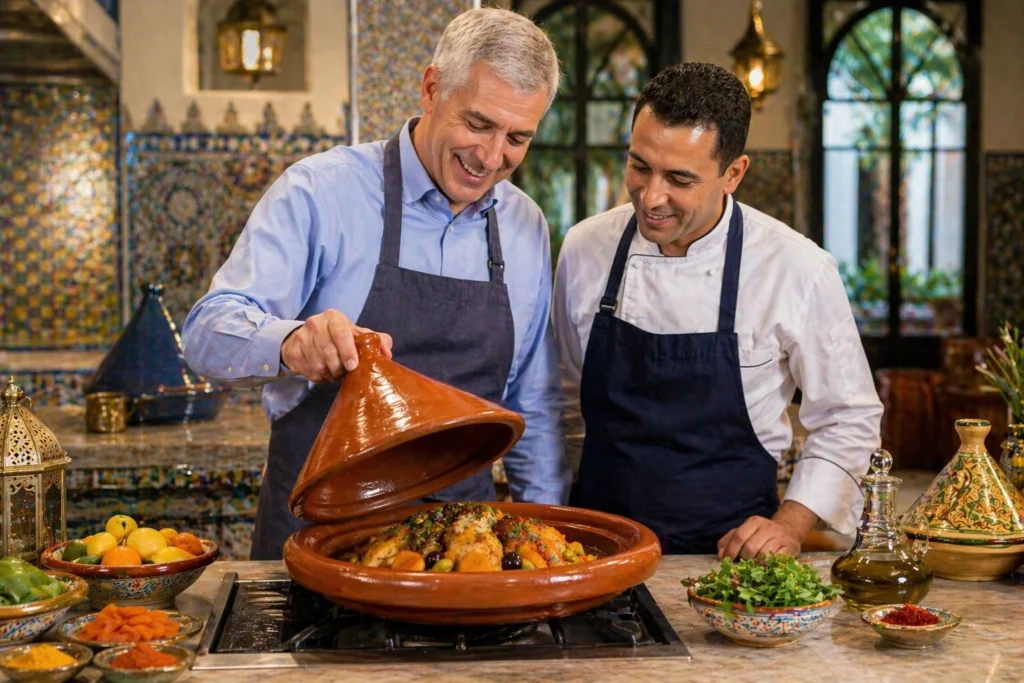
Hilton is putting culinary tourism in the spotlight with the launch of “Cooking with Chris,” a new video series featuring President and CEO Chris Nassetta exploring local food traditions at Hilton destinations worldwide. The series opens in Morocco, where Nassetta visits Conrad Rabat Arzana to learn the art of preparing traditional tagine, highlighting how food experiences are becoming a major driver of modern hospitality growth.
The move reflects a wider travel trend: guests increasingly want more than accommodation. They are seeking authentic cultural moments, local flavors and memorable experiences that connect them to the destination.
Why Culinary Tourism Is Booming
Food has become one of the strongest motivators in travel decision-making. Many travelers now plan trips around dining, markets, cooking classes and regional specialties as much as landmarks or beaches.
This shift has created significant opportunities for hotels and resorts. Properties that offer meaningful culinary experiences can strengthen guest satisfaction, increase on-site spending and differentiate themselves in a competitive market.
For global hotel brands, gastronomy is no longer an add-on amenity. It is becoming central to destination storytelling and brand identity.
Morocco Takes Center Stage
The first episode’s focus on Morocco is strategically significant. The country is globally recognized for its rich culinary heritage, spice traditions and hospitality culture.
At Conrad Rabat Arzana, Nassetta joins Executive Sous Chef Adil Limi to prepare chicken tagine, one of Morocco’s most iconic dishes. Slow-cooked and deeply rooted in local tradition, tagine represents the kind of authentic culinary narrative many travelers now value.
By showcasing this experience within a luxury hotel setting, Hilton demonstrates how international hospitality brands can celebrate local identity while delivering premium service.
For Morocco, that visibility can also support destination appeal among travelers interested in culture-led journeys.
Beyond the Hotel Room
The series signals how the guest experience is evolving beyond guestrooms and facilities. Today’s travelers often judge a stay by how immersive and memorable it feels, not only by room quality or location.
Cooking with local chefs, learning traditional methods and understanding regional ingredients can create stronger emotional connections than standard hotel experiences.
For hotels, those connections can translate into repeat visits, stronger reviews and greater brand loyalty.
This is especially relevant in luxury and upscale travel, where experience-led differentiation increasingly shapes booking decisions.
A Smart Strategy for Hilton
Hilton’s decision to center a leadership-led series around food also reinforces the company’s broader positioning as an experience-driven hospitality brand.
Featuring the CEO creates visibility and adds personality to the campaign, while local chefs and destinations remain at the heart of each story.
That balance matters. Travelers want trusted brands, but they also want authenticity. By collaborating with culinary professionals rooted in each destination, Hilton can deliver both global consistency and local relevance.
The strategy may also inspire guests to book stays specifically to access dining experiences, chef-led programming or culturally themed packages.
Benefits for Local Economies and Tourism
Culinary tourism can create benefits far beyond hotel walls. When visitors engage with local food culture, spending often spreads across farmers, producers, artisans, markets and independent suppliers.
Hotels that source regional ingredients or highlight local culinary traditions can help strengthen tourism’s economic impact.
In Morocco, where cuisine is a major part of cultural identity, showcasing dishes such as tagine to global audiences can reinforce national tourism appeal and support wider interest in travel to cities such as Rabat, Marrakech, Fez and Casablanca.
That makes food storytelling a valuable tool for destination marketing as well as hospitality growth.
The Rise of Experience-Led Travel
The success of culinary content also aligns with digital travel behavior. Many travelers now discover destinations through video, social media and immersive storytelling before they book.
Food-focused content performs especially well because it is emotional, visual and easy to connect with instantly.
Series like “Cooking with Chris” can therefore influence both inspiration and conversion—encouraging travelers to imagine themselves in the destination and then book the experience.
For hotels, that combination of entertainment and commercial value is increasingly powerful.
What Comes Next
If the series expands globally, it could showcase a wide range of Hilton destinations through their signature dishes and local culinary traditions.
That would create an ongoing platform for highlighting hotels, chefs and destinations while reinforcing the idea that travel is best understood through culture and cuisine.
For travelers, it offers inspiration. For destinations, it offers exposure. For Hilton, it strengthens a fast-growing area of hospitality demand.
The Bottom Line
Hilton’s launch of “Cooking with Chris” shows how deeply food is shaping the future of travel. By beginning in Morocco with an iconic tagine experience at Conrad Rabat Arzana, the company taps into one of tourism’s most influential trends.
As travelers continue to seek richer and more authentic journeys, culinary experiences may become just as important as the room key itself.
For more travel news like this, keep reading Global Travel Wire