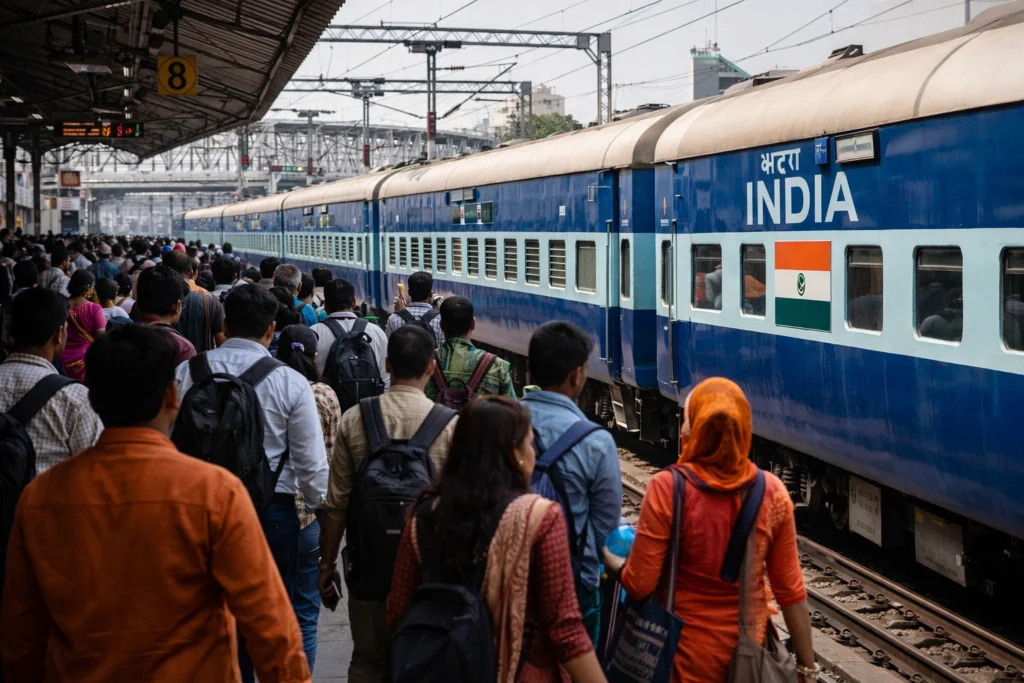
India is preparing for one of its most significant railway upgrades in recent years as Indian Railways launches a mega expansion drive for the 2025–26 financial year. The national network has approved 100 infrastructure projects worth about ₹1.53 lakh crore, covering more than 6,000 kilometres of new and upgraded routes. The programme is expected to reshape long-distance travel, unlock new tourism corridors and strengthen connectivity across Maharashtra, Bihar, Jharkhand and Madhya Pradesh.
The large-scale investment marks a decisive step toward building a higher-capacity, future-ready rail system. With demand for passenger travel continuing to rise, the expansion aims to reduce congestion, improve reliability and create faster, smoother journeys across some of India’s busiest transport corridors.
A New Era for Indian Rail Connectivity
The approved works include new railway lines, doubling of existing tracks, multitracking of heavily used routes and supporting infrastructure such as bypasses and chord lines. Together, these projects are designed to add capacity where it is needed most and improve network flexibility.
For passengers, this can mean more trains, fewer delays and stronger direct links between cities and regional destinations. For freight, additional track capacity can ease pressure on mixed-use corridors, helping both passenger and goods movement operate more efficiently.
The scale of the current plan is notably larger than the previous financial cycle, signaling a faster pace of infrastructure creation.
Why Maharashtra, Bihar, Jharkhand and Madhya Pradesh Matter
These four states stand out as key beneficiaries because they anchor major population centers, industrial belts, pilgrimage routes and tourism markets. They also sit on important east-west and north-south travel corridors used by millions of passengers every year.
Maharashtra combines business hubs, coastal tourism and large urban demand. Bihar is central to religious tourism, migrant travel and historic circuits. Jharkhand links mineral regions and emerging tourism areas, while Madhya Pradesh connects wildlife destinations, heritage cities and central India’s growing urban centers.
Improving rail infrastructure across these states can therefore create benefits far beyond state borders.
Faster Travel and Fewer Bottlenecks
One of the strongest aims of the programme is decongestion. Many major routes currently carry dense passenger demand alongside freight traffic, creating operational bottlenecks and timetable pressure. Additional tracks and bypass lines can reduce conflicts and help trains move more smoothly.
For long-distance travelers, that may translate into shorter journey times, better punctuality and improved chances of securing tickets during peak periods.
Festival travel, holiday seasons and weekend surges often place intense demand on Indian Railways. Expanded capacity can make these high-demand periods easier to manage.
Big Opportunity for Tourism
Tourism could be one of the biggest winners from the expansion drive. Better rail access makes destinations easier to include in travel plans, especially for budget-conscious and mid-market travelers who rely on trains as their preferred mode of transport.
As connectivity improves, travelers may find it easier to combine multiple destinations in one journey—such as heritage sites, pilgrimage centers, wildlife parks and urban experiences across different states.
Hotels, local transport providers, restaurants and attractions can all benefit when visitor numbers become easier to sustain year-round.
PM Gati Shakti Integration
The railway push is aligned with the PM Gati Shakti National Master Plan, which integrates rail, roads, ports and logistics infrastructure through coordinated planning. Rather than building isolated assets, the goal is to create a connected national transport grid.
For travelers, this matters because rail journeys do not begin and end at stations alone. Better integration with highways, buses and local transport can improve first-mile and last-mile connectivity, making complete journeys faster and more convenient.
This approach can be especially valuable for tourism clusters located beyond major city centers.
Inclusive Growth Through New Access
Government planning also emphasizes improved access for remote and underserved regions. New rail links can support not only travel, but also access to education, healthcare, markets and employment opportunities.
For tourism, this can bring lesser-known destinations into the national spotlight. Smaller towns with cultural, natural or spiritual appeal may become easier to reach and more attractive to domestic travelers.
That creates opportunities for local economies to diversify through visitor spending and hospitality growth.
Outlook for India’s Rail Future
The 2025–26 expansion package is more than a construction programme—it is a strategic upgrade of India’s core public transport system. By adding capacity, improving reliability and opening new corridors, Indian Railways is positioning itself for the next phase of national growth.
For passengers, the long-term promise is clear: more options, better journeys and stronger connections across a rapidly moving India.
For more travel news like this, keep reading Global Travel Wire