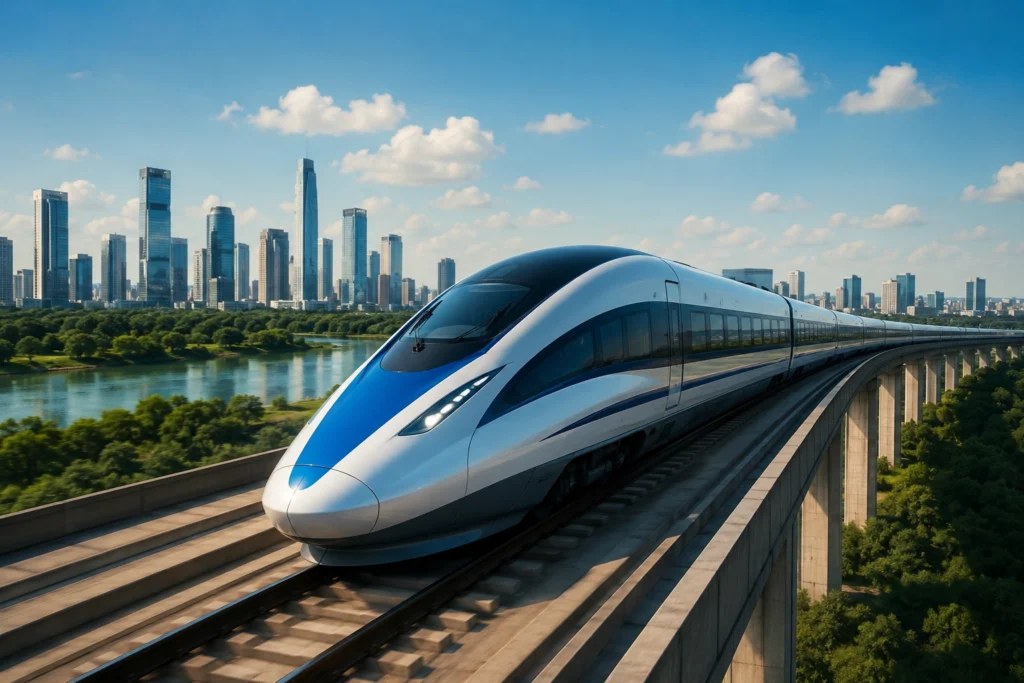
India’s proposed Bengaluru-Hyderabad high-speed rail corridor is gaining momentum as authorities advance planning discussions for one of the country’s most ambitious transportation infrastructure projects aimed at transforming intercity travel across southern India.
The proposed rail line is expected to dramatically reduce travel time between Bengaluru and Hyderabad from the current six to eight hours by road to approximately two hours, creating a major shift in mobility, tourism, logistics, and regional business connectivity.
As two of India’s most influential economic and technology centers continue expanding rapidly, the high-speed rail initiative is increasingly being viewed as a critical project capable of strengthening regional integration, improving sustainable transportation, and driving long-term economic growth.
Faster Travel Expected to Reshape Business and Tourism Mobility
The Bengaluru-Hyderabad corridor is expected to become one of southern India’s most important transportation links, connecting two major urban economies that play central roles in India’s technology, manufacturing, pharmaceutical, and innovation sectors.
Business travelers are anticipated to benefit significantly from faster transit times, allowing for more efficient meetings, corporate travel, and same-day return journeys between the cities. Tourism operators also expect improved rail connectivity to encourage short leisure trips, conference tourism, and multi-city travel itineraries.
Travel experts believe the corridor could redefine domestic intercity travel behavior by offering a high-speed alternative to congested highways and short-haul flights.
The project aligns with India’s broader transportation modernization goals focused on creating faster, smarter, and more sustainable mobility networks across rapidly urbanizing regions.
Southern India Emerges as a High-Speed Rail Growth Corridor
Bengaluru and Hyderabad have both emerged as leading economic powerhouses within India’s rapidly growing southern region.
Bengaluru continues strengthening its reputation as India’s technology capital and startup hub, while Hyderabad has expanded its influence in pharmaceuticals, aerospace, electronics manufacturing, and information technology.
The proposed high-speed rail corridor is expected to improve economic coordination between the two metropolitan areas while supporting industrial growth, labor mobility, and investment opportunities across the wider region.
Industry analysts note that stronger transportation links between major economic centers often contribute directly to productivity growth, regional competitiveness, and increased foreign investment.
High-Speed Rail Seen as a Catalyst for Regional Development
Beyond improving travel efficiency, the corridor is expected to support broader regional planning objectives by encouraging the development of secondary cities and economic clusters along the route.
Urban development experts increasingly view high-speed rail infrastructure as a tool for decentralizing economic activity away from overcrowded metropolitan centers. Improved connectivity can stimulate commercial growth, real estate investment, industrial expansion, and employment opportunities in smaller urban areas connected to major cities.
Transit-linked development around proposed stations may also create new business hubs, residential districts, hospitality investments, and logistics centers.
Authorities are expected to carefully evaluate land use strategies to ensure that growth generated by the project remains balanced and sustainable over the long term.
Sustainable Transportation Gains Importance in India’s Mobility Strategy
The Bengaluru-Hyderabad high-speed rail project also reflects India’s growing focus on sustainable mobility solutions as the country seeks to reduce traffic congestion, fuel consumption, and transportation-related carbon emissions.
High-speed rail systems are widely recognized globally as more energy-efficient alternatives to short-haul aviation and private vehicle travel, particularly along heavily traveled intercity routes.
Transportation planners believe the corridor could significantly reduce pressure on highways and airports while encouraging greater public transport usage across southern India.
Experts also emphasize the importance of integrating the rail system with local metro networks, bus systems, and urban transit infrastructure to maximize accessibility and long-term sustainability.
Land Acquisition and Environmental Planning Remain Critical
Despite the project’s strong economic potential, planners continue highlighting the importance of careful land acquisition processes and environmental safeguards.
Large-scale infrastructure developments often generate concerns regarding urban sprawl, ecological disruption, and real estate speculation near proposed transportation corridors. Authorities are expected to implement measures aimed at ensuring equitable land acquisition practices while protecting environmentally sensitive areas.
Urban planners stress that climate-sensitive development, affordable housing strategies, and sustainable land use planning will play essential roles in determining the long-term success of the project.
Balanced development policies will be necessary to ensure that the corridor supports inclusive economic growth rather than contributing to uncontrolled urban expansion.
Improved Connectivity Could Boost Commercial Competitiveness
For Bengaluru and Hyderabad, the high-speed rail project could deliver substantial long-term benefits for business efficiency and regional competitiveness.
Improved transportation connectivity is expected to strengthen supply chains, reduce travel-related productivity losses, and encourage deeper collaboration between industries operating across both cities.
Commercial districts, convention centers, technology parks, and industrial zones connected to the rail network may also experience increased investment activity as accessibility improves.
Tourism authorities believe the project could further support domestic travel growth by making weekend tourism, conference travel, and cultural tourism more accessible to larger numbers of travelers.
India Continues Expanding Its Modern Transportation Vision
The Bengaluru-Hyderabad corridor represents part of India’s larger effort to modernize transportation infrastructure and develop world-class mobility systems capable of supporting long-term economic expansion.
As urban populations continue rising and domestic travel demand increases, high-speed rail is increasingly viewed as a strategic component of India’s future transportation network.
Government officials and infrastructure planners continue evaluating additional high-speed rail opportunities across the country as India seeks to improve regional connectivity, strengthen economic integration, and modernize public transportation.
If successfully implemented, the Bengaluru-Hyderabad high-speed rail corridor could become one of the country’s most transformative infrastructure projects, reshaping travel patterns and economic activity across southern India for decades to come.
For more travel news like this, keep reading Global Travel Wire