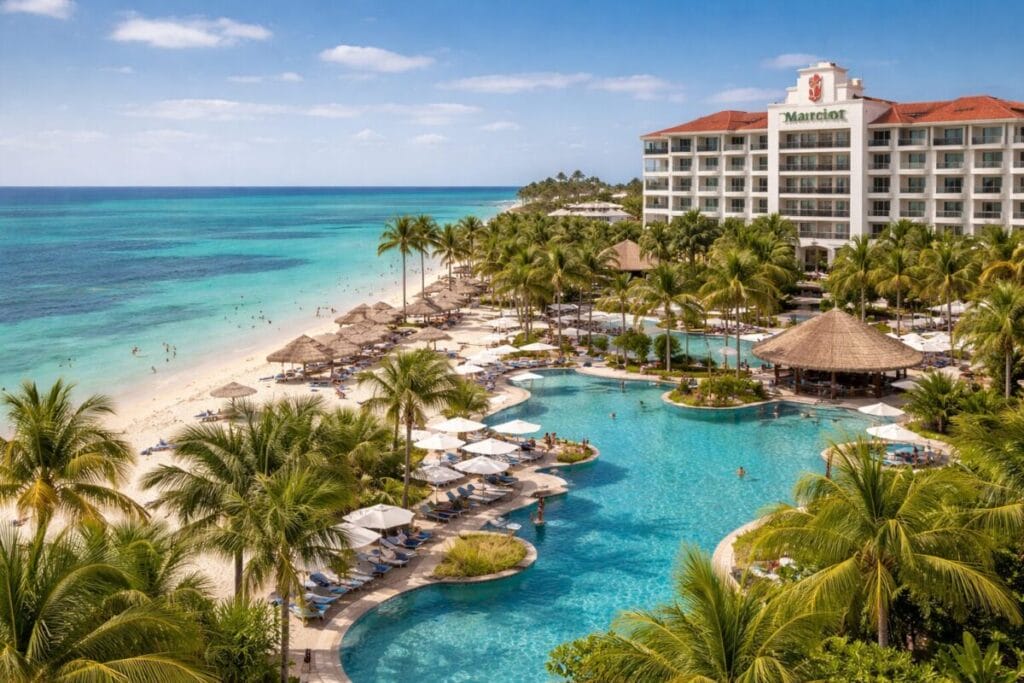
Marriott International has reported record growth across the Caribbean and Latin America region. The company signed 94 hotel deals and opened nearly 40 properties during the year.
This expansion highlights strong tourism demand across the region. Many countries continue to attract travelers seeking luxury resorts, beach destinations, and cultural experiences.
The new deals add more than 10,000 rooms to Marriott’s development pipeline. As a result, the company continues to strengthen its presence across major travel markets.
Marriott now operates 555 hotels across 37 countries and territories in the region. These properties provide more than 95,000 guest rooms for international travelers.
The expansion includes luxury resorts, all-inclusive properties, and midscale hotels. This strategy allows Marriott to serve a wide range of travelers.
Industry analysts expect tourism growth to continue across the Caribbean and Latin America. Marriott aims to capture this demand through its diverse brand portfolio.
Strong Increase in Hotel Development Deals
Marriott achieved a major milestone with 94 signed development agreements. This number represents a forty percent increase compared with the previous year.
The agreements add more than 10,461 rooms to the company’s regional pipeline. This growth reflects strong partnerships with hotel owners and developers.
Many investors continue to target the Caribbean and Latin America hospitality market. Tourism growth and improving infrastructure attract international hotel brands.
Marriott leaders say their development strategy focuses on flexibility. The company works closely with partners to design projects that fit local markets.
The new deals include resorts, urban hotels, and all-inclusive properties. This balanced portfolio allows Marriott to serve leisure and business travelers.
The expansion also supports local tourism economies. New hotels create jobs and encourage travel spending across destinations.
Conversion Projects Support Rapid Growth
Marriott also signed several conversion agreements during the year. Conversion projects allow existing hotels to join Marriott’s global portfolio.
The company signed almost 30 conversion deals representing about 3,000 rooms. These projects help owners renovate and reposition existing properties.
Conversion projects offer faster development timelines compared with new construction. They also allow Marriott to expand quickly in growing tourism markets.
By the end of the year, Marriott planned 45 conversion projects across the region. These developments represent more than 6,000 additional rooms.
Hotel owners often choose conversion deals to gain access to Marriott’s global reservation network. Brand recognition also helps attract international travelers.
This strategy continues to support Marriott’s rapid regional expansion.
Luxury Resort Portfolio Expands in Key Destinations
Luxury travel continues to grow across the Caribbean and Latin America. Marriott has expanded its luxury portfolio to meet this demand.
The company recently opened Nekajui, a Ritz-Carlton Reserve in Costa Rica. This resort offers secluded accommodations surrounded by tropical rainforest.
Marriott also introduced Siari, another Ritz-Carlton Reserve property in Mexico. These exclusive resorts target travelers seeking privacy and premium service.
Future luxury projects remain under development across several island destinations. Marriott plans to open a Ritz-Carlton Reserve in Southern Eleuthera, Bahamas.
Another luxury development will bring a Bvlgari Resort and Residences to Exuma. These projects aim to attract high-end international visitors.
Luxury tourism generates significant revenue for regional economies. High-spending travelers support local businesses, tours, and cultural experiences.
All-Inclusive Resorts Continue to Gain Popularity
All-inclusive resorts remain one of the fastest growing segments in Caribbean tourism. Marriott has invested heavily in this hospitality category.
One notable development includes W Punta Cana Adult All-Inclusive Resort. This property represents the first all-inclusive hotel under the W brand.
All-inclusive resorts attract travelers seeking convenience and premium experiences. Guests enjoy accommodations, dining, and activities within one destination.
Many Caribbean tourism boards support this model because it attracts global visitors. The resorts also encourage longer vacation stays.
Marriott continues to expand its all-inclusive portfolio across the region. These developments help the company compete with established resort operators.
City Express by Marriott Drives Midscale Expansion
Marriott has also strengthened its midscale hotel segment. The company achieved this growth through the City Express by Marriott brand.
During the year, Marriott signed 28 midscale hotel deals. These projects represent more than 3,000 new rooms.
City Express by Marriott focuses on affordable accommodations for business and leisure travelers. The brand targets growing urban markets and emerging destinations.
The company plans to introduce the brand into seven new countries. These markets include Argentina, Brazil, Dominican Republic, and Mexico.
City Express by Marriott currently operates nearly 150 hotels in the region. Marriott also plans 46 additional projects within the pipeline.
These developments will add more than 5,000 rooms in the coming years.
Brazil Emerges as a Key Growth Market
Brazil remains one of Marriott’s most important regional markets. The country continues to attract domestic and international travelers.
Marriott signed thirteen new hotel agreements in Brazil during the year. These deals support the company’s long-term expansion plans.
Several major hotel openings have already strengthened Marriott’s presence in Brazil. One example includes The Westin São Paulo.
Another upcoming project involves the Tropical Hotel da Amazônia. This property will join the Tribute Portfolio brand.
Brazil also plans to expand its leisure tourism offerings. One major development includes The Westin João Pessoa all-inclusive resort.
This resort will open in 2026 and target international vacation travelers.
Brazil’s tourism authorities continue to promote sustainable travel across the country. Improved infrastructure and air connectivity support tourism growth.
Tourism Growth Drives Regional Hospitality Investment
Tourism plays a major role in the Caribbean and Latin American economies. Millions of international travelers visit these destinations each year.
Governments across the region continue to invest in tourism infrastructure. Airports, cruise ports, and transportation networks continue to expand.
These improvements make travel easier for global visitors. As a result, hotel companies continue to increase investment.
Marriott’s strong expansion reflects confidence in regional tourism growth. The company plans to continue developing hotels across luxury and midscale segments.
The brand also aims to support local communities through job creation and tourism partnerships.
Marriott Strengthens Position in Regional Hospitality Market
Marriott’s record development activity highlights its leadership across the region. The company now operates the largest hotel portfolio in Caribbean and Latin America.
Its diverse brands allow Marriott to serve luxury travelers, families, and business visitors. This flexibility helps the company respond to changing travel trends.
Tourism experts expect strong visitor growth in the coming years. Destinations across the Caribbean and Latin America continue to attract global attention.
Marriott plans to continue expanding its hotel pipeline through partnerships with investors and developers.
With dozens of new projects under development, the company aims to strengthen its presence across one of the world’s most dynamic tourism regions.
For more travel news like this, keep reading Global Travel Wire