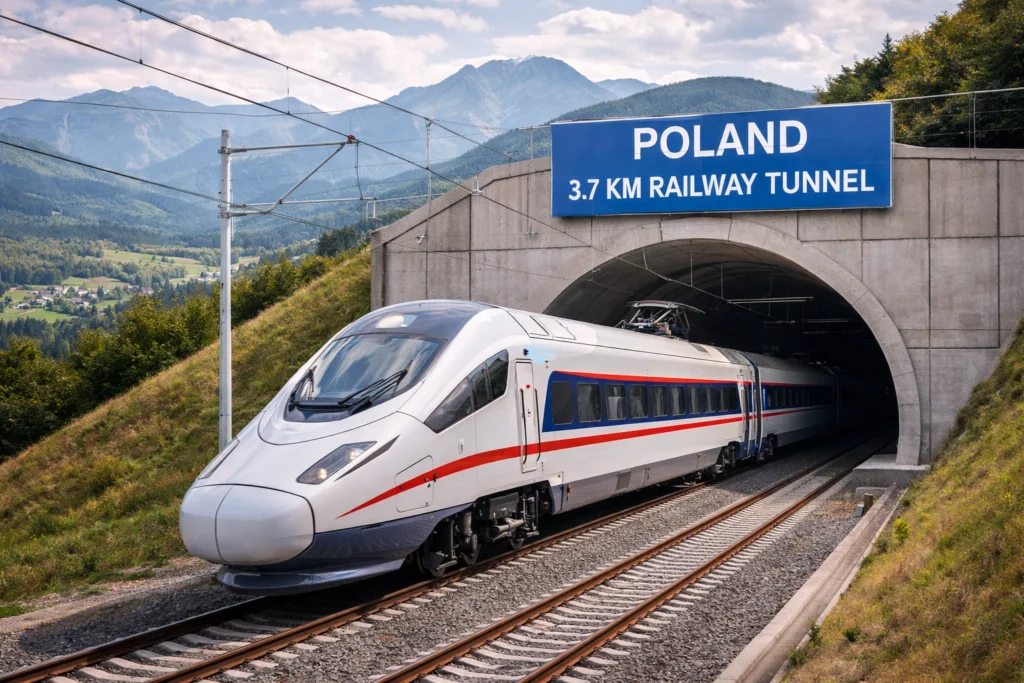
Poland has reached a major transport milestone with the completion of a new 3.7 kilometer railway tunnel in the south of the country, a project expected to reshape regional travel and strengthen access to some of Poland’s most visited destinations. The tunnel forms part of a wider rail modernization program linking the Silesian region with Krakow and marks another step in Poland’s push for faster, greener and more connected tourism infrastructure.
For travelers, the benefits could be immediate: shorter journey times, smoother connections and easier access to cultural cities, mountain resorts and heritage attractions across southern Poland.
For the tourism industry, the project opens fresh opportunities for longer stays, multi-city itineraries and stronger domestic and international visitor flows.
Faster Access to Southern Poland
The new Poland railway tunnel supports improved connectivity between key cities such as Krakow and Katowice, two of the country’s most important urban and tourism centers.
Better rail infrastructure can significantly cut travel times and improve reliability, making day trips and weekend breaks more practical for visitors. Faster journeys also encourage travelers to explore more than one destination in a single trip.
That matters in southern Poland, where historic cities, natural landscapes and cultural sites sit within reachable distance of each other.
For tourists arriving in Poland, rail now becomes an even stronger option for onward travel beyond the airport.
Krakow Gains Stronger Tourism Reach
Krakow remains one of Central Europe’s most popular city destinations, known for its medieval Old Town, castle district and vibrant cultural scene.
Improved rail links can help the city welcome more domestic travelers while making access easier for international visitors arriving elsewhere in Poland. Faster transfers from major hubs can strengthen Krakow’s position as a base for wider regional exploration.
Travelers may now find it easier to combine Krakow with nearby destinations, creating more flexible itineraries and higher overall tourism spending.
That can benefit hotels, restaurants, guides and local attractions throughout the city.
Better Connections to Katowice and Beyond
Katowice, the heart of the Silesian metropolitan area, also stands to gain from the new infrastructure.
The city has grown its profile through business events, culture, music and modern urban redevelopment. Stronger rail access can help attract leisure travelers who may previously have focused only on Krakow.
At the same time, smoother links across the region can spread tourism demand more evenly and reduce pressure on single hotspots.
That wider distribution often supports sustainable tourism growth.
Gateway to Nature and Mountain Travel
Southern Poland also offers some of the country’s most scenic landscapes, including routes toward the Tatra Mountains and alpine-style resort towns.
Improved rail travel can make these areas more accessible for visitors seeking hiking, winter sports, wellness breaks and nature escapes. Instead of relying solely on road transport, travelers may choose rail for a more comfortable and lower-stress journey.
As interest in outdoor tourism continues to rise, efficient transport links become a competitive advantage.
Rail can help turn city breaks into broader regional adventures.
Greener Tourism Takes Center Stage
The completion of the Poland railway tunnel also supports Europe’s wider sustainability goals.
Rail travel generally produces lower emissions per passenger than many car or short-haul air journeys. As travelers become more conscious of environmental impact, modern train networks are increasingly attractive.
By investing in rail capacity and faster routes, Poland aligns itself with the growing demand for low-carbon tourism choices.
That shift can appeal strongly to younger travelers, European weekend visitors and long-haul tourists planning greener multi-country trips.
Economic Boost for Local Communities
Transport projects often create benefits far beyond the station platform.
Easier access can drive hotel bookings, restaurant visits, attraction ticket sales and retail spending across towns connected to the upgraded corridor. Smaller communities may also gain more visibility when they become simpler to reach by rail.
For local businesses, stronger visitor movement can create year-round opportunities rather than purely seasonal demand.
This is especially valuable in regions with both city tourism and outdoor travel appeal.
Part of a Bigger Rail Vision
The tunnel is not a standalone achievement. It forms part of Poland’s broader strategy to modernize rail corridors and improve national mobility.
As future sections of upgraded rail lines come online, travelers can expect more seamless movement between major cities and tourism regions. Better integration with local transport networks may also improve first-mile and last-mile journeys.
That long-term vision positions rail as a central pillar of Poland’s tourism growth strategy.
Why It Matters for International Visitors
For overseas travelers, convenience often shapes destination choice.
A country with efficient rail links allows visitors to see more in less time. Poland’s expanding rail network can therefore strengthen its appeal against competing European city-break markets.
Visitors landing in Warsaw, Gdansk or Krakow may now feel more confident planning wider journeys through the country.
That flexibility can increase average stay length and visitor spend.
Outlook
The completion of the Poland railway tunnel signals more than an engineering success. It represents a new chapter in how travelers experience southern Poland.
With faster journeys, greener transport and easier access to Krakow, Katowice and mountain destinations, the country is building a stronger foundation for future tourism growth.
For visitors seeking culture, nature and seamless mobility, Poland’s rail future now looks more attractive than ever.
For more travel news like this, keep reading Global Travel Wire