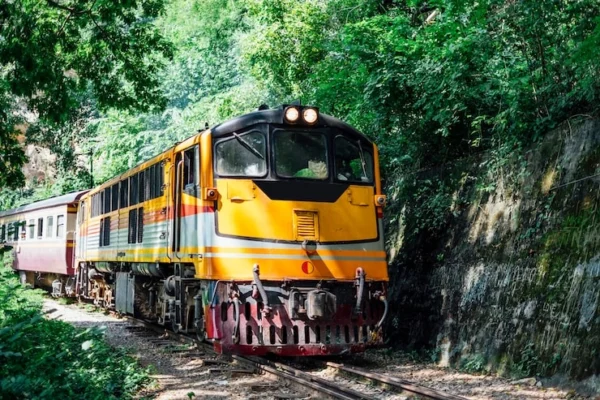
Thailand is rapidly transforming its transportation landscape through an ambitious nationwide railway modernization strategy designed to deliver faster, safer, and more sustainable travel across the country.
The State Railway of Thailand (SRT) is advancing multiple infrastructure projects simultaneously, including high-speed rail corridors, double-track regional expansions, major tunnel construction, and urban transit upgrades in Bangkok.
The modernization programme was highlighted during the Asia Pacific Rail 2026 conference, where senior railway officials outlined how Thailand’s expanding rail network is expected to strengthen economic competitiveness, reduce logistics costs, improve passenger mobility, and support sustainable transportation development.
The large-scale investment also reflects Thailand’s broader strategy to reduce reliance on road transportation while positioning rail travel as a key driver of tourism, regional trade, and urban mobility.
Double-Track Railway Upgrades Already Deliver Faster and Safer Travel
One of the most important milestones in Thailand’s rail transformation has been the completion of Phase 1 of the country’s double-track railway project.
The upgraded Southern Line between Nakhon Pathom and Chumphon has already generated measurable improvements in operational efficiency, travel reliability, and passenger safety.
Travel time between Bangkok and Chumphon has been reduced from approximately eight hours to six hours, significantly improving convenience for commuters, domestic tourists, and regional travelers.
Railway punctuality on the route has also improved by more than 13%, highlighting the impact of infrastructure modernization on service reliability.
Safety improvements have become another major benefit of the project. Authorities reported a 25% reduction in accidents at road-rail crossings due to the elimination of several at-grade intersections along the corridor.
The modernization works also included major engineering achievements such as the construction of the 5.4-kilometer Pha Sadet Tunnel and a five-kilometer elevated rail section in northeastern Thailand reaching approximately 50 meters in height.
Transport planners view these projects as foundational components of Thailand’s broader rail transformation strategy aimed at supporting long-term economic and tourism growth.
Northern and Northeastern Railway Expansions Strengthen Regional Connectivity
Thailand is now accelerating railway expansion projects across northern and northeastern provinces to improve regional mobility and strengthen trade logistics.
One of the most advanced projects is the Den Chai–Chiang Khong railway expansion in northern Thailand, which is currently nearing 60% completion.
The route is expected to improve transport access toward important regional trade corridors while supporting tourism growth and freight movement throughout northern Thailand.
The Ban Phai–Nakhon Phanom project in northeastern Thailand is also progressing steadily, with approximately 32% of construction completed.
Both projects are expected to be operational by 2028 and are considered strategically important for improving connectivity between underserved provinces and major economic centers.
In Lampang Province, railway authorities are also constructing a 6.2-kilometer tunnel that will become Thailand’s longest railway tunnel once completed.
The tunnel project is expected to improve operational safety and reduce travel complexity through mountainous terrain while supporting smoother passenger and freight movement across northern Thailand.
Bangkok–Nong Khai High-Speed Rail Set to Transform Regional Travel
Thailand’s most ambitious transportation project remains the Bangkok–Nong Khai high-speed rail line, which will eventually connect Thailand with Laos and China through a major cross-border rail network.
The project forms part of a wider regional connectivity strategy designed to strengthen transportation links across the Greater Mekong Subregion and enhance trade, tourism, and economic cooperation.
Phase 1 of the project between Bangkok and Nakhon Ratchasima is already more than 50% complete, with operations expected to begin in 2028.
Once operational, the route will significantly reduce travel times between Bangkok and northeastern Thailand while providing modern high-speed rail services comparable to other major Asian rail systems.
Phase 2, extending from Nakhon Ratchasima to Nong Khai near the Laos border, has already received cabinet approval.
The bidding process for the second phase is expected to begin in 2026, with construction scheduled to start in early 2027.
The completed corridor will create direct rail connectivity between Thailand, Laos, and China, opening new opportunities for tourism, international trade, logistics, and regional mobility.
Industry experts believe the project could reshape Southeast Asian transportation patterns by strengthening rail-based tourism and commerce across neighboring countries.
Bangkok Urban Transit Expansion Targets Traffic Congestion
In addition to intercity rail modernization, Thailand is also investing heavily in urban rail infrastructure to improve public transportation across the Bangkok Metropolitan Area.
The SRT plans to expand Bangkok’s Red Line commuter rail network through new extensions connecting key educational, medical, and residential districts.
Construction of the new extensions toward Thammasat University, Siriraj Hospital, and Salaya is expected to begin in mid-2026 with completion targeted for 2029.
The expanded urban transit system is intended to reduce traffic congestion, improve commuter efficiency, and lower environmental pollution levels by encouraging greater use of public transportation.
Bangkok remains one of Southeast Asia’s busiest urban centers, where traffic congestion and vehicle emissions continue presenting major infrastructure and environmental challenges.
Urban rail expansion is therefore viewed as essential to improving quality of life and supporting long-term sustainable city development.
Railway Investment Supports Tourism and Economic Growth
Thailand’s railway modernization programme is expected to generate significant long-term benefits for tourism, business travel, and regional economic development.
Improved rail infrastructure will make travel between cities faster and more reliable while enhancing access to tourism destinations throughout the country.
Regional expansions are also expected to stimulate local economies by improving freight efficiency, reducing logistics costs, and supporting investment in less-developed provinces.
Tourism operators anticipate stronger domestic and international travel demand as rail connectivity improves between major destinations and regional attractions.
High-speed rail, in particular, is expected to create new tourism corridors linking Bangkok with northeastern Thailand and neighboring countries through efficient cross-border travel.
Thailand Positions Rail as the Future of Sustainable Transport
Thailand’s ongoing railway transformation reflects a broader shift toward sustainable transportation infrastructure across Asia.
By investing in rail modernization, high-speed connectivity, electrification, and urban transit systems, the country aims to reduce dependence on highways and private vehicle usage while lowering transportation-related emissions.
Rail transport is increasingly viewed as a critical component of Thailand’s future economic competitiveness and environmental sustainability strategy.
As projects continue advancing over the coming years, Thailand is positioning itself as one of Southeast Asia’s emerging leaders in modern rail mobility and regional transportation integration.
With high-speed rail links, upgraded regional lines, and expanded urban transit systems all moving forward simultaneously, the country is entering a new era of faster, safer, and more connected travel infrastructure.
For more travel news like this, keep reading Global Travel Wire