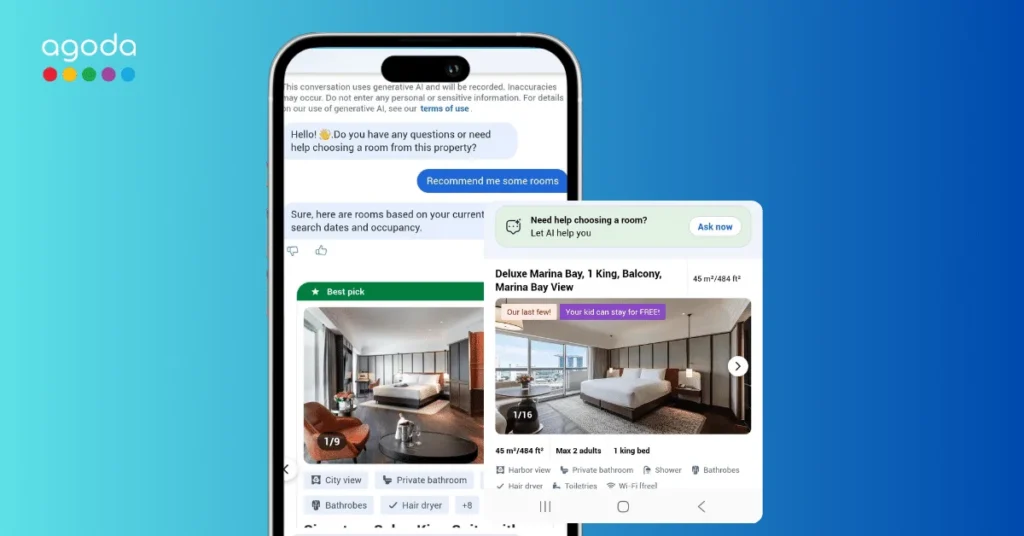
Agoda has expanded its AI Travel Assistant to 21 markets, bringing conversational holiday planning and booking tools to travellers in the UAE. Announced on 30 October 2026, the rollout follows a limited mobile trial launched on 15 September.
The feature allows users to discuss destinations, compare live prices and explore available accommodation within the same app. Flights and activities also form part of the planning experience, helping travellers organise different elements of a journey together.
For UAE residents, the assistant supports both domestic breaks and overseas holidays. However, its availability across 21 markets describes customer access, rather than the number of destinations travellers can explore.
From Holiday Ideas To Available Rooms
The assistant connects early travel inspiration with practical booking decisions.
Instead of beginning with a fixed hotel name, users can describe their preferences in everyday language. They can then refine dates, budgets and locations while comparing available options.
This approach could help travellers avoid developing an itinerary around accommodation unavailable for their intended stay.
A family considering a beach break, for example, can explore suitable locations while checking rooms for its chosen weekend.
Agoda’s UAE app listing directs customers to the assistant icon. Users can type responses or select suggested options as the conversation develops.
Earlier preferences remain part of the discussion, reducing the need to repeat details during each adjustment.
Abu Dhabi Breaks Show The Practical Appeal
A weekend journey from Dubai to Abu Dhabi illustrates how the tool can support local travel planning.
Families interested in beaches and cultural attractions might compare Saadiyat Island with alternatives. Those prioritising theme parks could explore accommodation around Yas Island.
The assistant allows travellers to change their preferred base while retaining previously discussed dates and requirements.
That flexibility can help families compare how accommodation choices fit their main outing.
However, identifying an attraction does not establish that admission is included with a hotel reservation.
Similarly, saving a restaurant as an itinerary idea does not secure a table. Each confirmed purchase or reservation requires separate attention.
Different Information Supports Different Decisions
The assistant combines several information types within its planning experience.
Web search contributes current information, while digital maps provide details about locations, restaurants and attractions. These can include photographs, ratings and opening hours.
Agoda supplies prices and availability for products sold through its platform.
The distinction matters because destination information and bookable inventory serve different purposes.
A suggested museum may help shape an itinerary, while a displayed hotel offer provides specific booking conditions.
Travellers should therefore distinguish recommendations from confirmed arrangements, particularly when coordinating accommodation, transport and activities around fixed dates.
Hotels And Activities Share More Planning Space
Agoda says participants using the trial were more likely to book multiple product types, including combinations such as accommodation and tours.
However, the company did not publish a sample size, percentage increase or UAE-specific breakdown in the supplied announcement.
The finding suggests that conversational planning can bring different travel products into the same purchasing journey.
For hotels and activity providers, that creates potential opportunities to reach customers while their itineraries are still developing.
Nevertheless, combining purchases does not automatically establish additional tourism demand.
A traveller might discover a new activity or simply book an existing plan earlier. The published findings do not distinguish those outcomes.
Booking Conditions Still Need Close Attention
The final decision depends on the specific offer displayed, rather than the conversation alone.
Travellers should compare room categories, travel dates, total prices and cancellation conditions before paying.
Two offers at the same hotel may carry different restrictions or inclusions. Flight choices also require attention to airports, arrival times and onward transport.
For activities, customers should establish whether a ticket has been purchased or merely saved for consideration.
International trips require separate checks on passport and visa conditions for every passenger.
The assistant’s planning functions do not establish immigration eligibility, and a reservation does not replace the required travel documents.
UAE Tourism Impact Remains Unmeasured
The expansion introduces another digital planning option within the UAE’s travel market.
Its immediate benefit concerns convenience: customers can explore ideas, assess availability and complete bookings without moving between separate planning stages.
However, no UAE-specific booking results accompanied the rollout described here.
There is therefore no demonstrated basis for attributing additional hotel nights, higher visitor spending or increased activity bookings to the assistant.
For travellers, the practical opportunity is clearer. The feature brings preferences and available offers closer together, while booking confirmations establish which parts of a trip are secured.
For more travel news like this, keep reading Global Travel Wire