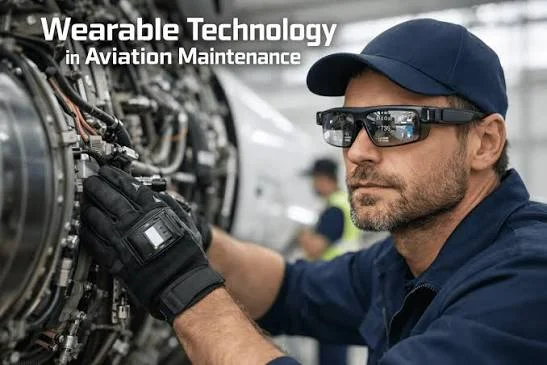
Artificial intelligence glasses could give aircraft technicians hands-free access to maintenance information, inspection records and remote engineering support. An October 2026 occupational assessment places aircraft mechanics and commercial pilots among ten jobs considered suitable for the technology.
The supplied findings rank aircraft mechanics ninth, with a suitability score of 79 out of 100. Commercial pilots place eighth, scoring 80.
These scores describe assessed compatibility rather than demonstrated operational improvements. The study does not establish airline deployment, approved cockpit use or verified reductions in maintenance time.
For travellers, the potential relevance lies in aircraft reliability. Better technical support could eventually help airlines manage maintenance more efficiently, although passenger benefits remain unmeasured.
Hands-Free Information Could Support Technicians
Aircraft maintenance involves detailed instructions, inspection requirements and accurate records. Technicians may need to consult documentation repeatedly while examining components or completing approved tasks.
Wearable displays could present relevant information within their field of view. Potential applications include retrieving service instructions, reviewing specifications and capturing photographs of inspection findings.
Voice controls could also help technicians record observations while keeping their hands available for physical work.
However, displaying information more conveniently does not establish that the information is correct. Maintenance organisations would need systems that retrieve current, approved technical material and clearly identify its origin.
AI-generated suggestions would require particular scrutiny before informing safety-critical decisions.
Remote Specialists Could Assist Across Airport Networks
Another proposed application involves connecting onsite technicians with authorised specialists elsewhere.
A camera-equipped device could transmit a live view of a component while supporting a conversation about the reported defect. The specialist could help locate documentation or clarify what the technician should examine.
This approach could interest airlines serving airports with smaller engineering teams. Specialist knowledge often sits at larger maintenance bases, while aircraft operate across geographically dispersed networks.
However, remote visibility has limitations. Camera angles, lighting, connectivity and image quality can affect what another person can assess.
Wearable support would therefore complement qualified personnel and established inspection procedures. It would not automatically replace physical examinations or maintenance authorisation.
Digital Records Need Human Verification
Inspection photography, voice notes and digital checklists offer another possible role for smart glasses.
Technicians could capture findings during a task, potentially reducing repeated movement between the aircraft and a separate workstation. Such tools might also help organise supporting images alongside maintenance records.
However, automatically transcribed notes can contain errors. Component identifiers, technical terminology and spoken numbers would need careful checking.
A photograph also cannot establish that every required inspection step occurred. Organisations would need clear procedures linking digital evidence with completed work.
The practical objective would be accurate, traceable documentation that supports maintenance decisions, rather than simply producing records faster.
Pilot Applications Require Separate Assessment
The supplied assessment identifies checklists, charts, alerts and voice documentation as possible applications for commercial pilots.
However, occupational suitability does not establish fitness for cockpit use. Flight crews already manage information through aircraft displays, checklists and electronic flight bags.
Adding wearable information could introduce competing visual demands or duplicate existing alerts. Any proposed application would need assessment against its intended operating environment.
The European Union Aviation Safety Agency’s artificial intelligence programme emphasises human factors, safety, security and trustworthy integration.
That broader framework supports careful evaluation of aviation AI. It does not constitute approval for any particular pair of glasses or cockpit application.
Tourism Benefits Depend on Proven Reliability
Reliable aircraft availability matters to holidaymakers, business travellers and tourism businesses coordinating arrivals.
If wearable assistance eventually improves maintenance workflows, it could support more predictable operations. However, the supplied study measures neither flight punctuality nor cancellations.
It also provides no verified figures for passenger time savings, hotel booking protection or airline operating costs.
Tourism benefits should therefore remain conditional. Faster access to expertise would matter only if it improves actual maintenance outcomes without weakening safety or documentation quality.
Airlines would need operational trials to establish whether the technology delivers consistent value.
Airport Uses Extend Beyond Aircraft
Airport facilities teams could also explore wearable assistance when maintaining mechanical equipment, ventilation systems and other infrastructure.
These activities share some requirements with aircraft engineering, including technical instructions, equipment identification and communication with specialists.
However, airport building maintenance and aircraft maintenance involve different responsibilities. Results from one setting cannot establish suitability in another.
Camera use would also require clear controls around confidential information, employees and security-sensitive areas.
For aviation operators, the next step is evidence from defined tasks and controlled evaluations. Useful measures would include information accuracy, worker workload and reliable completion of required procedures.
AI glasses present a possible support tool for aviation professionals. Their eventual contribution to smoother travel will depend on demonstrated performance and effective human oversight.
For more travel news like this, keep reading Global Travel Wire