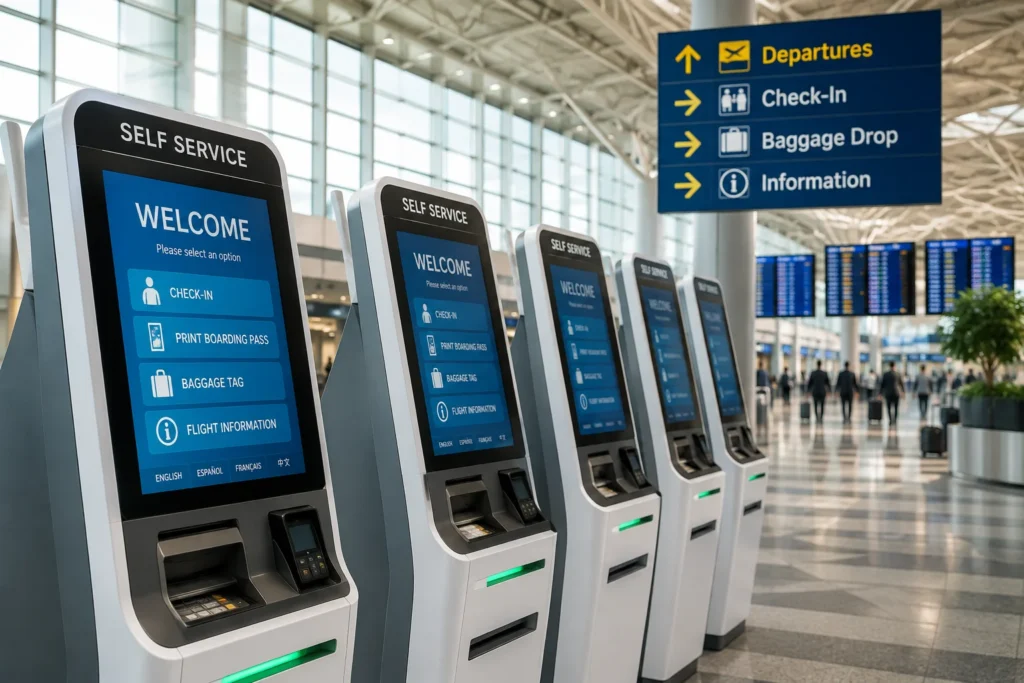
Civil aviation authorities and national transport ministries worldwide report sustained investments in modern terminal automation to handle rising passenger volumes and streamline airport operations. Modern airport terminals are rapidly integrating automated check-in, self-service bag drop, and advanced biometric identification frameworks to alleviate operational bottlenecks, shorten terminal queues, and enhance processing capacity across domestic and international gateways.
Key statistics and official forecasts highlight a structural shift toward digital, self-service passenger processing platforms within commercial aviation hubs.
Automated Processing Systems Lead Infrastructure Investments
Terminal hardware and self-service kiosks form the foundational core of global airport modernization programs. Official aviation infrastructure reporting indicates that hardware deployments account for nearly sixty percent of operational self-service investments across global hubs. Terminal operators prioritize high-capacity physical units equipped with multi-document scanners, automated bag-tag printers, and touchless interfaces.
Aviation processing data shows strong demand across specific functional terminal segments:
Self-Check-In Terminals: Representing over thirty-one percent of processing hardware deployments, automated check-in kiosks allow passengers to verify reservations, select seats, and print travel documentation independently.
Self-Bag-Drop Kiosks: Automated baggage units reduce manual counter handling times, allowing travelers to weigh, tag, and deposit checked luggage directly into terminal conveyor systems.
Immigration and Border Control Kiosks: Advanced border entry posts integrate digital passport verification and biometric matching to reduce manual immigration processing times at international arrival points.
Touchscreen and Contactless Interfaces: Touch-enabled self-service units account for over forty-four percent of hardware deployments, while touchless optical scanners continue expanding across major international transit hubs.
On-premises system architecture remains the primary deployment model for terminal processing, representing sixty-six percent of current installations due to strict national aviation security standards and local airport network requirements.
Biometric Integration and International Security Standards
The adoption of integrated biometric identification standards is fundamentally altering border verification and passenger identity management. Under frameworks established by the International Civil Aviation Organization (ICAO), member states are transitioning to updated biometric encoding formats (ISO/IEC 39794) for travel documents and inspection systems to enhance digital verification security and cross-border interoperability.
International civil aviation frameworks highlight key operational advantages of biometric travel deployments:
Automated Identity Verification: Facial recognition, fingerprint authentication, and optical passport verification systems streamline security checks without physical document handoffs.
Accelerated Terminal Throughput: National civil aviation initiatives, such as India’s Digi Yatra digital public infrastructure, report reducing average airport entry verification times from fifteen seconds down to five seconds per passenger.
Standardized Border Databases: Implementations of international security registries, such as the ICAO Public Key Directory, allow border control agencies to verify digital security certificates and prevent passport falsification in real time.
Regional performance metrics show North America leading overall technology adoption, accounting for over thirty-one percent of global terminal automation revenue. Meanwhile, civil aviation authorities across the Asia-Pacific region report the fastest expansion rate in modern terminal infrastructure, driven by massive airport construction projects and rising domestic flight frequencies.
Omnichannel Connectivity and Personalization Platforms
Modern terminal management increasingly connects physical airport infrastructure with digital travel ecosystems. Official guidelines from civil aviation boards emphasize the seamless integration of airline mobile applications, digital identity wallets, mobile boarding passes, and real-time flight notifications with physical kiosk hardware.
Through unified software architectures, travelers can initiate booking procedures on personal mobile devices and complete physical authentication, baggage tagging, or border clearances at automated terminal points. Self-service kiosks also incorporate multilingual interface options, localized navigation mapping, accessibility support, and customized flight status notifications, catering to international passenger demographics.
Data-Driven Terminal Operations and Operational Insights
Digital processing platforms double as intelligent data-collection points for airport operational control centers. Kiosk utilization metrics, queue monitoring analytics, and passenger flow data provide terminal managers with real-time visibility into concourse congestion and resource demands.
By utilizing predictive operational intelligence generated across automated touchpoints, airport operators can optimize security lane staffing, reallocate terminal floor space, and improve overall passenger management strategies. As global air travel continues its expansion, the airport kiosk industry remains central to establishing efficient, secure, and digitally integrated global transit hubs.
For more travel news like this, keep reading Global Travel Wire