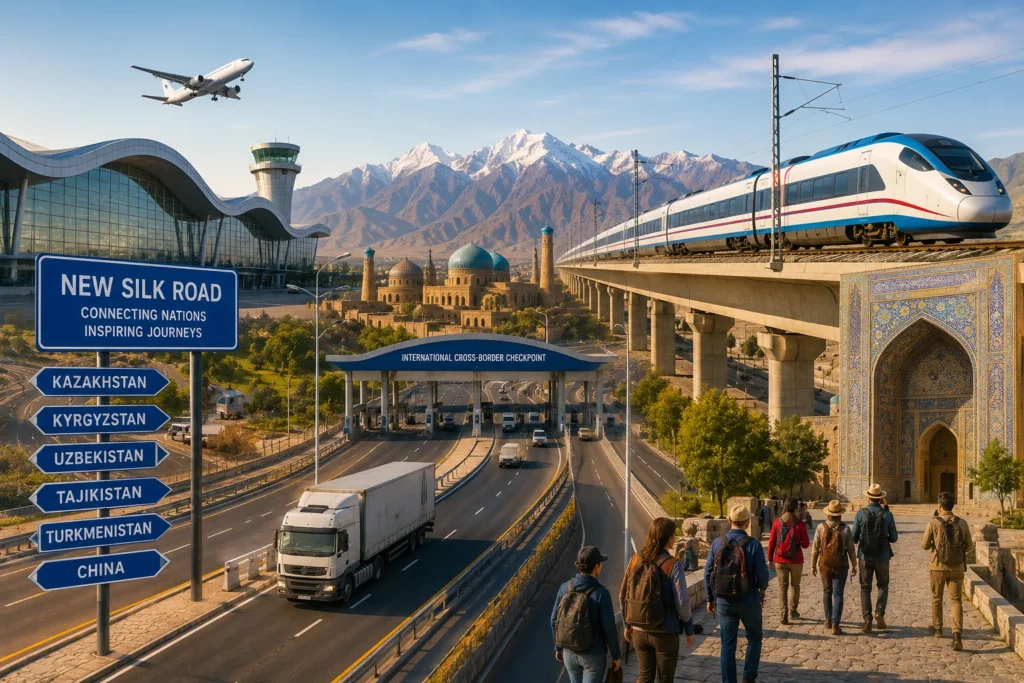
Strategic transport investments, high-speed regional connections, and collaborative heritage initiatives are fundamentally transforming travel access across Central Asia. Official economic data and bilateral releases highlight how modern transit corridors, digital cross-border services, and eco-tourism frameworks are expanding regional visitor access while positioning land-linked destinations along historic Silk Road routes.
Through coordinated regional agreements, modern highway reconstructions, and high-capacity rail developments, public tourism and transport authorities are enhancing traveler mobility and fostering sustainable economic growth across mountainous, rural, and historic urban communities.
Modern Transit Networks Expand Regional Destination Access
The modernization of high-capacity transport links serves as the catalyst for expanding regional tourism ecosystems. Central infrastructure initiatives, including major international rail corridors under construction across Central Asia, are establishing direct transit links that connect Asia and Europe.
Official public announcements confirm that the construction of new trans-regional rail lines will significantly shorten travel times between major cultural hubs. By converting landlocked zones into interconnected travel corridors, international visitors gain unprecedented overland access to remote mountain passes, ancient trading towns, and pristine alpine nature reserves.
Key infrastructure enhancements driving regional travel include:
High-Capacity Rail Corridors: Establishing direct passenger and freight rail networks to facilitate seamless multi-country itineraries across Central Asian states.
Highway Reconstruction Projects: Upgrading primary mountain pass expressways to improve road safety, shorten driving durations between border points, and support self-drive overland tourism.
Intermodal Transit Hubs: Building modern passenger transfer terminals equipped with multi-lingual visitor facilitation centers and standardized transit amenities.
Clean Energy Mobility: Deploying low-emission public transit and electric vehicle charging infrastructure along high-density tourist circuits to protect vulnerable alpine environments.
The expansion of key transport corridors allows international tour operators to design comprehensive Silk Road travel itineraries that move visitors efficiently across diverse ecological zones and historical landscapes.
Preserving Nomadic Heritage and Silk Road Cultural Monuments
Cultural heritage preservation forms a core pillar of regional tourism strategy. Joint ministerial statements emphasize the protection of ancient caravan stops, historic architecture, and traditional mountain settlements that define Central Asian history.
Targeted public programs focus on structural restoration, building multi-lingual interpretation centers, and constructing low-impact visitor pathways around fragile archaeological monuments. These investments ensure high-density heritage sites remain protected while offering immersive educational experiences.
Preservation frameworks prioritize active community involvement:
Artisan Marketplace Integration: Constructing traditional handicraft centers near major historic gates to provide local craftspeople direct access to visitor markets.
Community-Based Eco-Lodges: Supporting rural hospitality networks that allow travelers to experience traditional nomadic lifestyles and cultural heritage sustainably.
Digital Monument Verification: Deploying electronic ticketing platforms and crowd management analytics to prevent physical degradation at sensitive cultural landmarks.
By integrating traditional cultural heritage with modern visitor management tools, regional tourism authorities preserve authentic local identity while catering to global travel demand.
Emerging Technologies and Digital Tourism Ecosystems
Digital modernization is reshaping how travelers plan, access, and experience regional destinations. Central planning frameworks prioritize artificial intelligence, smart border management, and unified digital platforms to enhance travel convenience.
Public initiatives focus on deploying centralized electronic visa portals, real-time border waiting-time monitors, and localized mobile translation applications. These digital tools eliminate administrative friction for international arrivals, enabling smooth transitions between neighboring countries.
Furthermore, smart destination management platforms collect anonymous visitor movement data to optimize public transport schedules, manage peak-hour crowd flows at scenic spots, and direct tourist traffic toward emerging rural destinations.
Economic Impact and International Visitor Projections
Official economic indicators highlight the vital role of cross-border travel in national development. Bilateral trade and service reports confirm record-setting economic cooperation between regional partners, with cross-border exchanges contributing significantly to national revenue, small-business expansion, and rural employment.
Young demographic profiles and expanding educational opportunities across Central Asian nations position the region to capture growing international leisure travel market share. Public master plans target continued capital allocation toward regional airport upgrades, hospitality training institutes, and green energy projects along primary travel routes.
As regional connectivity deepens through international cooperation frameworks, strategic investment in sustainable infrastructure ensures that historic Silk Road destinations deliver high-quality, eco-friendly experiences for global travelers.
For more travel news like this, keep reading Global Travel Wire