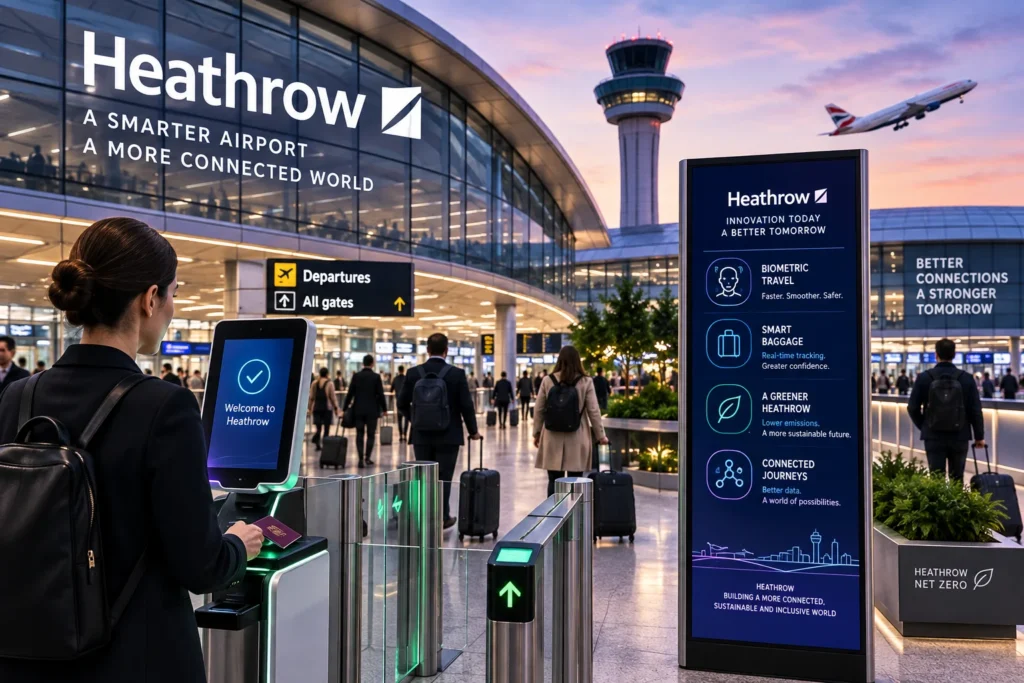
Global aviation hubs are undergoing a structural evolution as passenger volumes approach record levels worldwide. Leading this shift, London Heathrow has implemented a comprehensive technological overhaul, combining next-generation security screening, expanded biometric identity verification, and multi-billion-pound physical infrastructure upgrades.
According to official capital expenditure disclosures and operational performance updates released by the airport authority, the ongoing multi-year modernization program is designed to eliminate major transit bottlenecks, improve network resilience, and elevate the overall passenger experience across all four active terminals.
Next-Generation CT Scanners Streamline Security Checkpoints
At the core of Heathrow’s technological transformation is the full deployment of Next-Generation Security Checkpoints. Backed by a capital investment of approximately one billion pounds, Heathrow has become the largest international hub airport to fully integrate advanced computed tomography (CT) scanners across every terminal lane.
The advanced 3D imaging technology allows security officers to inspect cabin luggage from all angles with automated threat-detection software, eliminating the historical requirement for travelers to unpack liquids and laptops. Under the upgraded framework, passengers can keep electronic devices and liquid containers up to two liters inside their carry-on bags.
Official performance dashboards published by the airport authority confirm measurable operational gains resulting from the rollout:
Accelerated Screening Speeds: More than 98 percent of departing passengers consistently clear security checkpoints in under five minutes.
Enhanced Throughput: Automated threat detection maintains regulatory compliance while significantly increasing hourly lane capacity during peak travel periods.
Environmental Sustainability: The elimination of clear plastic liquid bags removes an estimated 16 million single-use plastic items from the airport’s operational footprint annually.
Biometric Identity and Border Clearance Infrastructure
Beyond checkpoint security, Heathrow is deepening its integration of biometric identity management to create continuous, digital-first travel corridors. Automated cameras capture biometric data at security checkpoints and boarding gates, matching images against travel credentials to reduce physical document checks.
This digital framework is supported by updated national border control protocols. Following official announcements from the UK government and civil border agencies, automated passport control access (eGates) was expanded to include eligible children aged eight and nine traveling with an adult. This policy change accelerates inbound family travel flows, diverting high-volume passenger groups away from manual immigration booths during peak arrival windows.
To support these digital systems, Heathrow has expanded its executive leadership to include specialized data, artificial intelligence, and digital transformation divisions. These internal teams utilize predictive data modeling to forecast passenger queues, execute preventive maintenance on critical baggage handling systems, and manage real-time flight disruptions.
Infrastructure Expansion and Terminal 4 Redevelopment
Physical capital expenditure projects are proceeding alongside digital initiatives to ensure overall network capacity matches growing passenger demand. Heathrow’s financial disclosures outline a capital investment plan exceeding 1.3 billion pounds for focused passenger upgrades, forming part of a wider 4.7-billion-pound regulatory expenditure envelope.
A major element of this physical expansion includes the comprehensive redevelopment of Terminal 4. The multi-storey car park facility was closed to enable a complete redesign of forecourts, passenger drop-off zones, and surface transport connections. The project aims to improve landside vehicle circulation, expand access to public transit links, and alleviate terminal approach congestion.
Additional capital projects across the airport estate include:
Terminal 2 Baggage System: Installation of high-capacity, automated baggage sorting networks to improve transfer reliability.
Terminal 5 Transit Replacement: Upgrading the internal automated people mover system to ensure uninterrupted terminal connectivity.
Surface Access Alignment: Integrating terminal forecourt designs with national rail and road access frameworks to support future long-term capacity plans.
Operational Metrics and Commercial Growth
Official operational metrics confirm that Heathrow maintains strong on-time performance indicators compared to major European connecting gateways. Enhanced baggage handling systems achieved load reliability rates exceeding 98 percent, transferring hundreds of thousands of additional bags successfully to intended flights.
The reduction in security dwell times has also reshaped passenger behavior within departure lounges. Financial trading updates indicate that reduced queue times have driven growth in commercial revenues, with increased passenger engagement across retail venues, premium dining establishments, and fast-track lounge services.
As international air travel continues to expand, Heathrow’s combination of advanced CT security infrastructure, biometric processing, and targeted terminal investments establishes a modernized blueprint for high-volume hub management worldwide.
For more travel news like this, keep reading Global Travel Wire