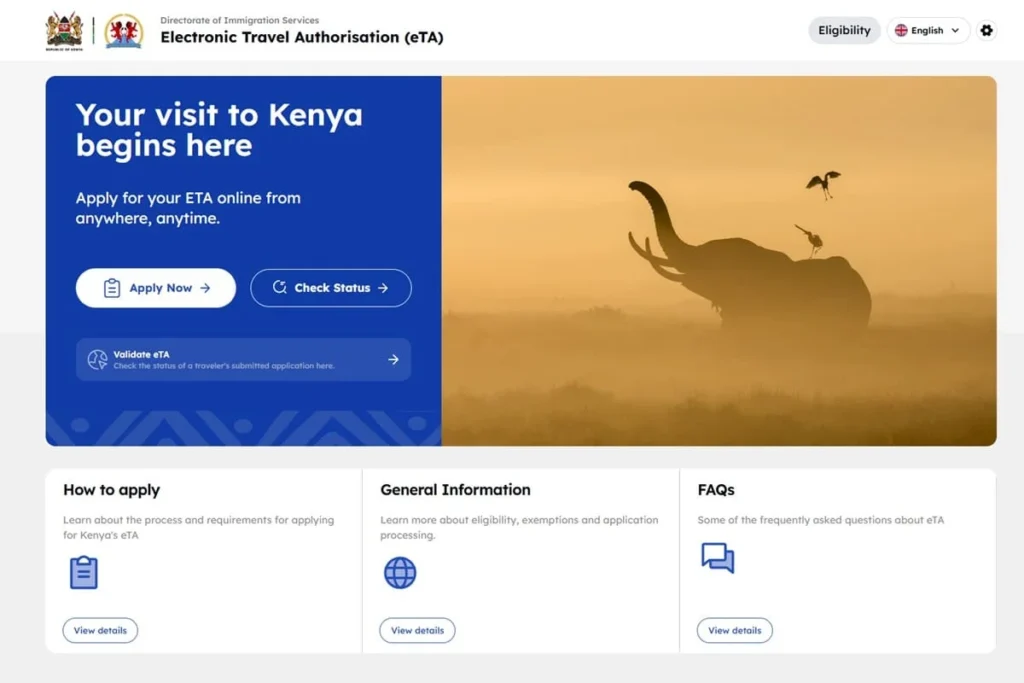
Kenya’s Electronic Travel Authorisation system reportedly introduced health insurance checks on 6 October 2026, adding another consideration for international visitors. Applicants have encountered insurance verification and purchase options before completing the online process.
The supplied application observations describe a premium of approximately US$44, with additional charges potentially increasing the final payment. However, that amount should not be presented as a verified universal government fee.
For tourists planning safaris, coastal holidays or Nairobi visits, the main question concerns recognition of existing insurance. Visitors already holding suitable coverage need clarity before purchasing another policy.
Insurance Protection Differs From Travel Authorisation
Kenya’s travel health insurance framework concerns medical protection for foreign visitors staying less than 12 months. The supplied information identifies Gazette Notice No. 11492, published on 30 July 2026, as the underlying instrument.
An ETA and an insurance policy serve different purposes. The authorisation concerns permission to travel, while insurance provides benefits subject to its terms.
Completing one process therefore does not automatically establish compliance with the other. Travellers should review both requirements when preparing their documentation.
The reported portal change brings those processes closer together operationally. Nevertheless, questions remain about how applicants demonstrate that an existing foreign-issued policy meets the prescribed conditions.
Reported Premium Requires Careful Cost Checks
The approximately US$44 premium represents a reported application price, rather than a confirmed fixed charge applying to every visitor. The supplied material also describes a separate observation of US$45.
Additional access and payment processing charges may affect the checkout amount. Travellers should therefore review the full payment breakdown before approving a purchase.
The supplied information lists a standard single-entry ETA fee of US$30. Insurance expenditure remains separate from that authorisation charge.
However, combining individual reported charges would not establish a universal trip preparation cost. Applicants with recognised existing insurance may face different arrangements.
For families and organised groups, even modest additional payments can affect the overall holiday budget. Clear pricing also helps travel businesses explain package inclusions accurately.
Existing Policies Remain the Central Question
The supplied material describes earlier Ministry of Health guidance allowing qualifying insurance purchased in a visitor’s home country. Acceptance depends on meeting Kenya’s prescribed requirements.
However, the reported application observations did not identify a clear certificate-upload option for foreign-issued policies. That creates uncertainty about verification within the online process.
Travellers should not interpret an unfamiliar purchase prompt as proof that their existing cover is invalid. Equally, possessing insurance does not automatically establish that every required benefit is included.
Applicants encountering difficulties should seek clarification through official ETA assistance channels. Keeping the policy certificate available can help explain the coverage already purchased.
For travel agents, resolving this question before departure could prevent unnecessary duplication and last-minute administrative problems.
Coverage Details Matter Beyond the Headline Limit
The supplied framework specifies a minimum combined insurance benefit of US$50,000. This describes protection under the policy, rather than the price paid for it.
The listed benefits include medical expenses, emergency medical transportation and repatriation of remains. Prescription medicines and mental health treatment also appear among the specified categories.
Travellers should examine those individual provisions instead of relying solely on an advertised overall coverage figure. A broad medical limit may not establish compliance with every benefit condition.
Policy duration, geographical validity and exclusions also deserve attention. Visitors arranging activities should check whether their intended itinerary falls within the purchased protection.
The same review can help travellers understand emergency assistance arrangements during their stay.
Legal Developments Need Precise Confirmation
The supplied account describes an August interim suspension followed by an October judgment upholding the framework. However, the later ruling could not be independently verified against an official judgment for this article.
Consequently, the reported court outcome should not substitute for confirmed implementation guidance. Travellers and tourism businesses need current official instructions on how the requirement operates.
This distinction matters because a policy’s legal basis and its online administration involve separate questions. Clear directions would help applicants understand acceptable documents and any purchase obligations.
Tourism Businesses Face an Information Challenge
The reported insurance stage affects preparations for wildlife safaris, beach stays, conferences and business visits. Hotels and tour operators may need to explain the additional documentation step to customers.
However, the development does not establish a decline in bookings or visitor demand. Its immediate significance concerns application clarity, potential costs and confidence during trip planning.
Visitors with approved ETAs should check current insurance instructions before assuming they need replacement authorisations. The supplied material identifies no confirmed general requirement to reapply solely because of the reported portal change.
For Kenya’s tourism sector, consistent recognition procedures would help travellers prepare confidently while understanding the medical protection required for their stay.
For more travel news like this, keep reading Global Travel Wire