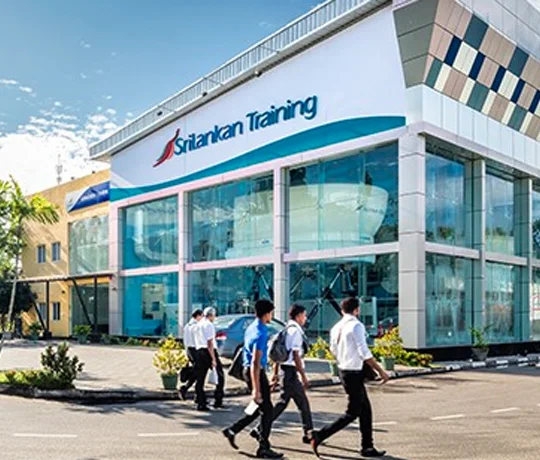
SriLankan Airlines has completed a specialised Airbus A330 training programme for six senior pilot instructors and examiners from Etihad Airways. The collaboration demonstrates the Sri Lankan carrier’s capacity to support experienced aviation professionals from another international airline.
Its Flight Training Division delivered the Line Flying Under Supervision programme, known as LFUS. Participants included five Type Rating Examiners and one Senior Type Rating Examiner.
The initiative brings renewed attention to Sri Lanka’s aviation expertise beyond passenger and cargo services. It also strengthens professional cooperation between the two national carriers through practical training and knowledge exchange.
Experienced Examiners Complete Specialised Programme
The participating Etihad professionals undertook training with support from SriLankan Airlines’ qualified flight instructors, cockpit crews and operational teams. Their involvement brought together instructional expertise and the resources required to coordinate supervised flying.
The programme focused on the Airbus A330, drawing on SriLankan Airlines’ fleet and established training infrastructure. Its completion illustrates how an airline’s operational resources can also support specialist professional development.
The participants already held senior instructional and examining roles. Consequently, the initiative involved experienced aviation personnel rather than an introductory pathway for new pilots.
That distinction places the collaboration within a specialised segment of airline training. Delivering such a programme requires coordination across flight operations, instruction and supporting operational functions.
Airline Highlights Wider Training Potential
Captain Chaminda De Zoysa, SriLankan Airlines’ Head of Flight Operations, described the assignment as an opportunity extending beyond one training engagement. He highlighted the combination of aircraft, experienced instructors, operational knowledge and established infrastructure available within the airline.
In his assessment, those resources provide a foundation for supporting aviation professionals from other major carriers. He also identified potential for SriLankan Airlines Flight Training to develop its role as a regional training partner.
The completed programme provides a concrete example of that capability. However, it does not establish the scale or timing of any additional international training contracts.
For SriLankan Airlines, the immediate outcome is the successful delivery of a specialised assignment. Any broader expansion will depend on future partnerships and the requirements of participating operators.
Regulatory Coordination Supports Delivery
SriLankan Airlines led preparation and coordination for the programme, working with public authorities and other stakeholders to establish the operational framework.
The Civil Aviation Authority of Sri Lanka, the Ministry of Defence and additional stakeholders supported the necessary arrangements and regulatory approvals. Their involvement helped enable delivery in accordance with required aviation standards.
This coordination highlights the organisational work behind international flight training. Aircraft and instructors form only part of the resources required to deliver a programme involving overseas airline personnel.
Operational support and regulatory preparation also contribute to execution. The collaboration therefore reflects both technical expertise and the ability to organise the surrounding requirements.
Training Expertise Adds Depth to Aviation Services
The initiative broadens SriLankan Airlines’ contribution to aviation beyond transporting travellers and freight. It demonstrates another use for the professional knowledge and infrastructure maintained within an operating airline.
Specialised training creates opportunities to exchange operational experience between carriers. In this case, SriLankan personnel supported senior Etihad professionals through a structured programme.
For the wider industry, such cooperation connects airlines through technical development as well as commercial transport activity. It can also help participating teams share approaches to professional learning.
Nevertheless, the announcement provides no financial value, programme duration or detailed performance measurements. Its strongest established result remains completion of the training by the six participating professionals.
Tourism Relevance Centres on Aviation Capability
For Sri Lanka’s tourism industry, the development has relevance through the country’s aviation capabilities and international professional relationships. Airlines form an essential part of access to destinations and the traveller experience.
Training expertise supports the professional foundations behind those operations. However, this programme does not announce additional passenger flights, increased tourism capacity or changes to holiday bookings.
Its contribution lies in showcasing Sri Lanka as a location capable of delivering specialised aviation services. Hosting overseas airline professionals also creates a platform for further institutional cooperation.
Any measurable impact on accommodation demand, visitor spending or the local economy would require additional information. The announcement does not quantify those outcomes.
Future Partnerships Offer Scope for Development
The completed Etihad programme gives SriLankan Airlines an example of its ability to serve international training requirements. Its aircraft, instructors and operational teams provide resources for exploring similar opportunities.
Further collaborations could expand professional exchange and strengthen the airline’s training relationships. For now, the six-person programme establishes a completed milestone in cooperation between the carriers.
The next indication of wider growth would be additional confirmed programmes. Their scope would show how this specialised assignment develops into sustained international aviation training activity.
For more travel news like this, keep reading Global Travel Wire