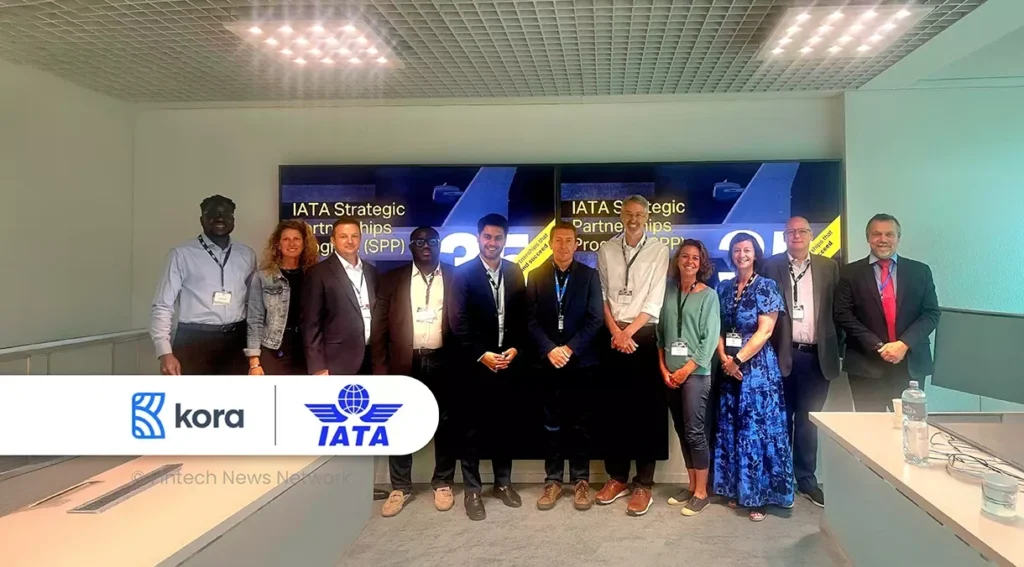
Kora is strengthening Africa’s aviation payment infrastructure through its integration with the IATA Financial Gateway, giving airlines and travel agencies a simpler way to process transactions across Nigeria, Kenya, and other key African markets.
The move comes as Africa’s aviation sector enters a major growth phase driven by rising travel demand, expanding airline networks, tourism recovery, and stronger intra-African connectivity. However, fragmented payment systems, local currency complications, and cross-border settlement delays have long created challenges for airlines selling tickets across the continent.
By joining the IATA Financial Gateway, Kora brings African payment methods closer to global airline systems. This gives carriers and travel sellers access to local cards, mobile money, domestic bank transfers, payouts, and settlement services through a more unified digital structure.
How Kora Connects With The IATA Financial Gateway
The IATA Financial Gateway is designed to help airlines, travel suppliers, and agencies manage payments through a single orchestration platform. Instead of building separate connections with multiple payment providers, airlines can use one integration layer to access different payment methods and markets.
Kora’s inclusion in this system is especially important for African aviation. The company operates as a pan-African payment infrastructure provider, supporting pay-ins, payouts, and settlement services across markets including Nigeria, Kenya, Ghana, Egypt, and South Africa.
For global airlines, this means easier entry into African payment ecosystems. For African travel agencies, it creates a stronger route to sell tickets using familiar local methods. For passengers, it can mean fewer failed transactions, faster booking confirmations, and more convenient payment choices.
Solving Africa’s Airline Payment Fragmentation Problem
Africa’s travel market has enormous potential, but airline payment fragmentation remains one of the biggest barriers to growth. Airlines often need to work with multiple local gateways, currencies, banks, compliance systems, and settlement partners to accept payments in different countries.
This adds cost and complexity. It can also reduce ticket sales when passengers cannot use their preferred local payment method. In markets where mobile money and bank transfers are widely used, depending only on international cards can exclude a large number of potential travellers.
Kora’s integration with the IATA Financial Gateway helps address this challenge by creating a more centralised access point. Airlines can reach local African payment methods without managing a separate integration for every country or provider.
This supports a broader financial modernisation trend across Africa, where systems such as the Pan-African Payment and Settlement System are working to make cross-border payments faster, safer, and more efficient in local currencies.
What Airlines Gain From Kora’s Payment Infrastructure
For airlines operating in Africa, the benefits can be significant. Payment success rates are directly linked to revenue, especially in fast-growing markets where travellers expect reliable digital booking channels.
With Kora connected to the IATA ecosystem, airlines can improve local payment acceptance across African markets. They can also reduce integration costs, simplify settlement processes, and improve operational control across multiple destinations.
This is particularly valuable for carriers serving cities such as Lagos, Nairobi, Accra, Cairo, Johannesburg, Abuja, Cape Town, and other important travel hubs. These markets connect business travel, family travel, tourism, education, religious journeys, and regional trade.
As African air traffic continues to expand, airlines will need stronger payment systems to support larger passenger volumes. A smoother transaction process can help carriers capture demand that might otherwise be lost at the payment stage.
Travel Agencies Get A Stronger Ticket Sales Network
Travel agencies also stand to benefit from the Kora and IATA Financial Gateway integration. Agencies selling flights across Africa often deal with customers who prefer domestic bank transfers, mobile wallets, local cards, or other regional payment options.
When agencies can accept more payment methods, they can serve a wider audience. This is especially important for small and mid-sized travel companies that may not have the resources to build multiple direct payment integrations.
A unified payment structure can also improve speed and confidence. Faster confirmations help agencies complete bookings more efficiently, while better settlement visibility supports financial planning and customer service.
For destinations that depend on travel sellers to package flights, hotels, tours, safaris, conferences, and events, stronger payment access can support the entire tourism chain.
Passenger Experience Improves Across Nigeria, Kenya And Beyond
The biggest long-term impact may be felt by passengers. A traveller booking a flight from Lagos, Nairobi, Accra, or Johannesburg wants a simple and trusted payment experience. Failed payments, rejected cards, delayed confirmations, and limited payment options can discourage travel.
Kora’s connection to airline payment infrastructure can reduce those friction points. Passengers may gain better access to local payment choices, especially in markets where international credit card penetration is limited.
This matters for tourism growth. When more travellers can complete bookings easily, destinations can attract stronger visitor flows. Hotels, ground transport providers, attractions, restaurants, event venues, and local guides can all benefit from higher air travel conversion.
Africa’s Aviation Growth Needs Better Digital Infrastructure
Africa’s aviation industry is expected to grow strongly over the coming decades, supported by tourism, trade, urbanisation, regional mobility, and the African Continental Free Trade Area. Nigeria and Kenya are central to this momentum, with Lagos and Nairobi serving as major commercial, tourism, and aviation gateways.
Yet growth depends on more than aircraft and routes. Airlines also need reliable financial systems that can handle multi-market transactions at scale. Payment infrastructure is now part of aviation infrastructure.
Kora’s role in the IATA Financial Gateway reflects this shift. It shows how fintech is becoming essential to airline retailing, passenger experience, and tourism development across Africa.
A Major Step For African Travel Payments
Kora’s integration into the IATA Financial Gateway marks a major step toward more inclusive and efficient airline payments across Africa.
For airlines, it offers simpler access to African payment systems. For travel agencies, it supports stronger ticket sales. For passengers, it promises a smoother booking journey with more local payment options.
As African aviation demand rises, digital payment systems will become increasingly important to the continent’s travel future. Kora’s move places fintech at the centre of that transformation, helping airlines connect with more travellers across Nigeria, Kenya, and the wider African market.
For more travel news like this, keep reading Global Travel Wire