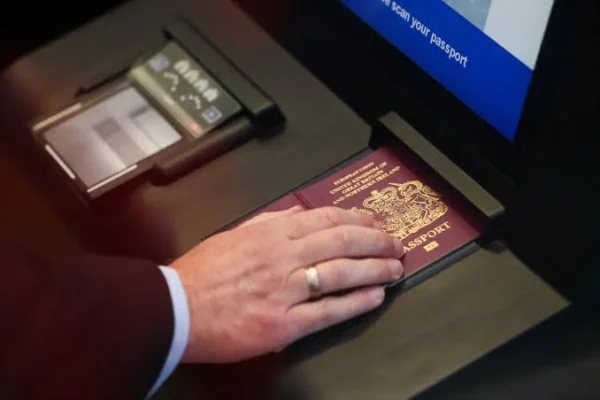
Singapore, Japan and other Asian markets are accelerating biometric passenger processing as airports seek faster journeys and stronger identity verification.
Facial recognition, iris scans, advance passenger information and digital travel credentials increasingly support movement through immigration and airport checkpoints.
These systems can reduce queues and simplify document checks. However, they also make aviation more dependent on secure databases, reliable communications and continuously available government platforms.
A cyberattack or technical failure can quickly affect check-in, automated gates and passenger clearance. Consequently, Asia’s digital border revolution is becoming a test of resilience as well as convenience.
Airports and immigration authorities must maintain manual alternatives, protect sensitive information and ensure that technology failures do not bring passenger operations to a halt.
Singapore expands token-less immigration clearance
Singapore has become a leading example through the Immigration and Checkpoints Authority’s New Clearance Concept.
Token-less clearance at Changi Airport allows eligible travellers to use facial and iris biometrics at automated immigration lanes. Singapore residents can complete arrival and departure clearance without presenting a passport at the gate, while foreign visitors can use the system when departing.
The physical passport remains an essential travel document. Passengers must still carry it because destination authorities and airline procedures may require it.
Singapore’s system uses traveller information already available to immigration authorities and matches it with live biometric checks at the automated lane.
The change has reduced individual clearance time from approximately 25 seconds to around 10 seconds. This can improve terminal flow as passenger traffic increases.
Automation also allows immigration officers to focus more attention on higher-risk cases. Yet effective operation depends on accurate identity data, functioning sensors and secure government systems.
Japan connects biometrics with airport processing
Japan follows a different model through Visit Japan Web and Face Express.
Visit Japan Web enables international visitors to complete immigration and customs-related information before arrival. Travellers can use generated digital codes during entry procedures, reducing repeated form-filling at the airport.
Face Express supports a biometric journey at participating airports, including Narita. Passengers register their passport, boarding pass and facial image at a kiosk before using facial recognition at selected baggage, security and boarding touchpoints.
However, Face Express should not be confused with immigration clearance. It primarily streamlines airport departure procedures operated with participating airlines and terminals.
Japan’s approach illustrates how separate systems can support different parts of the journey. A government service handles pre-arrival declarations, while airport biometrics reduce repeated document presentation during departure.
Travellers should check whether their airline participates because availability can vary by airport, terminal and flight.
India develops decentralised passenger identity
India’s DigiYatra programme uses facial recognition to create a paperless airport journey at participating domestic terminals.
Passengers register voluntarily through the DigiYatra application before using biometric gates at airport entry, security access and boarding checkpoints.
The system has expanded across numerous Indian airports and processed millions of passenger journeys. Its decentralised structure is designed to keep credentials on the traveller’s device rather than create one central passenger database.
Temporary travel information shared with an airport is scheduled for deletion after the journey under DigiYatra’s operating framework.
International expansion has been discussed alongside global digital identity standards. However, travellers should not assume that DigiYatra currently replaces passports or immigration procedures for overseas journeys.
Physical documents remain necessary, while international interoperability requires agreements between governments and aviation authorities.
Thailand advances automated border processing
Thailand has expanded automated biometric gates at important international airports as it modernises immigration processing.
Digital arrival information and electronic visa services also form part of the country’s changing border environment. These tools can help authorities review traveller information before or during entry.
However, visitors must check current official requirements before departure. An electronic visa, digital arrival submission and any future travel authorisation are separate processes and may apply differently according to nationality.
Airlines also require reliable confirmation that passengers meet destination entry rules. If a government verification platform becomes unavailable, check-in may slow while staff seek alternative approval.
Cyber risks grow with digital dependence
Biometric borders concentrate highly sensitive information. Facial images, passport details and travel records can attract criminal groups and sophisticated state-linked attackers.
Threats may include data theft, service disruption, fraudulent applications and attempts to deceive identity-verification systems.
Airports must also protect connections linking airlines, immigration agencies and technology suppliers. A weakness within one connected service can affect other parts of the passenger journey.
Strong encryption, limited data retention, access controls and continuous security monitoring can reduce exposure. Biometric systems also require presentation-attack detection to identify photographs, masks or manipulated digital images.
Privacy safeguards are equally important. Authorities should clearly explain which information they collect, why they require it, how long they retain it and who can access it.
Offline alternatives protect passengers
Digital efficiency can create operational fragility when airports remove too much manual capacity.
Automated gates normally close when they cannot confirm a traveller’s identity. Passengers must then move to staffed counters, potentially creating congestion.
Low-cost airlines may be particularly exposed because they operate short turnaround times and tightly scheduled aircraft rotations. One prolonged check-in or immigration disruption can affect several later flights.
Airports therefore need tested contingency plans, backup connectivity, mobile inspection equipment and enough trained officers to manage degraded operations.
Preloaded, securely signed passenger information may support limited offline processing where national rules permit. Manual passport inspection must also remain available for emergencies and travellers unable to use biometrics.
Asia’s digital border transformation will ultimately be judged by more than speed. Successful systems must protect personal data, withstand cyber threats and continue serving travellers when technology fails.
For more travel news like this, keep reading Global Travel Wire