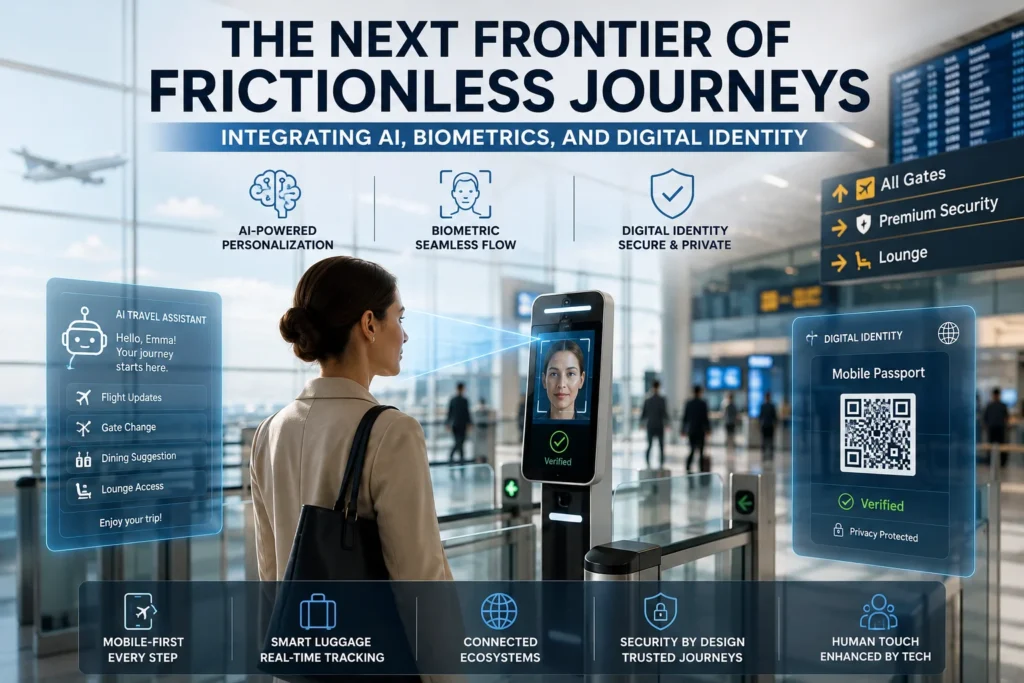
The global travel ecosystem stands on the brink of an unprecedented operational evolution. While artificial intelligence, facial recognition, and smartphone-enabled credentials have independently reduced friction for millions of transit users, orchestrating all three technologies in real time is transforming modern passenger processing. By combining verified biometric matching with decentralized digital wallets and adaptive AI decision-making, international travel is shifting from fragmented physical checkpoints toward a fully integrated digital identity framework.
This unified approach removes repetitive manual verification steps. Biometrics provide automated identity confirmation at physical gates, digital wallets supply tamper-proof verified credentials, and artificial intelligence evaluates context in real time to optimize flow management, heighten security protocols, and personalize service delivery.
Accelerating Adoption: How Facial Verification Elevates the Traveler Experience
Passenger preferences increasingly favor swift, contactless identity verification over physical document management. Standing before an automated biometric camera at border control, departure gates, or lounge entrances eliminates the need to repeatedly retrieve passports and printed boarding passes.
Official data highlights widespread adoption across major international hubs:
Rapidly Expanding Usage: Global passenger tracking indicates that 50% of travelers used airport biometrics in recent processing periods—up from 46% in prior surveys—primarily at immigration and security gates.
High User Satisfaction: Travelers utilizing biometric verification report an overall satisfaction rate of 85%.
Strong Demand for Paperless Processing: Approximately 74% of international travelers express a willingness to share biometric details if it allows them to skip presenting physical passports or paper boarding passes.
Despite high enthusiasm, data privacy remains a critical consideration. Surveys indicate that 42% of passengers hesitant to share biometric information would opt in if guaranteed strict data protection and explicit deletion policies. Addressing these concerns requires a commitment to “responsible biometrics,” ensuring processes remain fully opt-in, decentralized, and compliant with global privacy frameworks. Modern systems prioritize local device storage, where personal data stays on the user’s smartphone, is shared temporarily with explicit consent, and is erased immediately following the interaction.
Achieving Seamless Cross-Border Interoperability
Scaling biometric technology across global transit networks requires multi-agency orchestration and standardized digital identity frameworks. Historically, aviation data existed in isolated enterprise silos. Today, progress depends on secure, real-time data sharing across interoperable systems operating within recognized regulatory boundaries.
Government initiatives worldwide are driving this transition toward standardized digital travel credentials:
European Union Wallet Mandate: European regulations require member states to provide citizens with secure digital identity wallets, targeting 80% population adoption by 2030 to streamline cross-border travel and public services.
National Digital Initiatives: Government programs, such as India’s DigiYatra ecosystem, demonstrate the practical deployment of digital credentials to enable paperless domestic and international terminal access.
Global Interoperability Proofs of Concept: Recent multi-airline and multi-airport trials conducted in coordination with global aviation associations have successfully demonstrated end-to-end paperless journeys. Travelers successfully navigated multi-leg international itineraries using verified digital passports, visas, and frequent flyer credentials stored within private mobile wallets.
Passenger demand strongly aligns with these integrated systems. Research reveals that nearly 78% of international travelers want a single smartphone application combining digital passports, loyalty cards, and booking engines to manage payment and airport navigation seamlessly.
How AI Transforms Digital Credentials into Dynamic Journeys
Integrating computer vision and machine learning into identity networks enhances verification speed, accuracy, and operational security. However, combining real-time AI processing with verified digital identity signals unlocks advanced applications that extend far beyond initial check-in.
During unexpected flight disruptions, AI-enabled travel systems can read trusted identity signals to immediately confirm a traveler’s location, ticket entitlement, and lounge or hotel eligibility. Rather than requiring passengers to stand in long service queues for manual rebooking, intelligent networks can deliver dynamic, personalized support directly to the passenger’s mobile device.
Expanding Biometric Verification Beyond Airport Terminals
The operational benefits of verified digital identity extend well beyond aviation checkpoints into broader hospitality and transport sectors:
Maritime and Cruise Operations: Major ocean cruise terminals utilizing mobile biometric enrollment report significant embarkation improvements, cutting terminal processing and passenger boarding times by up to 50%.
Hospitality and Vehicle Rentals: Hotel properties and car rental agencies are implementing pre-arrival digital document checks paired with arrival facial scans. This setup allows guests to bypass check-in desks, instantly download digital room or vehicle keys, and proceed directly to their destinations.
Leisure and Entertainment Venues: High-volume entertainment venues, including casinos and major sports arenas, are deploying self-service biometric access gates to streamline entry for registered guests and VIP members.
The Future of Modern Travel Infrastructure
Achieving mass global adoption of digital identity travel frameworks requires ongoing alignment among governments, airport authorities, airlines, and hospitality operators. As regulatory bodies update legal standards to support decentralized credentials, the integration of biometrics, digital wallets, and artificial intelligence will remain the cornerstone of a safer, more resilient, and frictionless travel industry.
For more travel news like this, keep reading Global Travel Wire