Global travel is undergoing a major shift as luxury hospitality moves from passive physical comfort toward active biological recovery. For decades, high-end accommodations focused primarily on premium bedding, soundproofed guest rooms, and blackout curtains to ensure a good night’s rest. However, for long-haul international travelers crossing multiple time zones, internal biological rhythms often remain misaligned with local destination times.
To eliminate the traditional “recovery day” lost to travel fatigue, global hospitality brands are integrating circadian science directly into the guest experience. By pairing personalized biological synchronization with targeted nutritional programs, operators are offering holistic solutions to help international guests arrive focused, energized, and ready to engage.
Integrating Circadian Science into the International Guest Experience
At the core of modern circadian wellness travel is an advanced understanding of the human central clock. Disruptions to sleep-wake cycles, commonly known as jet lag, stem from misalignments between local environmental cues and internal physiological processes. Generic advice—such as sleeping on the plane or forcing exposure to morning sunlight—frequently fails because it ignores an individual’s unique sleep genetics, known as their chronotype.
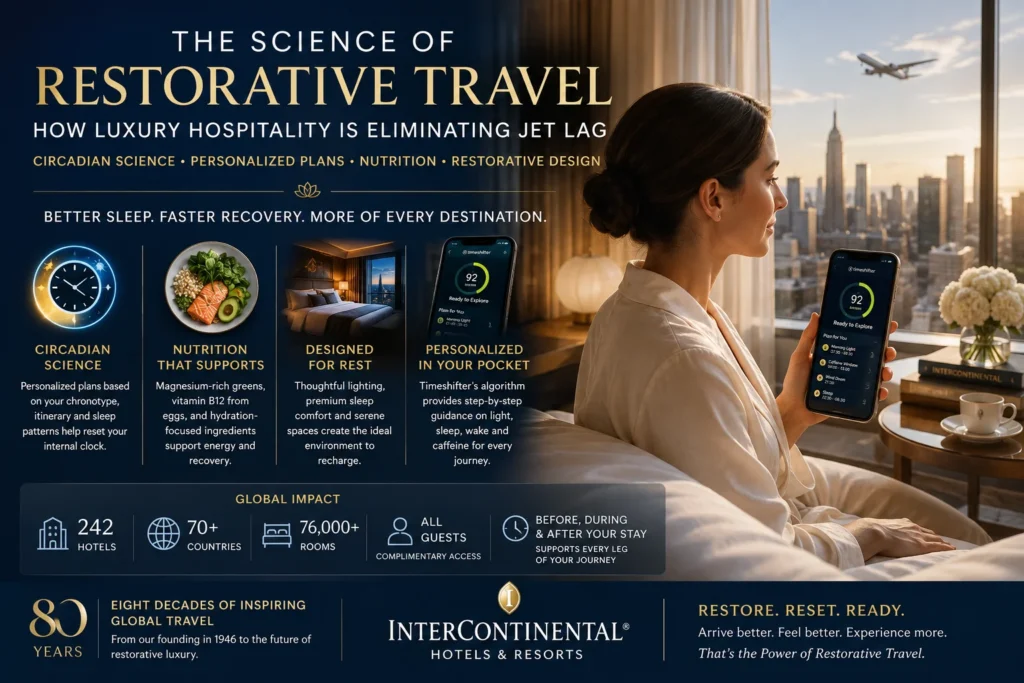
Through global technology partnerships, luxury operators are placing astronaut-grade circadian algorithms into the hands of long-haul travelers. By analyzing a guest’s specific flight itinerary, baseline sleep schedule, and personal chronotype, localized digital systems generate precise, customized action plans.
Key components of personalized circadian recovery include:
Timed Light Exposure and Avoidance: Strategic guidance on when to seek natural sunlight or bright indoor light, and when to wear blue-light-blocking glasses to reset the central clock.
Calculated Sleep Windows: Clear schedules indicating optimal times for sleep and short power naps to maintain cognitive function during transit.
Strategic Caffeine Windows: Precise recommendations on when to consume caffeine for alertness and when to avoid it to protect subsequent sleep cycles.
Combining Digital Science with Targeted Physical Nutrition
Addressing travel fatigue effectively requires supporting the body both neurologically and biochemically. To complement digital circadian tools, forward-thinking luxury brands are redesigning their dining menus to counter the physical stress of long-distance air travel.
Pressurized aircraft cabins and shifting meal schedules frequently cause dehydration, digestive distress, and mineral depletion. In response, hotel culinary teams are launching specialized dining options—such as flexible all-day menus featuring targeted wellness bowls and restorative plates—engineered with specific functional ingredients:
Vitamin B12: Included in egg-based and plant-focused dishes to support energy metabolism and assist in sleep regulation.
Magnesium: Sourced through dark leafy greens and seeds to replenish vital minerals depleted during flight-induced stress.
Hydration-Dense Nutrients: Selected specifically to combat cabin dehydration and support digestive balance upon arrival.
Deploying Restorative Technology Across Global Networks
A prominent example of this operational evolution is taking place across the InterContinental Hotels & Resorts portfolio, part of IHG Hotels & Resorts. The luxury hotel group has expanded its global partnership with health-technology platform Timeshifter, making personalized circadian jet lag plans complimentary for guests across 242 properties in nearly 70 countries.
Coinciding with the brand’s 80th anniversary in 2026—a legacy that traces back to its founding in 1946 by Pan American Airways founder Juan Trippe—the initiative forms a key pillar of the group’s “Intentional Flexibility” strategy. Designed under the leadership of luxury brand executives, the program seamlessly adapts to the fluid schedules of modern high-net-worth travelers.
Guests receive complimentary access via pre-arrival digital communications and QR code touchpoints throughout their stay. This allows travelers to begin shifting their circadian rhythms before departure, maintain alertness upon arrival, and transition smoothly when returning to their home time zone.
The Business Impact of Biological Optimization
The widespread adoption of circadian technology highlights a broader transformation in high-end tourism economics. For international corporate travelers, government delegations, and high-net-worth leisure guests, time is a non-renewable asset. Experiencing severe travel fatigue directly impacts decision-making, physical well-being, and overall vacation enjoyment.
By shifting the definition of luxury hospitality from passive room amenities to active biological optimization, global hotel brands are creating tangible value for long-haul visitors. As scientific understanding of sleep and human performance advances, circadian management and restorative wellness will remain central to the future of international travel.
For more travel news like this, keep reading Global Travel Wire