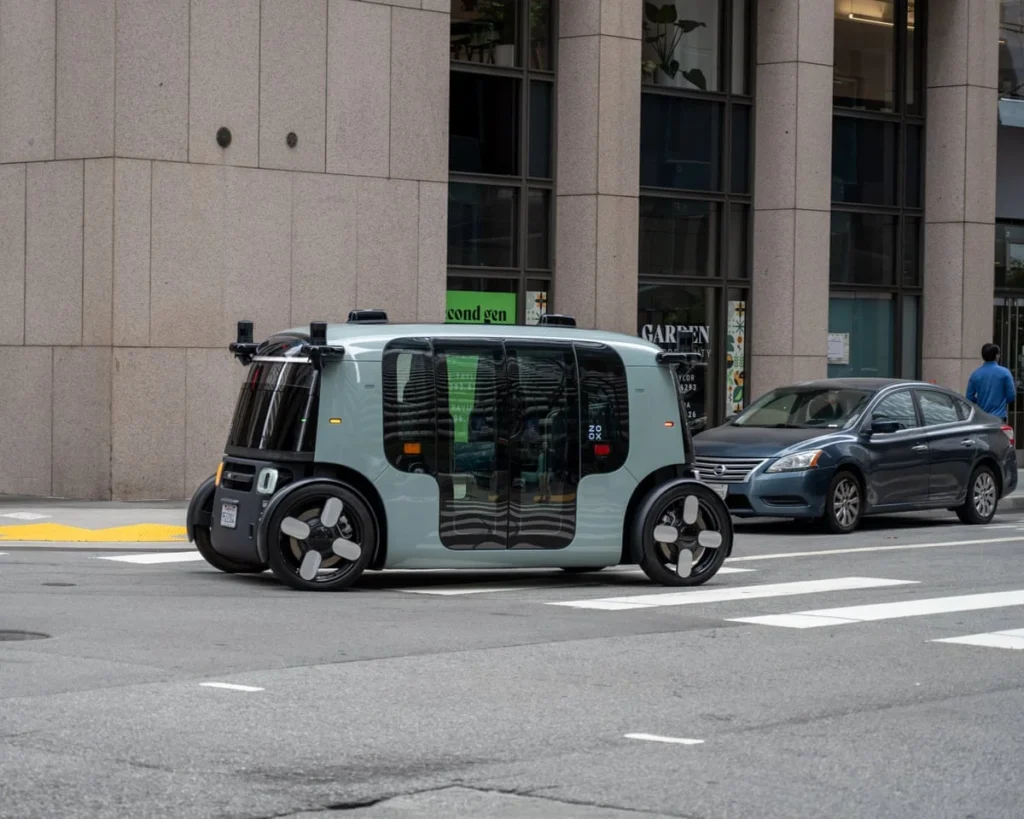
The United States has proposed changes to vehicle lighting standards that could help identify driverless cars and accommodate purpose-built robotaxis. Optional cyan lamps would signal automated operation, while revised requirements would give manufacturers greater flexibility over lighting controls and design.
The National Highway Traffic Safety Administration’s proposals address regulations originally developed for vehicles operated by human drivers. They form part of a broader federal programme covering automated vehicle equipment, exemptions and future safety standards.
For travellers, the developments concern the regulatory foundations of driverless transport. They do not announce nationwide robotaxi availability or establish final rules for every automated vehicle.
Cyan Lights Would Identify Automated Operation
A central proposal would introduce consistent specifications for optional automated driving system marker lamps. Cyan would become the prescribed colour, alongside requirements governing positioning, activation and visibility.
The lamps would help police officers and other road users recognise when an automated driving system controls a vehicle.
However, the proposal would not require every self-driving vehicle to carry these lights. Instead, it would standardise the equipment where manufacturers choose to install it.
That distinction matters for passengers encountering unfamiliar vehicles during a trip. The proposal concerns a consistent identification signal, rather than a universal requirement that all robotaxis display cyan lighting.
Purpose-Built Vehicles Could Use Different Controls
The proposed amendments to Federal Motor Vehicle Safety Standard No. 108 also address vehicles designed exclusively for automated operation.
For these vehicles, NHTSA would revise requirements involving manually activated direction indicators, hazard warning signals and headlamp beam switches.
The flexibility targets vehicles never intended for a person to drive. It would not automatically extend to every conventional car offering automated functions.
This approach recognises that driverless vehicle layouts may differ from familiar passenger cars. However, design flexibility would remain part of an equipment safety framework.
For future passenger services, these provisions could influence how manufacturers develop vehicles around automated operation and passenger accommodation.
Headlamp Testing Would Reflect Modern Technology
NHTSA also proposes removing the fixed 12.8-volt testing requirement for integral beam headlamps.
Manufacturers would instead certify performance using design voltages appropriate to their systems. The agency links this change to durable LED equipment and advanced lighting technology.
Another amendment would remove provisions specifying the vertical arrangement of upper and lower headlamp beams. NHTSA says manufacturers could gain design flexibility without weakening illumination standards.
These technical changes would not directly alter how visitors book transport. Their significance lies in how manufacturers demonstrate that newer vehicle designs meet required lighting performance.
The proposals therefore address both automated operation and the assessment of modern lighting systems.
Public Feedback Will Shape Final Requirements
A 30-day consultation is due to begin after the notice appears in the Federal Register. Submissions should identify Docket No. NHTSA-2026-1519.
Manufacturers, safety organisations and other stakeholders will have an opportunity to comment. The proposed requirements may change before authorities adopt a final rule.
The lighting notice also remains separate from a negotiated rulemaking process announced earlier in October. That initiative is expected to examine other provisions within the same lighting standard.
Keeping these processes distinct is important because the broader regulatory programme contains measures at different stages of development.
Wider Reforms Cover Vehicle Equipment and Robotaxis
Other proposed updates address transmission displays, windscreen defrosting and wiping, tyre placard locations and braking controls.
NHTSA has also announced future work involving mirrors, rearview systems, electronic stability control, sun visors and warning labels.
Alongside equipment reform, the administration is updating exemption programmes for research, demonstrations and commercial fleets.
Domestic vehicles are gaining eligibility for research and demonstration exemptions. Vehicles manufactured before a commercial exemption was issued may also qualify for deployment under the revised framework.
NHTSA says it has already granted its first commercial robotaxi deployment exemption through that framework.
An individual exemption, however, remains separate from a generally applicable federal safety standard.
Future Travel Services Depend on Operational Readiness
The agency is developing its first federal vehicle safety standard focused specifically on automated driving systems. Work with the SAE Industry Technologies Consortia aims to accelerate objective performance standards.
Updated federal guidance will also address first responder interactions, safety management systems and remote assistance.
These subjects matter to passenger transport because vehicle design alone cannot establish how a service manages everyday operations or unexpected situations.
For tourism businesses, driverless services could eventually become another consideration in local transport planning. However, the proposals provide no basis to predict specific airport routes, hotel partnerships or passenger demand.
The immediate development is a changing regulatory framework. Final requirements and individual deployment decisions will determine how that framework translates into future road travel.
For more travel news like this, keep reading Global Travel Wire